

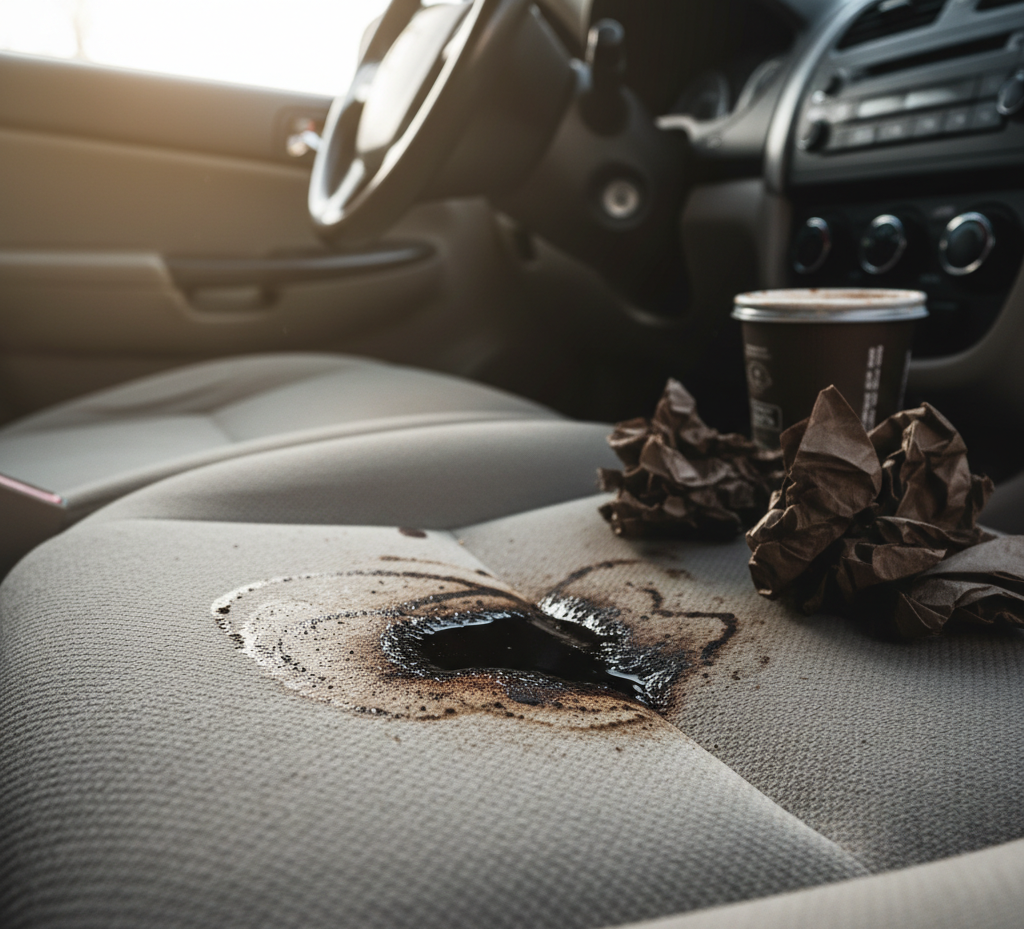
You wiped up the spill immediately, yet a dark brown ring remains on your upholstery. If you are wondering why coffee stains won’t come out of car seats, the issue lies in the chemical composition of coffee and the physical structure of automotive fabrics.
Coffee acts as a natural dye. When it makes contact with synthetic fibers, it forms strong molecular bonds that standard wiping cannot break. Furthermore, car seats contain deep foam cores that absorb liquids far below the visible surface.
To permanently remove these marks, you must neutralize the specific compounds trapped within the fabric.
Why Won’t Coffee Stains Come Out of Car Seats? (Quick Answer)
- Tannins: Coffee contains plant compounds called tannins that naturally dye synthetic and natural fibers.
- Capillary Action: Spills soak into the deep foam padding beneath the fabric. As the surface dries, the liquid wicks back up, creating a persistent ring.
- Milk Proteins: Dairy additives curdle and bind to fabric weaves when heated, requiring specialized enzymes to break them down.
- Improper Cleaning: Using hot water or scrubbing aggressively pushes the liquid deeper and chemically sets the pigment into the material.
The Chemistry of Spilled Coffee
To extract a mark, you must understand what you are actually trying to lift. Coffee is not a single substance; it is a complex mixture of organic compounds.
Tannins (The Dye Agent)
Tannins are organic polyphenols found in plants, bark, and seeds. They are the same compounds responsible for the dark color in wine and tea. According to the American Cleaning Institute, tannin marks require specific acidic treatments to release their hold on fabrics. When black coffee hits a car seat, the tannins act like a commercial fabric dye, physically altering the color of the upholstery threads.
Lipids and Oils (The Water Repellents)
Coffee beans naturally contain oils. Roasting brings these lipids to the surface, and brewing transfers them into your cup. When a spill dries, these oils leave a water-resistant residue on your seat. If you attempt to clean the area with plain water, the oils repel the moisture, preventing you from reaching the underlying tannins.
Dairy and Sugar Compounds
If you drink lattes or use creamers, you are introducing proteins and animal fats into the fabric of the vehicle. Milk proteins act like a biological glue when they dry. Sugar creates a sticky matrix that binds dirt and dust from the car’s cabin to the spill area, making the discoloration appear much darker over time.
How Automotive Seats Trap Liquids
Automotive upholstery is engineered for durability, but its multi-layered construction makes spill extraction difficult. A car seat is not a single piece of cloth.
The Woven Surface Layer
Most modern vehicle seats use nylon or a nylon-polyester blend. These synthetics are highly porous. The microscopic gaps between the woven threads provide immediate entry points for hot liquids. Because the liquid is usually warm when spilled, the fabric fibers expand slightly, allowing the coffee to penetrate deeper than it would with a cold-water spill.
The Polyurethane Foam Core
Directly beneath the fabric sits a thick pad of open-cell polyurethane foam. This material acts exactly like a dense kitchen sponge. The visible spill on the surface is usually only 20% of the total volume—the remaining 80% is deep within this foam layer.
The Wicking Phenomenon
Wicking explains why a stain reappears days after you thought you cleaned it. You scrub the top layer, and the fabric looks clean. However, as the vehicle’s cabin heats up in the sun, the moisture trapped in the foam evaporates and rises. Capillary action carries the remaining coffee pigments back to the surface, depositing a fresh ring on the fabric.
Common Mistakes That Lock Stains In
Many standard cleaning habits actually make automotive stains permanent. Avoid the following errors when treating your upholstery.
Using Hot Water
Never use hot water on a milk or cream beverage spill. Heat chemically alters the structure of dairy proteins, essentially cooking them into the polyester fibers. Once proteins coagulate inside a fabric weave, they become nearly impossible to remove without industrial-grade solvents. Always use lukewarm or cold water for extraction.
Scrubbing Instead of Blotting
Applying downward pressure with a stiff brush pushes the liquid further into the foam core. Scrubbing back and forth frays the synthetic threads, damaging the seat’s texture. This abrasion creates micro-abrasions in the fabric that trap dirt, leaving the affected area permanently dull. You must blot the liquid to pull it upward.
Over-Saturating the Area
Pouring cleaning solutions directly onto the seat introduces more liquid into the open-cell foam. If the foam stays wet for more than 24 hours, mildew and mold will develop inside the cushion. This creates a permanent sour odor in the cabin. Apply cleaners to a microfiber towel first, then transfer the moisture to the seat.
Step-by-Step Extraction Methods
Different types of coffee spills require different chemical neutralizers. Match the cleaning method to the exact type of beverage spilled.
Method 1: The Acidic Extraction (For Black Coffee)
Tannins are alkaline, meaning they react best to mild acids. White vinegar breaks the molecular bond between the plant dye and the synthetic car seat fiber.
- Mix two parts distilled cold water with one part distilled white vinegar in a spray bottle.
- Mist the affected area lightly. Do not soak the fabric.
- Let the mild acid sit for five minutes to break down the tannins.
- Take a dry, white microfiber towel and press firmly down on the spot.
- Lift straight up to extract the liquid. Repeat until the towel pulls up no more brown pigment.
Method 2: The Surfactant Approach (For Oily Coffee)
If the spill contained espresso or French press coffee, you must cut through the natural bean oils before treating the color. Surfactants lower the surface tension of water, allowing it to lift lipids away from fabrics.
- Mix two cups of warm water with one drop of heavy-duty liquid dish soap.
- Agitate the water until suds form.
- Scoop only the foam (not the liquid water) onto a soft-bristled detailing brush.
- Work the foam gently over the stain in tight, overlapping circles.
- Wipe the suds away with a damp towel to remove the trapped oils.
Method 3: Enzymatic Cleaners (For Milk and Sugar)
If your drink contained milk, cream, or syrup, standard soaps will fail. You need biological enzymes to consume the organic proteins and sugars. Look for an automotive upholstery cleaner specifically labeled as “enzymatic.”
- Spray the enzyme cleaner onto a microfiber towel.
- Dab the towel firmly into the protein stain.
- Allow the enzymes to dwell for 15 minutes. They need time to digest the organic matter literally.
- Extract the moisture using a dry towel or a wet-dry vacuum.
Advanced Tools for Complete Removal
If capillary action has drawn a massive amount of liquid into the foam core, manual blotting will not generate enough suction to pull it out. You must rely on mechanical extraction.
Wet-Dry Shop Vacuums
A standard household vacuum cannot handle liquids. A wet-dry shop vacuum provides the raw suction power needed to pull moisture from the deep polyurethane padding. After applying your vinegar or enzyme solution, press the wet-dry vacuum nozzle firmly against the fabric. Drag it slowly across the stain to pull the hidden liquid up through the surface layers.
Hot Water Extractors
Professional auto detailers use hot water extractors to clean seats. These machines inject a precise burst of heated cleaning solution into the fabric and immediately vacuum it back out in a single motion. This prevents the liquid from ever reaching the deeper foam core. You can rent consumer-grade spot extractors from local hardware stores to handle severe, set-in spills.
Steam Cleaning
Steam machines use pressurized vapor to loosen hardened sugars and oils without saturating the seat. The heat softens the bonded materials, making them easy to wipe away with a towel. Keep the steamer nozzle moving constantly; holding it in one place can melt synthetic nylon fibers.
Drying the Upholstery Properly
Proper drying is the final, critical step in the extraction process. If the seat dries too slowly, the wicking process will pull hidden pigments back to the surface, undoing your work.
- Airflow: Open all vehicle doors and windows immediately after cleaning. Cross-ventilation forces the moisture to evaporate rapidly.
- Dehumidifiers: If the weather is humid, place a portable dehumidifier or moisture-absorbing desiccant bags inside the car overnight, with the door closed.
- Climate Control: Run the vehicle’s engine with the heater turned on high and the air conditioning compressor engaged. The AC system actively pulls humidity out of the cabin air.
Preventing Future Spills from Setting
Once you extract the mark, you should adjust the fabric’s surface tension to prevent future accidents from sinking into the foam.
Ceramic Fabric Protectants
Modern auto detailing utilizes ceramic-infused fabric sprays. These products coat individual polyester threads in microscopic silicon dioxide. When a liquid hits a treated seat, it beads up on the surface instead of absorbing.
- Vacuum the seat thoroughly to remove dust.
- Spray the protectant evenly across the dry fabric.
- Allow it to cure for 24 hours in a well-ventilated area.
- Reapply every six months for maximum hydrophobic performance.
Final Thoughts on Automotive Upholstery Care
Understanding why coffee stains won’t come out of car seats is key to permanently solving the problem. By identifying whether you are fighting plant tannins, bean oils, or dairy proteins, you can apply the correct chemical neutralizer.
Avoid excessive moisture, never scrub aggressively, and rely on strong extraction tools to pull the liquid out of the internal foam.
