

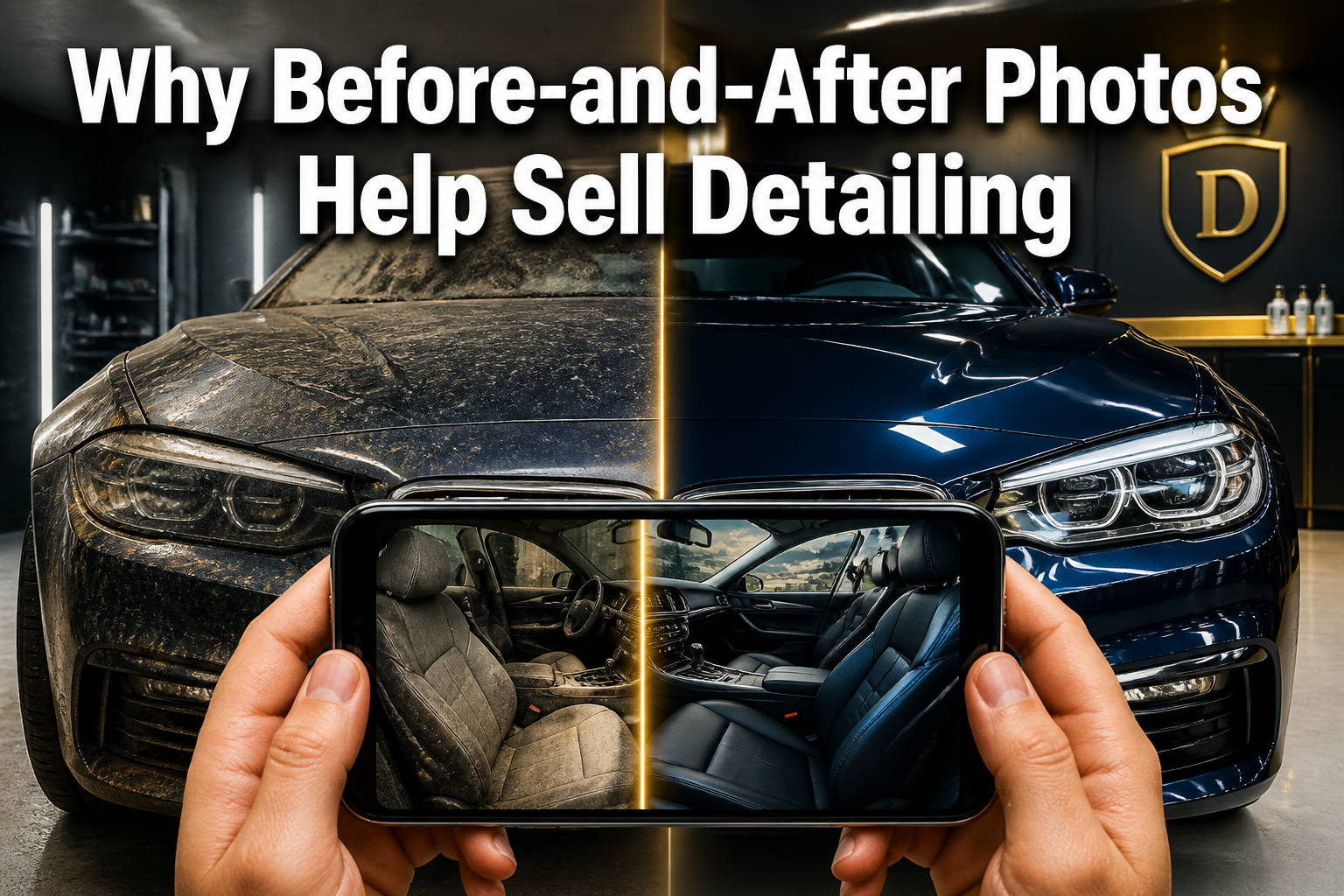
Before-and-after photos help sell detailing services by providing visual proof of transformation that builds trust, justifies pricing, and creates emotional connections with potential customers.
These images serve as powerful marketing tools that demonstrate expertise and results better than any written description could achieve.
How do Before-and-After Photos Build Customer Trust?
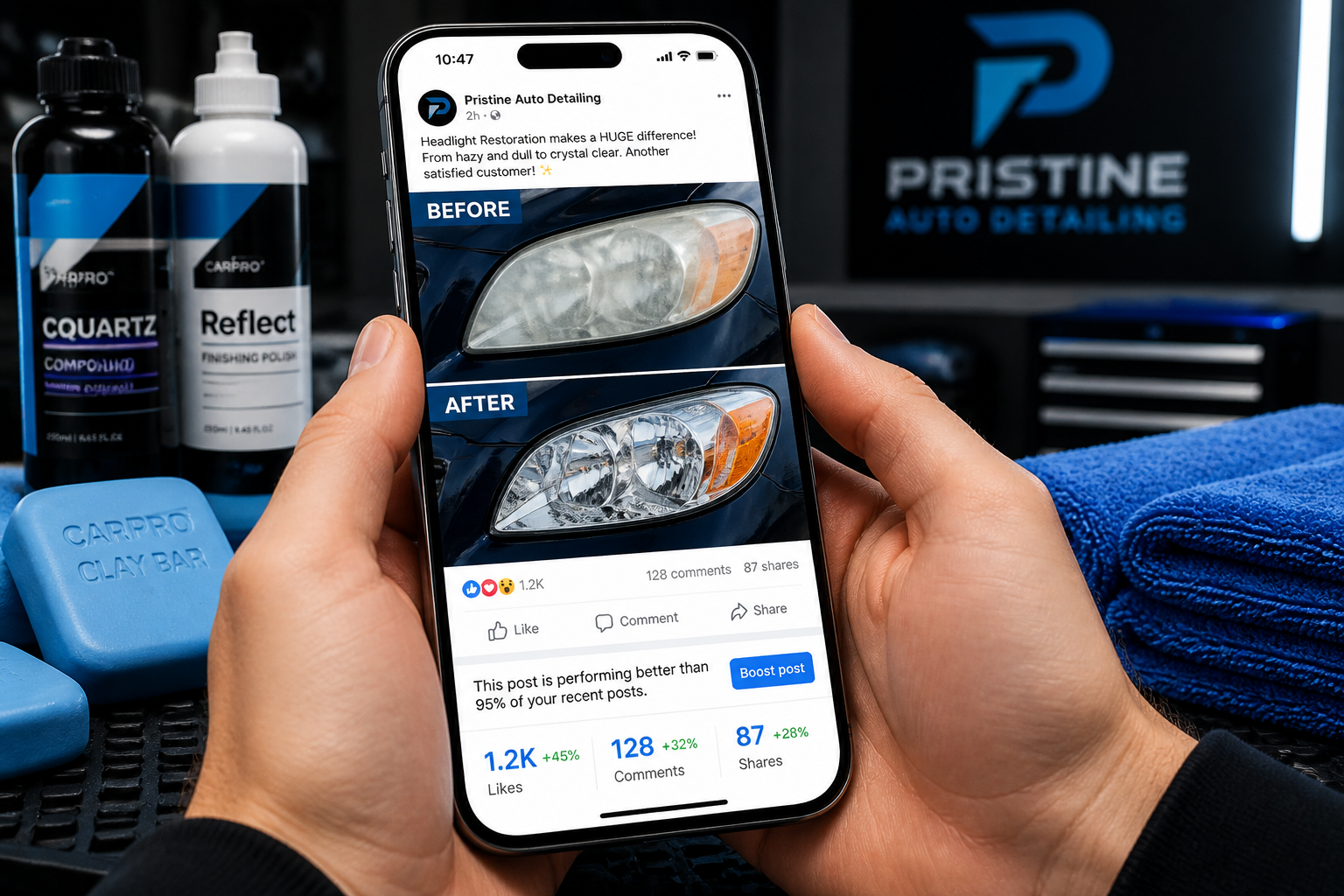
Before-and-after photos help sell detailing by eliminating skepticism and providing concrete evidence of service quality. Customers can see exactly what results to expect, which removes the guesswork from hiring a detailing professional.
Trust-building elements in effective photos:
- Consistent lighting and angles for accurate comparison.
- Same vehicle shown in identical positions.
- Clear documentation of specific problem areas.
- Honest representation without excessive editing.
- Multiple angles showing comprehensive results.
Choose detailed documentation if you want to establish long-term credibility over quick sales. Customers who see thorough before-and-after evidence become repeat clients and refer others.
Common mistake: Using heavily filtered or edited photos that don’t match real-world results. This approach damages credibility when customers see the actual outcome.
Why Visual Evidence Justifies Premium Detailing Prices?
Premium detailing services require visual justification because customers need to understand the value difference between basic car washes and professional restoration work. Before-and-after photos help sell detailing at higher price points by showing the dramatic improvements that justify the investment.
Price justification through visual evidence:
- Paint correction photos showing swirl mark removal.
- Interior restoration reveals years of wear reversal.
- Engine bay cleaning transformations.
- Headlight restoration clarity improvements.
- Ceramic coating water beading demonstrations.
The transformation photos allow customers to see why professional detailing costs $200-800 versus a $20 car wash. Each service level can be supported with appropriate before-and-after documentation.
Decision rule: Use close-up detail shots for technical services like paint correction, wide shots for overall transformations, and process shots for premium add-ons like ceramic coatings.
What Types of Before-and-After Photos Generate the Most Sales?
Different photo styles serve specific marketing purposes and appeal to various customer segments. The most effective images combine dramatic visual impact with clear service demonstration.
High-converting photo categories:
| Photo Type | Best For | Customer Appeal |
|---|---|---|
| Paint correction close-ups | Technical customers | Shows expertise level |
| Full vehicle transformations | General audience | Maximum visual impact |
| Interior deep cleaning | Family vehicle owners | Hygiene and comfort focus |
| Headlight restoration | Safety-conscious drivers | Functional improvement |
| Engine bay detailing | Enthusiasts | Attention to detail proof |
Process documentation photos showing work in progress, and build additional credibility. These images demonstrate thoroughness and professional techniques that justify premium pricing.
Edge case: Luxury vehicle transformations generate higher engagement but may intimidate budget-conscious customers. Balance your photo portfolio with various vehicle types and price points.
How to Capture Before-and-After Photos That Sell Detailing Services?
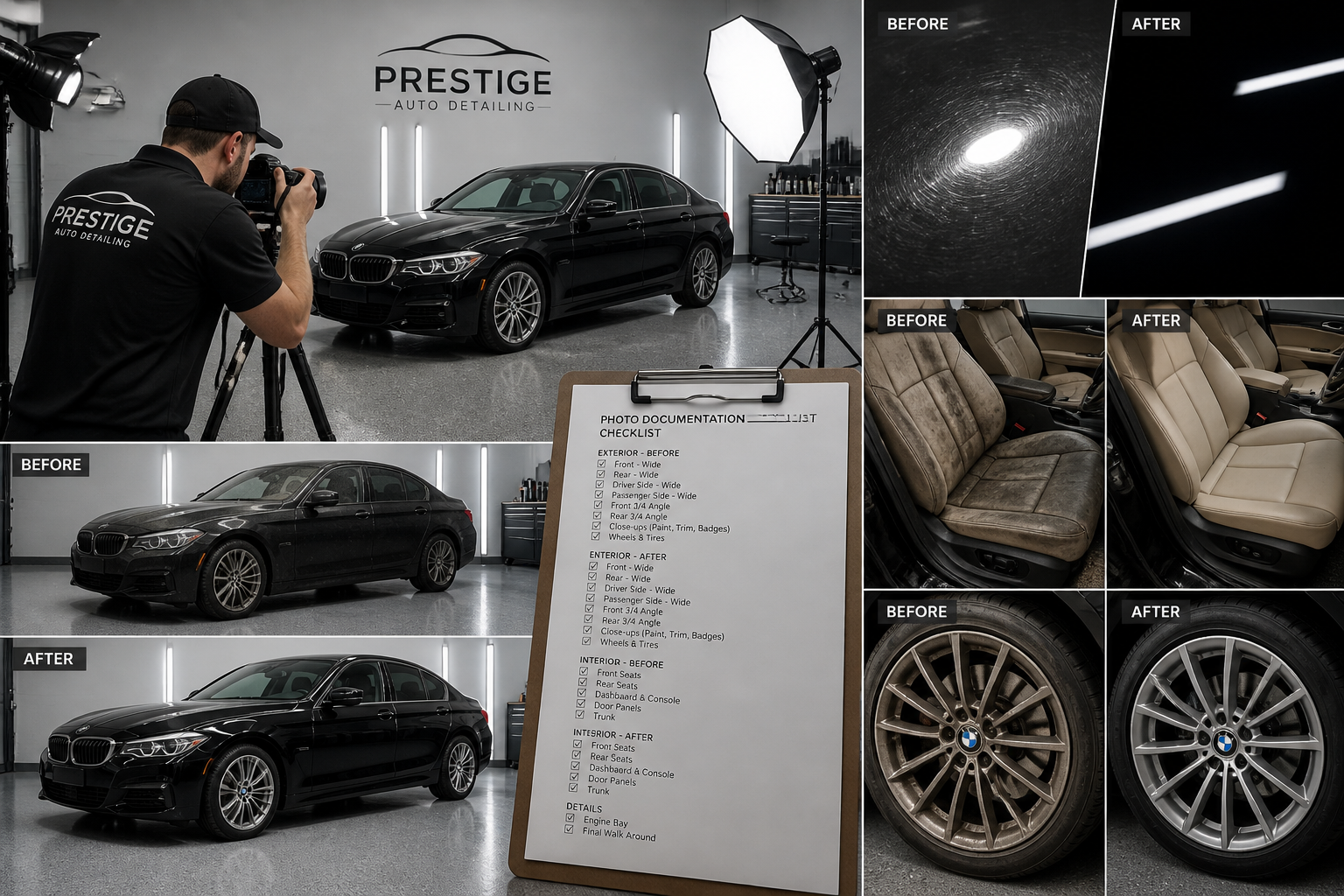
Systematic photo documentation requires consistent technique and attention to detail. Before-and-after photos help sell detailing most effectively when they accurately represent the transformation while highlighting your professional capabilities.
Essential photo capture steps:
- Document initial condition: Capture all problem areas in consistent lighting.
- Use identical angles: Match camera position and distance for accurate comparison.
- Maintain consistent lighting: Natural daylight or professional LED panels work best.
- Focus on dramatic improvements: Prioritize areas with the most visible transformation.
- Include detail shots: Close-ups of specific corrections alongside wide shots.
- Photograph the process: Work-in-progress shots build credibility.
Technical requirements:
- Minimum 1080p resolution for social media sharing.
- Consistent white balance across all photos.
- Sharp focus on key areas of improvement.
- Clean background without distractions.
Choose professional lighting equipment if you detail indoors or work in varying conditions. Consistent lighting ensures accurate color representation and dramatic contrast.
Where to Display Before-and-After Photos for Maximum Impact
Strategic photo placement maximizes the sales impact of your detailing transformations. Different platforms serve various stages of the customer journey from awareness to booking.
High-impact display locations:
- Website homepage: First impression for new visitors.
- Social media feeds: Ongoing engagement and sharing potential.
- Google Business listing: Local search visibility and credibility.
- Email marketing: Nurturing leads with proof of results.
- In-person consultations: Mobile portfolio for immediate reference.
- Vehicle signage: QR codes linking to photo galleries.
Platform-specific strategies:
- Instagram: Focus on visually striking transformations with trending hashtags.
- Facebook: Include customer testimonials with photo evidence.
- Website: Create dedicated galleries organized by service type.
- Google: Regular photo updates improve local search ranking.
Avoid oversaturating any single platform with similar content. Vary your photo selection and posting schedule to maintain audience interest.
Common Mistakes That Reduce Before-and-After Photo Effectiveness
Even dramatic transformations can fail to generate sales when photos are poorly executed or inappropriately presented. Understanding these pitfalls helps maximize the marketing value of your documentation efforts.
Critical mistakes to avoid:
- Inconsistent lighting between the before and after shots.
- Different angles that make comparison difficult.
- Over-editing that creates unrealistic expectations.
- Poor timing of the before photos after partial cleaning.
- Missing context without showing the full vehicle.
- Low-resolution images that appear unprofessional online.
Presentation errors:
- Posting photos without service descriptions or pricing context.
- Using competitor vehicles or stock photos instead of actual work.
- Failing to highlight specific problems that were addressed.
- Overwhelming viewers with too many similar transformations.
Recovery strategy: If existing photos don’t meet quality standards, prioritize capturing new documentation with proper technique rather than continuing to use subpar images that may damage credibility.
Summary
Before-and-after photos help sell detailing services by providing undeniable visual proof of transformation that builds trust, justifies pricing, and creates emotional connections with potential customers.
These powerful marketing tools demonstrate expertise more effectively than any written description while serving as social proof that drives referrals and repeat business.
FAQ
How many before-and-after photos should I take per vehicle?
Take 15-25 photos covering exterior, interior, engine bay, and detail shots. Select the 5-8 most dramatic transformations for marketing use while keeping comprehensive documentation for your records.
What’s the best time of day to photograph detailing results?
Mid-morning to early afternoon provides consistent natural lighting. Avoid direct sunlight that creates harsh shadows or late-day lighting that changes color temperature between before and after shots.
Should I include customer vehicles that didn’t photograph well?
Focus on your best transformations for marketing purposes. Not every job will produce dramatic visual results, and that’s acceptable. Build your portfolio with the most impressive examples.
How often should I post before-and-after photos on social media?
Post 2-3 times per week with varied content. Mix before-and-after transformations with process shots, tips, and customer testimonials to avoid repetitive content.
Can I use before-and-after photos in paid advertising?
Yes, these images often perform better than stock photos in ads. Ensure you have customer permission for commercial use and comply with platform advertising policies.
What if the transformation isn’t dramatic enough for good photos?
Focus on specific improvements like paint clarity, interior cleanliness, or functional restoration (headlights, trim). Even subtle improvements can be compelling with proper photography technique.
Should I watermark my before-and-after photos?
Use subtle watermarks to prevent unauthorized use while maintaining visual appeal. Place logos in corners where they don’t interfere with the transformation showcase.
How do I handle customer privacy concerns with photos?
Always request permission before photographing customer vehicles. Offer to blur or avoid license plates and personal items. Some customers prefer anonymous documentation.
What equipment do I need for professional-quality photos?
A smartphone with good camera quality suffices for most needs. Consider investing in portable LED lighting panels and a tripod for consistency if you frequently work indoors.
How long should I keep before-and-after photos?
Maintain photos for at least two years for business records and customer reference. Archive older images while keeping your best transformations for ongoing marketing use.
Can before-and-after photos help with insurance claims or disputes?
Yes, thorough documentation protects both you and customers by showing initial condition, work performed, and final results. This evidence proves valuable for any service-related questions.
Should I include pricing information with before-and-after photos?
Include service descriptions and general pricing ranges to qualify leads, but avoid specific prices that may become outdated. Direct interested customers to contact you for current quotes.
