

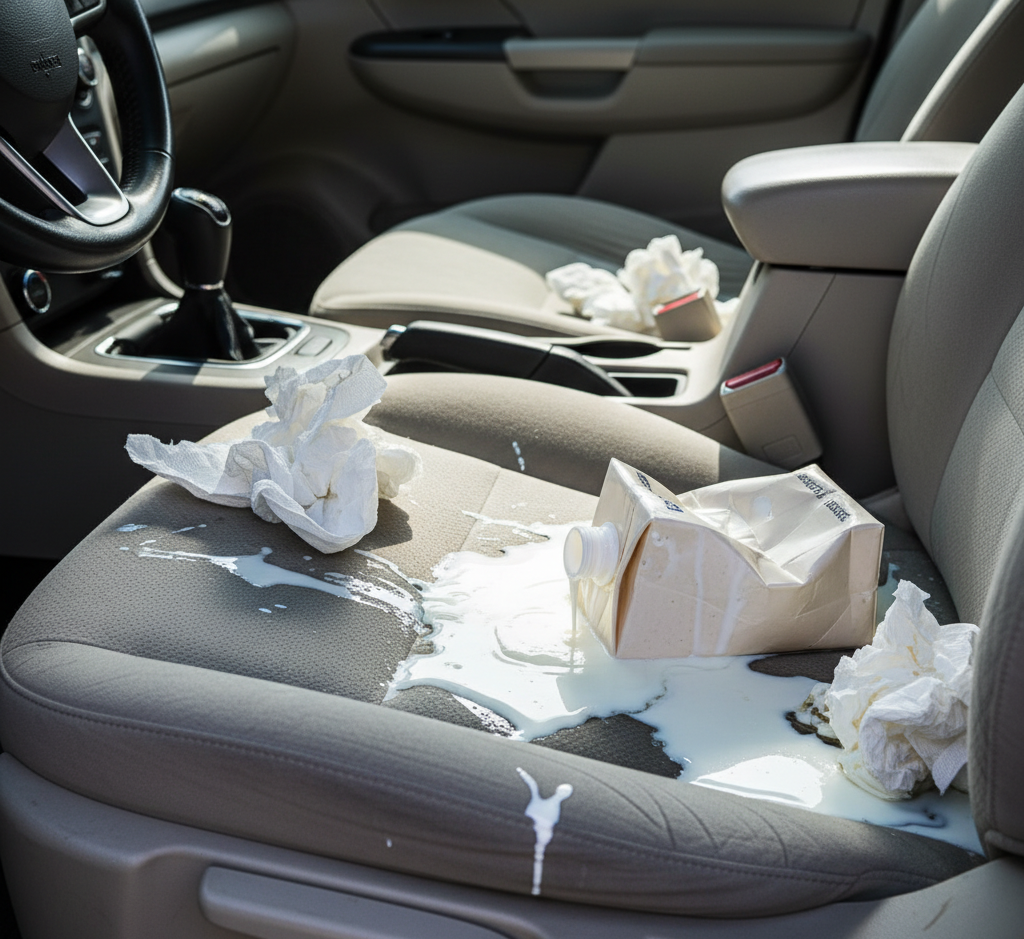
Spilled milk in a vehicle is more than a messy inconvenience. If left untreated, the organic proteins and fats in milk break down, leading to a persistent, sour odor that can make your commute unbearable.
To effectively remove milk smell from car upholstery, you must act quickly to eliminate the bacteria at the source. Surface cleaning is rarely enough; the liquid often seeps deep into seat cushions and carpet padding.
Why Spilled Milk Smells So Bad?
Understanding the cause of the odor helps in choosing the right cleaning method. Milk contains lactose, proteins, and fats. When these components interact with heat and moisture inside a car, they become a breeding ground for bacteria.
As the bacteria consume the milk solids, they release volatile organic compounds (VOCs). This process creates that signature “sour” or “spoiled” scent. Because cars are often sealed and exposed to sunlight, the interior temperature acts as an incubator, accelerating the decay.
According to cleaning experts at Consumer Reports, heat is the primary enemy of organic spills. If you live in a warm climate, a milk spill can become a permanent odor problem within 24 hours if not neutralized.
Immediate Steps After a Milk Spill
If the spill just happened, your first few minutes are critical. Your goal is to stop the liquid from reaching the foam padding beneath the fabric or leather.
Blot, Don’t Rub
Grab a clean microfiber cloth or a stack of paper towels. Press firmly onto the spill site to soak up as much liquid as possible.
Avoid rubbing the area. Rubbing pushes the milk deeper into the fibers and expands the “stink zone.” Continue blotting with fresh towels until no more moisture transfers to the cloth.
Use a Wet/Dry Vacuum
If you have access to a shop vac, use it immediately. A vacuum can pull liquid out from the deeper layers of the upholstery that manual blotting cannot reach. Use the narrowest attachment to focus the suction power on the center of the spill.
Assess the Damage
Check if the milk ran into the seat tracks, under the floor mats, or into the seatbelt buckles. Milk that hides in these crevices will rot out of sight, making the car smell even if the seats look clean.
Using Household Items to Neutralize Odors
You likely already have powerful cleaning agents in your kitchen. These methods are cost-effective and safe for most interior surfaces.
The White Vinegar Solution
White vinegar, an acetic acid, excels at breaking down milk proteins. It also acts as a natural disinfectant, killing the bacteria that cause the stench.
- Mix the Solution: Combine equal parts white vinegar and room-temperature water in a spray bottle.
- Apply Generously: Spray the affected area until it is damp but not soaked.
- Let it Sit: Allow the vinegar to sit for 15 to 20 minutes.
- Blot Dry: Use a fresh cloth to soak up the remaining liquid.
- Ventilate: Keep your car windows open to let the vinegar scent dissipate.
The Baking Soda Power Treatment
Baking soda is a base that neutralizes acidic odors. It is particularly effective for lingering smells that have already settled into the fabric.
- Dry Application: Sprinkle a thick layer of baking soda over the dried spill area. Use a soft brush to work it into the fibers lightly.
- The Wait Period: Leave the powder for at least 24 hours. For severe cases, 48 hours is better.
- Vacuum: Use a high-powered vacuum to remove the powder.
Coffee Grounds as an Absorbent
Dry coffee grounds are excellent at absorbing ambient odors. While they won’t clean the spill, they can help pull the sour scent out of the air. Place a bowl of dry grounds in the car overnight to act as a natural deodorizer.
How to Remove Milk Smell From Car Upholstery with Enzyme Cleaners?
When DIY methods fail, enzymatic cleaners are the gold standard. These products contain specific bacteria and enzymes that “eat” organic matter, such as milk, urine, and sweat.
Why Enzymes Work?
Standard soaps only clean the surface. Enzymatic cleaners stay active as long as there is “food” (milk) and moisture present. They follow the path of the spill, traveling deep into the foam to eliminate the source of the smell.
Step-by-Step Enzyme Application
- Choose the Right Product: Look for a cleaner labeled for “pet stains” or “organic odors.” Brands like Nature’s Miracle are widely trusted.
- Saturation is Key: You must apply enough cleaner to reach every spot where the milk went. If a cup of milk is soaked in, you need a cup of cleaner to rinse it out.
- Cover with Plastic: To keep enzymes active longer, cover the damp area with plastic wrap. This prevents the cleaner from evaporating too quickly.
- Air Dry Slowly: Once the odor is gone, remove the plastic and let the seat air dry naturally.
Cleaning Different Upholstery Types
The material of your car interior dictates which tools you should use. Using the wrong method can ruin your seats.
Fabric and Carpet
Fabric is the most difficult to clean because it is porous.
- Use a soft-bristled brush to agitate cleaning solutions.
- Avoid over-saturating the foam, as trapped water can lead to mold.
- Always use a fan to speed up drying after cleaning.
Leather and Vinyl
Leather is less porous but can be damaged by harsh acids.
- Avoid using undiluted vinegar on leather.
- Use a dedicated leather cleaner and conditioner after the odor is removed to prevent cracking.
- Pay close attention to the stitching, as milk often hides in the seams.
Perforated Leather
Many modern cars have ventilated seats with tiny holes. If milk enters these holes, it is nearly impossible to reach manually. In this case, an enzymatic spray is your only option, as it will seep into the holes just like the milk did.
Deep Cleaning with Steam
If the milk smell persists after several treatments, you may need a steam cleaner. Steam uses high-temperature water vapor to loosen dried milk solids and kill bacteria instantly.
Benefits of Steam Cleaning
- Heat Disinfection: The steam at this temperature kills most bacteria on contact.
- Deep Penetration: The pressure forces moisture into the padding and sucks it back out.
- No Chemicals: This is a great option for people with sensitivities to strong cleaning fragrances.
You can rent a professional upholstery cleaner from most hardware stores or hire a mobile detailer. Ensure the machine has an extraction feature to pull the dirty water back out of the seat.
Addressing Hidden Milk Spills
Sometimes the smell remains even though the seat is spotless. This usually means the milk has traveled to an inaccessible area.
Under the Carpet
Milk often runs off the seat and under the floor carpeting. You may need to remove the plastic trim pieces (sill plates) to peel back the carpet, clean the metal floor pan, and clean the heavy insulation underneath.
Seatbelt Webbing
Check your seatbelts. If a child were holding a bottle, the milk might be on the belt itself. Pull the belt all the way out, soak it in a bucket of warm water with mild soap, and let it dry completely before retracting.
The Cabin Air Filter
If you have been driving with a sour smell for a long time, the odor molecules may have settled into your cabin air filter. Replacing this filter is a cheap and easy way to freshen the air inside the vehicle.
When to Call a Professional Detailer?
If you have tried the steps above and the smell returns on a hot day, it is time for professional intervention.
Professional detailers use ozone generators. An ozone generator (O3) creates a gas that permeates every inch of the car, including the headliner and air vents. It oxidizes the odor molecules, permanently removing them.
Note: Ozone is hazardous to breathe. This process must be done by a professional who can safely vent the vehicle afterward.
Prevention Tips for Future Spills
The best way to manage milk smells is to prevent them from happening.
- Use Spill-Proof Containers: Only allow bottles with secure lids in the car.
- Apply Fabric Protector: Products like Scotchgard create a hydrophobic barrier on fabric, giving you more time to blot up a spill before it sinks in.
- Seat Covers: If you have young children, waterproof seat covers can save your upholstery from permanent damage.
- Keep Supplies Handy: Keep a small kit of microfiber cloths and a bottle of water in your trunk for emergencies.
Conclusion
Learning how to remove milk smell from car upholstery requires patience and the right tools. By focusing on the bacteria and the deep-seated proteins, you can restore your car’s interior to its original state.
Start with the simplest DIY methods like vinegar and baking soda. If the smell persists, don’t hesitate to use an enzymatic cleaner or a steam extractor. The longer you wait, the harder it is for the proteins to break down. Act today to keep your driving environment fresh and hygienic.
