

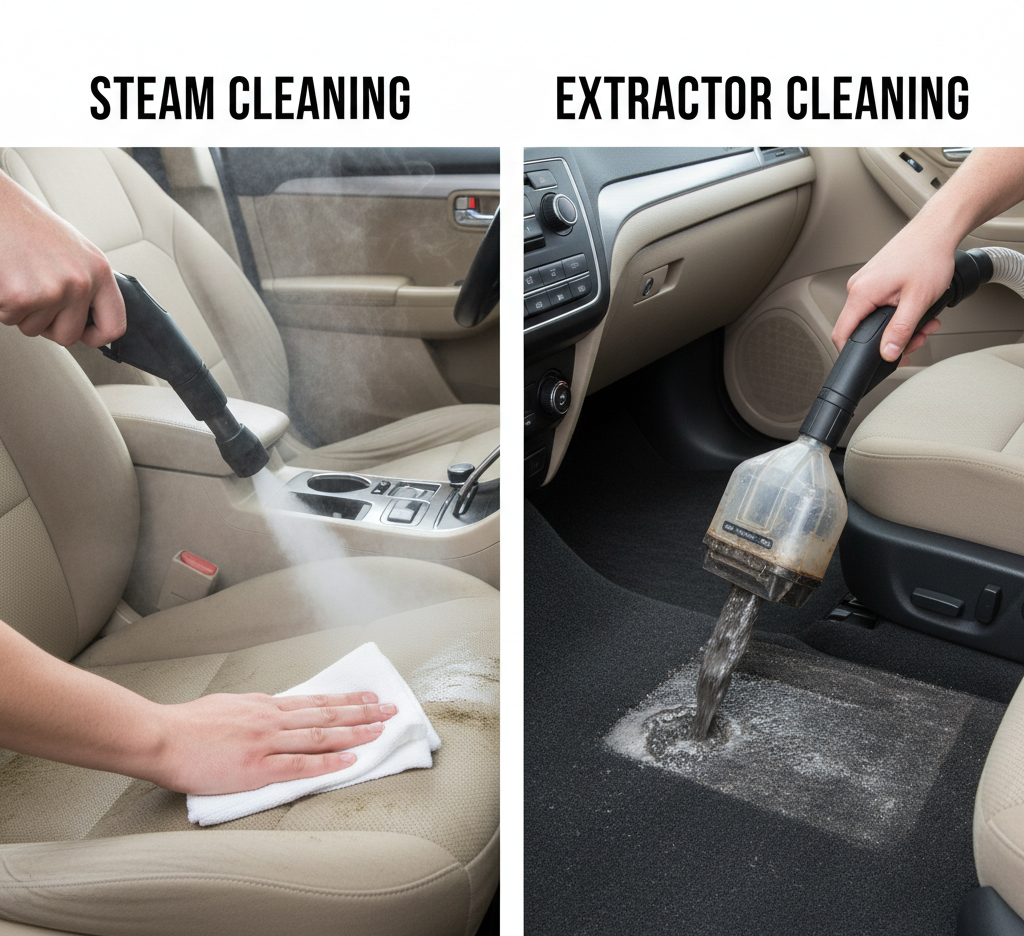
Choosing between steam cleaning vs extractor cleaning for car interiors depends entirely on the specific type of dirt you need to remove. Both tools offer professional-grade results, but they tackle messes in completely different ways.
Steam cleaners use high-temperature vapor to sanitize surfaces, melt grime, and neutralize odors without soaking your vehicle’s fabric. Extractor machines use hot water and chemical solutions to wash the upholstery and physically vacuum out deep-set liquid stains.
If you deal with light surface dirt, sticky residues, or need to disinfect the cabin, a steam machine is the right choice. If you need to pull out deep mud stains, spilled coffee, or heavy soil from carpets, an extractor is the better option.
What is the Difference Between Steam Cleaning and Extractor Cleaning?
To get straight to the point, here is exactly how these two auto detailing methods differ:
- Mechanism: Steam machines boil water to create a pressurized, high-heat vapor. Extractors inject liquid cleaning solutions into the fabric and immediately vacuum them back up.
- Moisture Levels: Steam is a low-moisture cleaning method. Extractors soak the material and require active water recovery.
- Primary Application: Steam excels at killing germs, cleaning hard plastics, and breaking down surface oils. Extractors excel at removing embedded solids and liquids from carpet fibers.
- Drying Time: Steamed seats dry in minutes. Extracted seats can take several hours to fully dry.
Understanding Auto Detailing Steam Cleaners
Steam cleaners are versatile tools that heat water to temperatures exceeding 200°F (93°C). The machine pushes this dry vapor through a nozzle at high pressure.
Because the vapor contains very little liquid water, it is extremely safe for modern vehicles loaded with electronic sensors under the seats.
How Steam Cleaning Works
The heat from the vapor breaks the chemical bonds of dirt, grease, and sticky residues. Once the dirt melts, you wipe it away with a clean microfiber towel.
The extreme temperatures also sanitize the interior. According to the Environmental Protection Agency (EPA), high-heat steam is one of the most effective ways to eliminate dust mites, bacteria, and allergens from indoor environments.
Pros and Cons of Steam Machines
Pros:
- Dries almost instantly, preventing mold growth.
- Reaches tight crevices, air vents, and seat tracks easily.
- Safe for leather, vinyl, and hard plastics.
- Requires zero harsh chemicals, making it eco-friendly.
Cons:
- Cannot pull thick, embedded stains out of plush carpets.
- Extreme heat can warp cheap plastics if held in one spot too long.
Best Uses for Steam in Cars
Steam is the ultimate tool for detailing the dashboard, steering wheel, and cup holders. It effortlessly blows out the dust and sticky soda spills hiding in the center console.
It is also the preferred method for cleaning perforated leather seats. Liquid can get trapped inside the tiny cooling holes of modern leather seats, making extractors dangerous to use. Steam cleans the leather surface without flooding the internal ventilation fans.
Understanding Hot Water Extractors (Carpet Shampooers)
A hot water extractor, often called a carpet shampooer, is a heavy-duty wet vacuum system. Professional detailers rely on these machines to rescue heavily soiled vehicles.
These units feature two separate tanks: one for clean water and cleaning chemicals, and one for dirty recovery water.
How Extractor Cleaning Works?
The user pulls a trigger on the upholstery wand, spraying a pressurized stream of hot cleaning solution deep into the seat cushion or floor mat. The solution agitates the dirt trapped at the base of the fibers.
Simultaneously, a powerful vacuum nozzle positioned right behind the spray jet sucks the liquid, dirt, and chemical residue out of the fabric and deposits it into the recovery tank.
Pros and Cons of Carpet Extractors
Pros:
- Unmatched performance for removing severe, deep-set stains.
- Physically flushes out spilled liquids like milk, coffee, or bodily fluids.
- Leaves carpets looking brand new by lifting flattened fibers.
Cons:
- Leaves upholstery damp, requiring fans or heaters to fully dry.
- Risk of mildew odor if the operator uses too much water.
- Cannot be used on hard plastics, dashboards, or sensitive electronics.
Best Uses for Extractors in Cars
Extractors are strictly for porous, fabric materials. They are the ideal choice for cloth seats, fabric floor mats, and the main interior carpet.
If you buy a used car with mysterious stains or heavy pet odors trapped in the floorboards, an extractor is the only machine capable of physically removing the source of the problem. Expert automotive sources, such as Consumer Reports, often recommend deep extraction to restore neglected vehicle carpets.
Steam Cleaning vs Extractor Cleaning for Car Interiors
| Feature | Steam Cleaning | Extractor Cleaning |
|---|---|---|
| Best For | Surface dirt, hard plastics, leather, vents | Deep stains, spills, cloth seats, and floor carpets |
| Drying Time | 5 to 15 minutes | 4 to 12 hours |
| Stain Removal | Low to Medium | High |
| Sanitization | High (Thermal destruction of germs) | Medium (Relies on chemical disinfectants) |
| Risk of Mold | Extremely Low | High (If over-wetted) |
| Setup Time | Fast | Slow (Mixing chemicals, filling tanks) |
Deep Stain Removal
When comparing steam cleaning vs extractor cleaning for car interiors with heavy stains, the extractor wins easily. Steam will only push a deep liquid stain further down into the seat cushion.
An extractor physically pulls the contaminant out of the vehicle. You can actually watch the brown, dirty water traveling through the clear vacuum nozzle, giving you visual confirmation that the dirt is gone.
Odor Elimination
Both methods handle odors well, but they target different sources. Steam neutralizes odors trapped in the air circulation system. You can blow steam directly into the AC vents to kill the bacteria that cause a sour smell.
Extractors eliminate odors caused by rotting organic matter hidden in the seats. If spilled milk is souring inside the passenger seat cushion, an extractor will flush it out completely.
Equipment Cost and Maintenance
Consumer-grade steam machines are relatively inexpensive. You can purchase a highly capable canister steam cleaner for under $200. They require minimal maintenance, aside from occasionally descaling the boiler tank.
Hot water extractors are significantly more expensive. Entry-level spotting machines cost around $150, but professional heated extractors often exceed $1,000. They also require constant maintenance to keep the pumps, spray jets, and vacuum motors free of clogs.
Which Method is Best for Your Vehicle?
Your choice depends on your vehicle’s condition and the materials in your cabin.
When to Choose Steam?
- Your car has a leather or vinyl interior.
- You clean your vehicle regularly and only deal with light dust and body oils.
- You live in a cold or humid climate where wet seats will not air-dry quickly.
- You need to clean delicate areas, such as the infotainment screen borders, buttons, and switches.
When to Choose Extraction?
- Your car has a cloth interior and heavily soiled fabric carpets.
- You frequently transport pets, children, or messy outdoor equipment.
- You spilled a large beverage, which soaked deeply into the seat foam.
- You are restoring an older vehicle that has years of ground-in dirt.
Can You Use Both Methods Together?
Yes. Professional auto detailers almost always use both machines in tandem to achieve flawless results.
The process usually starts with a dry vacuum of the entire vehicle. Next, the detailer uses a steam machine to agitate and break down stubborn, dried stains on the cloth seats. The heat loosens the soil without adding excessive water.
Finally, the detailer uses a hot-water extractor to remove the loosened dirt from the fabric. This hybrid approach limits the amount of water needed, drastically reducing the total drying time while maximizing the cleaning power.
Final Thoughts
Maintaining a clean cabin protects your vehicle’s resale value and improves your daily driving experience. Ultimately, choosing between steam cleaning and extractor cleaning for car interiors comes down to assessing the mess at hand.
Use steam for quick sanitization of hard surfaces and leather. Rely on an extractor when you need to pull heavy soil and spilled liquids out of your carpets and cloth seats.
Frequently Asked Questions
Does steam cleaning damage car seats?
No, steam is very safe for most car seats. However, you must keep the nozzle moving. Holding a 200-degree steam nozzle in one spot on a leather seat for too long can strip the protective clear coat and permanently discolor the dye.
Will an extractor leave my car smelling like mildew?
It can, but only if used improperly. Mildew forms when thick seat foam is saturated with water and fails to dry quickly. To prevent this, make multiple “dry passes” with the extractor wand to vacuum up as much moisture as possible, and leave the car windows slightly open with a fan blowing inside until the car is completely dry.
Can I use a regular household carpet cleaner in my car?
You can, but they are often too bulky to maneuver inside a tight vehicle cabin. The wide floor nozzles do not fit the curved contours of automotive seats. Dedicated detailing extractors feature narrow hand wands designed specifically for automotive upholstery.
