

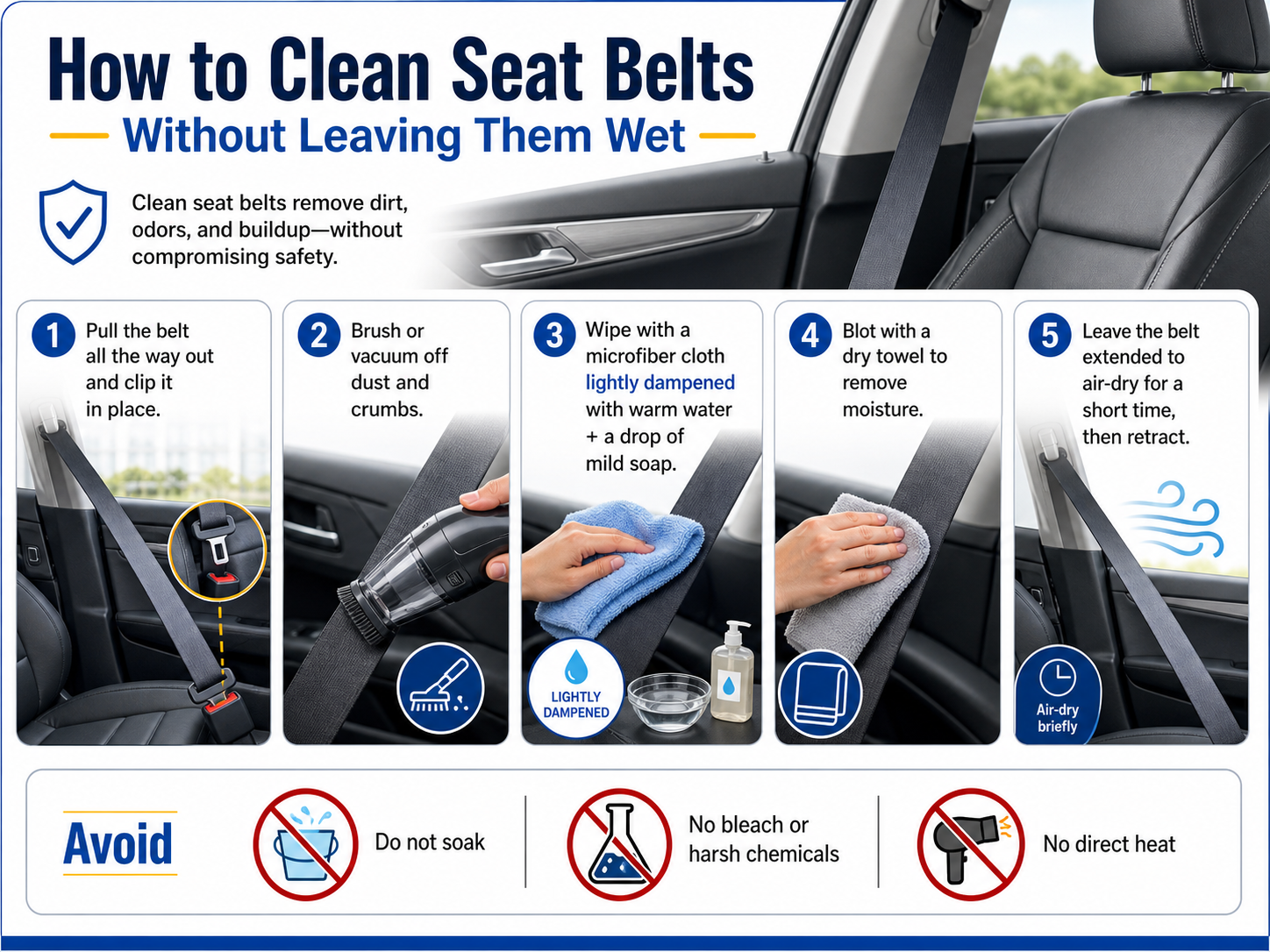
Learning how to clean seat belts without leaving them wet solves a frustrating car maintenance problem. Nobody wants a damp, uncomfortable strap resting against their fresh clothes during a morning commute. Trapped moisture inside your car also creates a breeding ground for nasty odors and mildew.
The secret to a dry finish requires ditching traditional liquid soaps. Instead, you must combine a specialized foaming interior cleanser with high-friction microfiber extraction.
This specific combination lifts grime from the polyester webbing without penetrating the core threads.
How to Clean Seat Belts Without Leaving Them Wet?
Search engines and readers love fast answers. If you need immediate results, follow this rapid low-moisture extraction process.
- Extract and secure: Pull the entire strap out from the retractor and clamp it at the top.
- Apply dry foam: Spray a light layer of foaming upholstery shampoo directly onto the fabric.
- Agitate the fibers: Scrub along the grain of the weave using a soft interior detailing brush.
- Wrap and pull: Squeeze a dry microfiber towel tightly around the strap and slide it downward.
- Force dry: Keep the strap extended and blast the vehicle’s heating system for ten minutes.
The Anatomy of Automotive Restraint Webbing
Understanding the material helps you choose the right approach. Modern vehicle restraints consist of densely woven polyester webbing. This material boasts incredible tensile strength, designed to save lives during impacts.
However, this tight weave pattern acts like a microscopic sponge. Dead skin cells, coffee spills, and daily sweat easily embed themselves between the synthetic threads. When you apply heavy liquid water to clean these contaminants, the liquid sinks deep into the inner weave.
This deep saturation causes the dreaded slow drying time. By the time the surface feels dry, the internal fibers remain damp. Our low-moisture technique specifically targets the surface layer to prevent this internal soaking entirely.
Essential Supplies for a Low-Moisture Wash
Gathering the correct tools prevents accidental soaking. You likely already own most of these items. Avoid swapping these specific tools for household alternatives.
- Heavy-duty binder clip: Prevents the strap from retracting back into the door pillar.
- Foaming fabric cleanser: Foam sits on the surface, whereas liquid sinks.
- Soft-bristled detail brush: Stiff brushes can fray and damage the life-saving material.
- Three clean microfiber towels: Essential for the friction-drying phase.
- Fabric protectant spray (optional): Repels future stains and spills.
Using the right chemical formulation protects the webbing’s integrity. For guidelines on chemical safety in vehicles, refer to the occupational health standards for automotive detailing.
Step-by-Step Low-Moisture Cleaning Process
Follow this exact sequence to guarantee a spotless, dry finish. Rushing the process often leads to over-saturation.
1. Isolate the Work Area
Start by removing the restraint entirely from the door pillar housing. Pull until you feel the tension stop at the very end of the spool. Place your heavy-duty binder clip right where the strap exits the plastic trim.
This prevents the wet fabric from rolling back inside the wall. If a damp strap retracts, the internal metal mechanism can rust. It also guarantees you access to every inch of the dirty material.
2. Apply the Foaming Agent
Shake your foaming upholstery cleaner vigorously. Hold the can about six inches away from the material. Spray a thin, even layer of foam down the length of the extended strap.
Never use a liquid degreaser or a heavy all-purpose cleaner. Liquid chemicals require heavy water rinsing, which defeats our primary goal. The foam will actively lift the dirt to the surface while keeping the core threads dry.
3. Agitate the Contaminants
Grab your soft-bristled brush. Scrub the foamy material using straight, linear motions. Follow the vertical lines woven into the fabric.
Never scrub in aggressive circles. Circular scrubbing damages the synthetic fibers, creating a fuzzy texture on the strap. This structural damage can compromise the belt’s safety rating under National Highway Traffic Safety Administration (NHTSA) guidelines on restraint wear and tear.
4. The Towel Wrap Extraction
This step dictates whether your strap remains wet or dries instantly. Fold your first clean microfiber towel into a thick square. Wrap this square tightly around the very top of the strap, gripping it in your fist.
Squeeze your hand firmly and pull straight down the entire length of the belt. The friction generates mild heat, while the microfiber aggressively absorbs the suspended foam and dirt. Repeat this downward-pulling motion three times, flipping to the dry side of the towel each time.
Advanced Drying Techniques for Immediate Use
Sometimes, you need to drive the car five minutes after detailing. If the microfiber extraction left a slight dampness, utilize these environmental tricks.
Utilize the Vehicle’s Climate Control
Start your engine and turn the interior heater to the maximum temperature. Direct the air conditioning vents toward the extended straps. Roll the windows down about 2 inches to let evaporating moisture escape the cabin.
Park in Direct Solar Heat
If the weather is sunny, reposition the vehicle. Park so the sun shines directly through the windshield or side glass onto the extended straps. The natural UV heat accelerates the evaporation of any residual surface moisture exponentially.
Tackling Specific Stubborn Stains
Generic dirt washes away easily. Specific spills require targeted chemical reactions. Here is how to handle the worst offenders without resorting to heavy water.
Removing Heavy Grease and Mechanical Oil
Mechanic’s grease creates ugly black smudges. Apply a tiny drop of citrus-based solvent directly onto a microfiber corner, not the belt. Dab the grease spot repeatedly until the oil transfers from the belt to your towel.
Eliminating Coffee and Soda Spills
Sugary drinks harden and make the webbing feel stiff. Lightly mist the hardened area with a mixture of equal parts white vinegar and warm water. Wait exactly 60 seconds, then scrub with your brush and immediately extract with your towel.
Neutralizing Sour Odors and Sweat
Sweat breeds bacteria, creating a lingering gym-bag smell in your cabin. Skip the masking air fresheners. Lightly spray an enzyme-based odor eliminator onto the fabric after your main cleaning, letting the enzymes consume the odor-causing bacteria as the fabric air-dries.
Critical Mistakes to Avoid
Ruining your vehicle’s safety equipment poses a severe risk. Avoid these common detailing blunders at all costs.
Never Use Bleach: Bleach chemically attacks polyester. It weakens the structural integrity of the weave, potentially causing the restraint to fail during a collision. Always stick to pH-balanced automotive interior products.
Never Pressure Wash: Some internet tutorials suggest closing the strap in the car door and pressure washing it outside. This forces gallons of water into the fibers. It will take days to dry and invites severe mold growth.
Never Use Ironing Heat: Do not attempt to dry the webbing with a clothing iron or a high-temperature heat gun. Synthetic polyester melts incredibly fast. Even slight melting completely compromises tensile strength.
Long-Term Maintenance and Stain Prevention
Prevention drastically reduces the need for deep washing. Implementing a minor maintenance routine keeps your interior looking flawless year-round.
Wipe down the belts once a month with a damp interior detailing wipe. This removes surface oils before they embed deeply into the woven texture. Taking thirty seconds a month prevents a thirty-minute scrubbing session later.
Consider applying a fabric guard. Once you’ve mastered cleaning seat belts without leaving them wet, spray a hydrophobic fabric protectant onto the dry material. This invisible barrier forces future spills to bead up and roll off rather than soaking in.
