

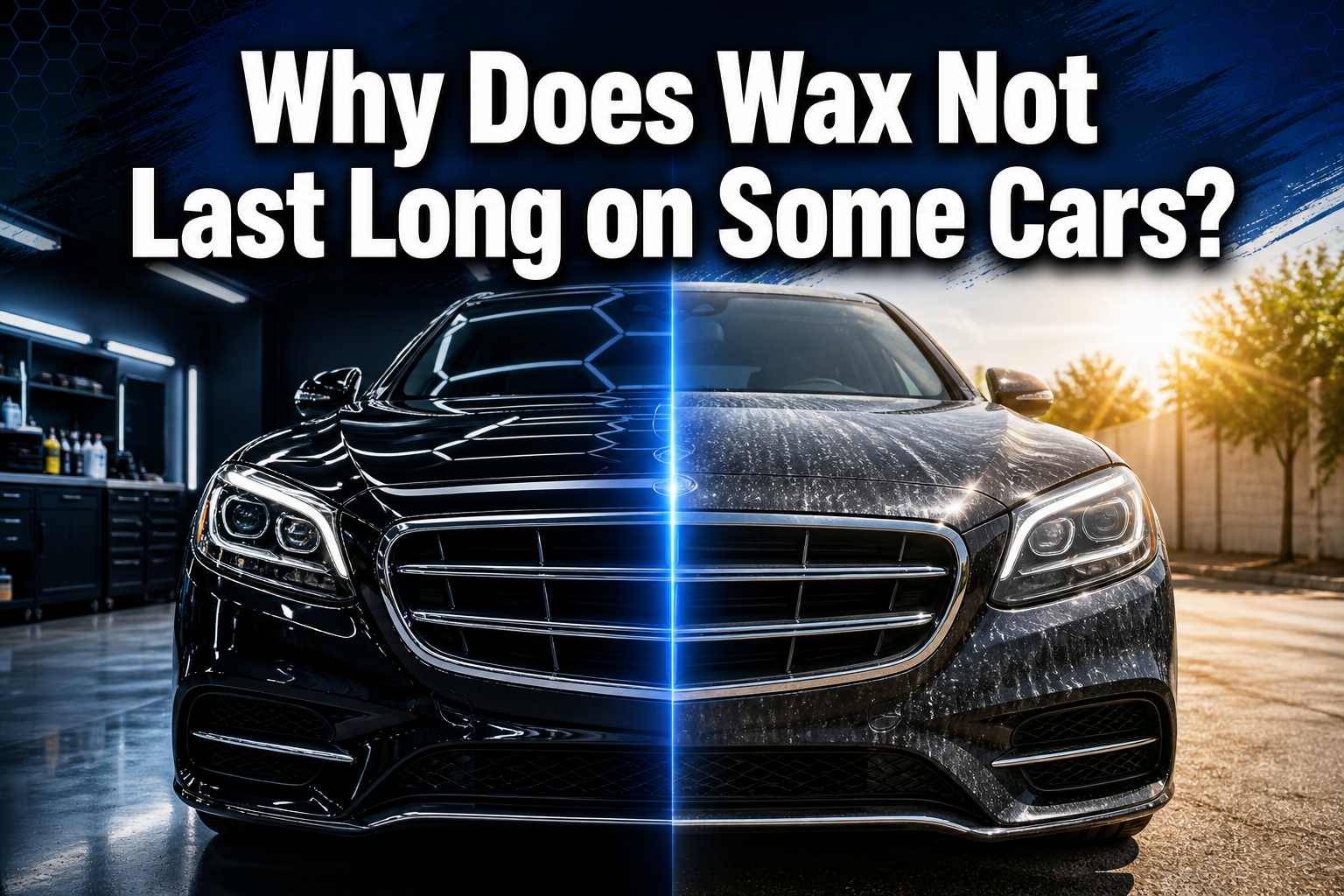
Car wax fails to last long due to improper surface preparation, contaminated paint, harsh environmental conditions, and the use of low-quality products. The most common reason wax does not last long is applying it over dirty or oxidized paint, which prevents proper bonding and causes premature failure within days or weeks instead of months.
Key Takeaways
- Surface contamination is the primary reason why wax doesn’t adhere properly and fails quickly.
- Environmental factors like extreme heat, UV exposure, and frequent rain can reduce wax life by 50-75%.
- Paint condition directly affects wax longevity – oxidized or damaged paint won’t hold wax effectively.
- Application technique matters more than product quality for durability.
- Proper preparation, including washing, decontamination, and polishing, extends wax life significantly.
- Product selection should match your climate and driving conditions.
- The maintenance schedule affects how long each wax application will last.
- Professional-grade products typically last 2-3 times longer than consumer alternatives.
What Causes Wax Not to Last Long on Car Paint?
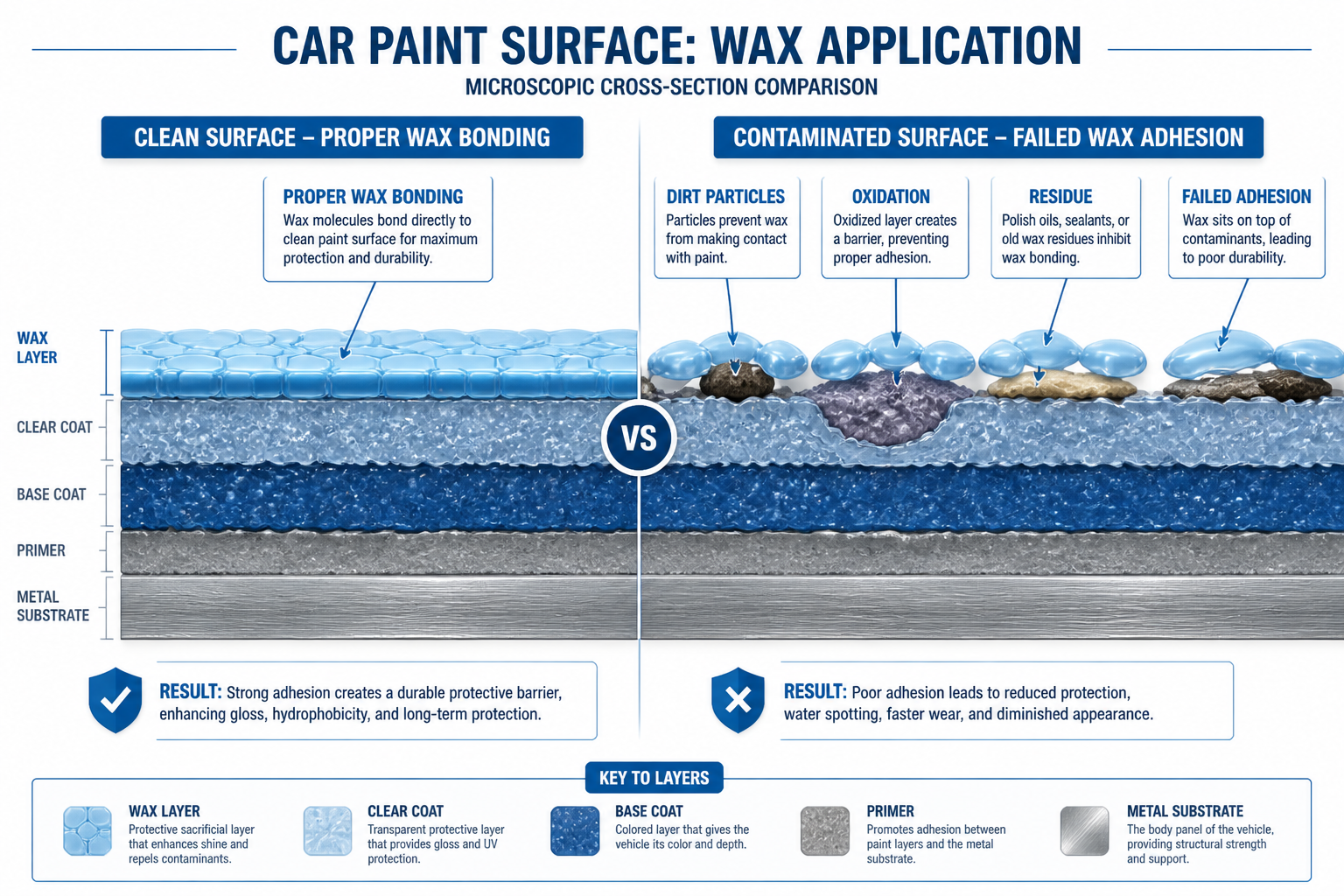
Several factors work together to reduce wax durability, with surface preparation being the most critical. Wax bonds chemically with clean paint surfaces, but contaminants create barriers that prevent this bonding process.
Primary causes of premature wax failure:
- Contaminated paint surface: dirt, oils, old wax residue, and oxidation.
- Improper washing technique: leaving soap residue or water spots.
- Skipping decontamination: iron particles and embedded contaminants.
- Poor application conditions: direct sunlight, extreme temperatures.
- Low-quality products: synthetic blends with poor bonding agents.
- Inadequate curing time: removing excess wax too quickly.
Decision rule: If your wax lasts less than 4-6 weeks under normal conditions, the issue is likely surface preparation rather than product quality.
Common mistake: Many car owners apply new wax over old, degraded wax layers, creating a weak foundation that fails quickly.
How Does Paint Condition Affect Why Wax Not Last Long?
Paint condition directly determines how well wax bonds to your vehicle’s surface. Healthy paint provides microscopic anchor points for wax molecules, while damaged paint creates an unstable foundation.
Paint conditions that reduce wax longevity:
- Oxidation: chalky, faded appearance prevents proper bonding.
- Clear coat damage: scratches and swirl marks create uneven surfaces.
- Contamination buildup: tar, tree sap, and industrial fallout.
- Previous product residue: silicones and polymers from other treatments.
- Water spot etching: mineral deposits that roughen the surface.
Assessment checklist:
- Run your hand across the paint after washing.
- Check for rough texture or embedded particles.
- Look for chalky residue when wiping with a clean cloth.
- Examine paint depth and clarity in direct sunlight.
Choose paint correction if: The surface feels rough, appears hazy, or shows visible oxidation. Wax applied over compromised paint typically lasts only 1-2 weeks.
What Environmental Factors Make Wax Not Last Long?
Environmental conditions dramatically impact wax durability, with some climates reducing protection life by up to 75%. Understanding your local conditions helps set realistic expectations and maintenance schedules.
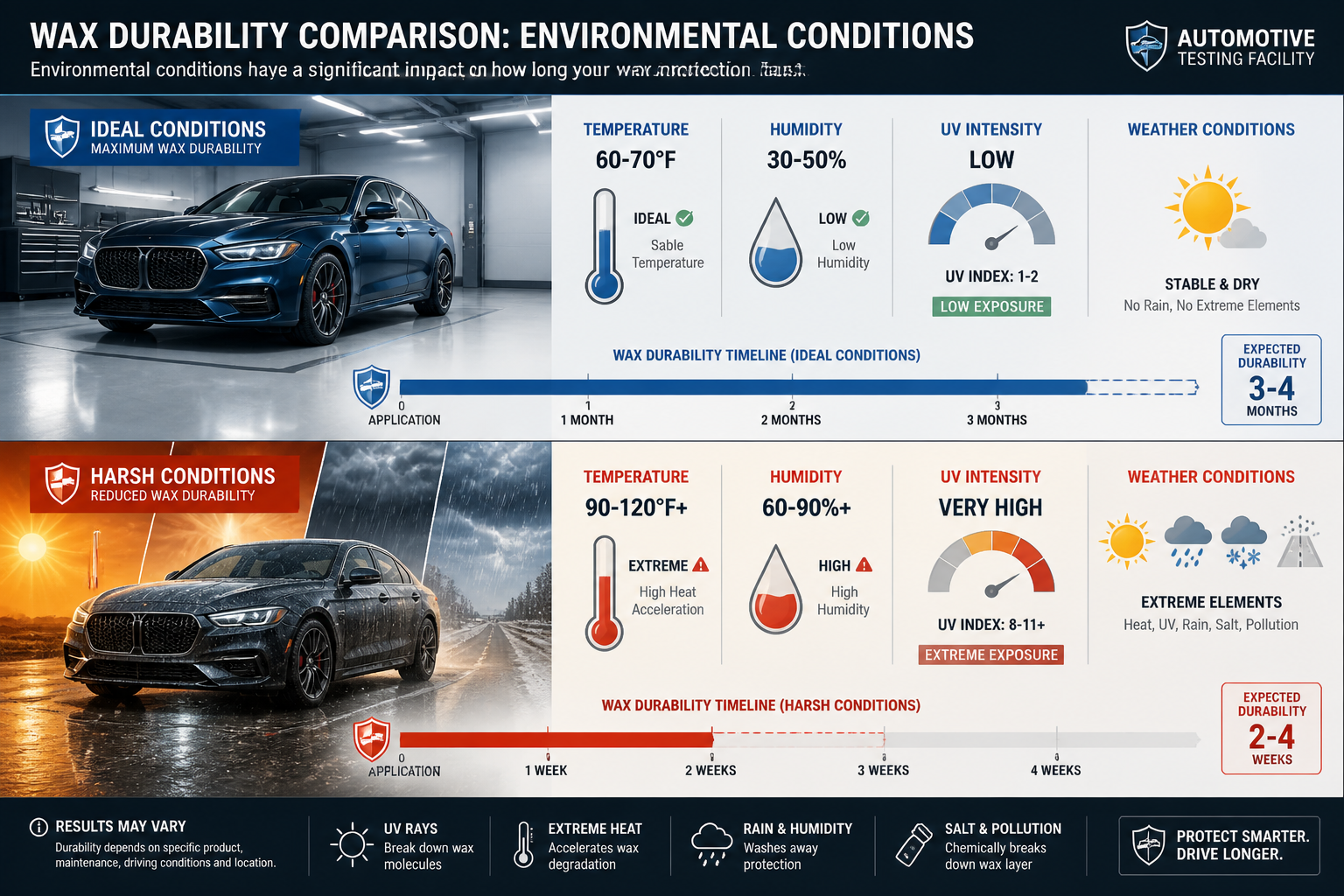
High-impact environmental factors:
| Condition | Effect on Wax Life | Typical Reduction |
|---|---|---|
| Extreme heat (90°F+) | Accelerated breakdown | 40-50% shorter |
| High UV exposure | Chemical degradation | 30-40% shorter |
| Frequent rain | Physical washing away | 25-35% shorter |
| Salt exposure | Corrosive breakdown | 50-60% shorter |
| Industrial pollution | Chemical contamination | 35-45% shorter |
| Garage storage | Protected conditions | 100-150% longer |
Climate-specific strategies:
- Hot, sunny regions: Use carnauba-based waxes with UV inhibitors, apply in shade.
- Coastal areas: Choose synthetic waxes with salt resistance, and increase frequency.
- Urban environments: Focus on pollution-resistant formulas with regular washing.
- Moderate climates: Standard wax products work well with 3-4 month intervals.
Edge case: Cars driven less than 5,000 miles annually in garage-kept conditions can maintain wax protection for 6-8 months regardless of climate.
Which Application Mistakes Cause Wax Not Last Long?
Proper application technique often matters more than product selection for achieving long-lasting results. Even premium waxes fail when applied incorrectly, while budget products can perform well with proper technique.
Critical application errors:
- Applying in direct sunlight: causes premature curing and poor bonding.
- Using dirty applicators: transfers contaminants to fresh wax.
- Working too large sections: wax dries before proper removal.
- Insufficient product removal: leaves residue that attracts dirt.
- Skipping cure time: doesn’t allow chemical bonding to complete.
- Over-application: thick layers that don’t bond properly.
Correct application process:
- Work in 2×2-foot sections in shade or cool conditions.
- Apply thin, even coats using clean microfiber or foam applicators.
- Allow 5-10 minutes curing time, depending on temperature.
- Remove with clean, dry microfiber cloths using straight-line motions.
- Inspect for streaks or residue before moving to the next section.
Pro tip: The “swipe test” – if you can’t easily swipe away the wax with your finger after curing, it’s ready for removal.
How Do Product Quality Issues Make Wax Not Last Long?
Product formulation significantly affects durability, with synthetic waxes generally outlasting natural carnauba in harsh conditions. However, application technique and surface preparation remain more important than product price.
Quality indicators for longer-lasting wax:
- Carnauba content: higher percentages (30%+) for natural products.
- Synthetic polymers: acrylic and polyethylene components for durability.
- UV inhibitors: chemical protection against sun damage.
- Bonding agents: siloxanes that improve paint adhesion.
- Solvent quality: affects application ease and curing properties.
Product selection guide:
- Daily drivers in harsh climates: Synthetic polymer waxes.
- Weekend/show cars: High-carnauba natural waxes for appearance.
- New vehicles: Paint-safe formulas without abrasives.
- Older vehicles: Products with mild cleaning agents.
Budget consideration: Mid-range products ($15-30) often provide 80% of premium performance at half the cost when applied properly.
What Maintenance Habits Prevent Wax Not Last Long Issues?
Regular maintenance extends wax life and maintains consistent protection. Proper care between applications prevents the buildup of contaminants that cause premature wax failure.
Essential maintenance practices:
- Weekly washing with pH-neutral car soap.
- Immediate contamination removal – bird droppings, tree sap, tar.
- Proper drying technique using clean chamois or microfiber.
- Avoid automatic car washes with harsh detergents and brushes.
- Monthly inspection for wax degradation signs.
- Touch-up applications on high-wear areas like horizontal surfaces.
Wax degradation warning signs:
- Water no longer beads on the surface.
- Paint feels rough or sticky after washing.
- Visible streaking or uneven appearance.
- Increased dirt and grime adhesion.
- Loss of depth and gloss in paint reflection.
Maintenance schedule example:
- Week 1-4: Regular washing and drying.
- Week 5-8: Add spray wax or detailer between washes.
- Week 9-12: Full inspection and reapplication as needed.
Conclusion
Understanding why wax doesn’t last long on some cars comes down to three key factors: surface preparation, environmental conditions, and application technique. The most common culprit is contaminated paint that prevents proper wax bonding, leading to failure within weeks instead of months.
Frequently Asked Questions
How long should car wax last under normal conditions?
Quality car wax should last 3-4 months under normal driving conditions with proper application and maintenance. Garage-kept vehicles may see 4-6 months of protection.
Can I apply new wax over old wax?
No, applying new wax over degraded old wax creates poor bonding and reduces durability. Always remove old wax completely through washing and decontamination before reapplication.
Does expensive wax always last longer?
Not necessarily. Application technique and surface preparation affect longevity more than price. Mid-range products often perform similarly to premium options when applied correctly.
Why does wax fail faster on horizontal surfaces?
Horizontal surfaces like hoods and roofs receive more direct UV exposure, heat buildup, and contamination from airborne particles, causing faster wax degradation.
Should I wax more frequently in winter?
Yes, salt and harsh weather conditions require more frequent applications, typically every 6-8 weeks instead of the usual 12-16 weeks during winter months.
Can I make cheap wax last longer?
Proper surface preparation, correct application technique, and regular maintenance can extend any wax’s life by 50-100% regardless of product cost.
What’s the difference between wax longevity on new vs. old cars?
New cars with healthy paint and clear coat typically hold wax 25-50% longer than older vehicles with oxidized or damaged paint surfaces.
Does clay bar treatment help wax last longer?
Yes, clay bar decontamination removes embedded particles that prevent proper wax bonding, often doubling the durability of subsequent wax applications.
How do I know when wax protection has failed?
Water will stop beading and start sheeting or sticking to the surface. The paint may also feel rough or look less glossy than when freshly waxed.
Can weather stripping affect wax durability?
Rubber and plastic trim can transfer oils and chemicals that contaminate nearby paint, reducing wax life in those areas. Use trim-specific products to prevent this issue.
