

To wash a black car without swirl marks, use the two-bucket method with grit guards, high-quality microfiber wash mitts, and work from top to bottom in straight lines rather than circular motions. Pre-rinse thoroughly, wash in shade, and dry with clean microfiber towels or a chamois to prevent water spots and scratches that show prominently on dark paint.
Key Takeaways
- The two-bucket system prevents dirt from contaminating clean wash water and scratching paint.
- Microfiber wash mitts are gentler than traditional sponges or towels on black paint.
- Straight-line washing motions minimize visible swirl marks compared to circular scrubbing.
- Pre-rinsing removes loose dirt that could otherwise scratch the paint surface during washing.
- Working in shade prevents soap from drying too quickly and leaving water spots.
- Quality car soap matters – pH-neutral formulas protect the clear coat on black vehicles.
- Proper drying technique using clean microfiber prevents final-stage scratching.
- Regular washing prevents buildup that requires aggressive scrubbing.
Why Black Cars Show Swirl Marks More Than Other Colors?
Black cars reveal every imperfection because dark paint provides maximum contrast against scratches and swirl marks. The clear coat on black vehicles reflects light differently than lighter colors, making even microscopic scratches visible under direct sunlight or bright garage lighting.
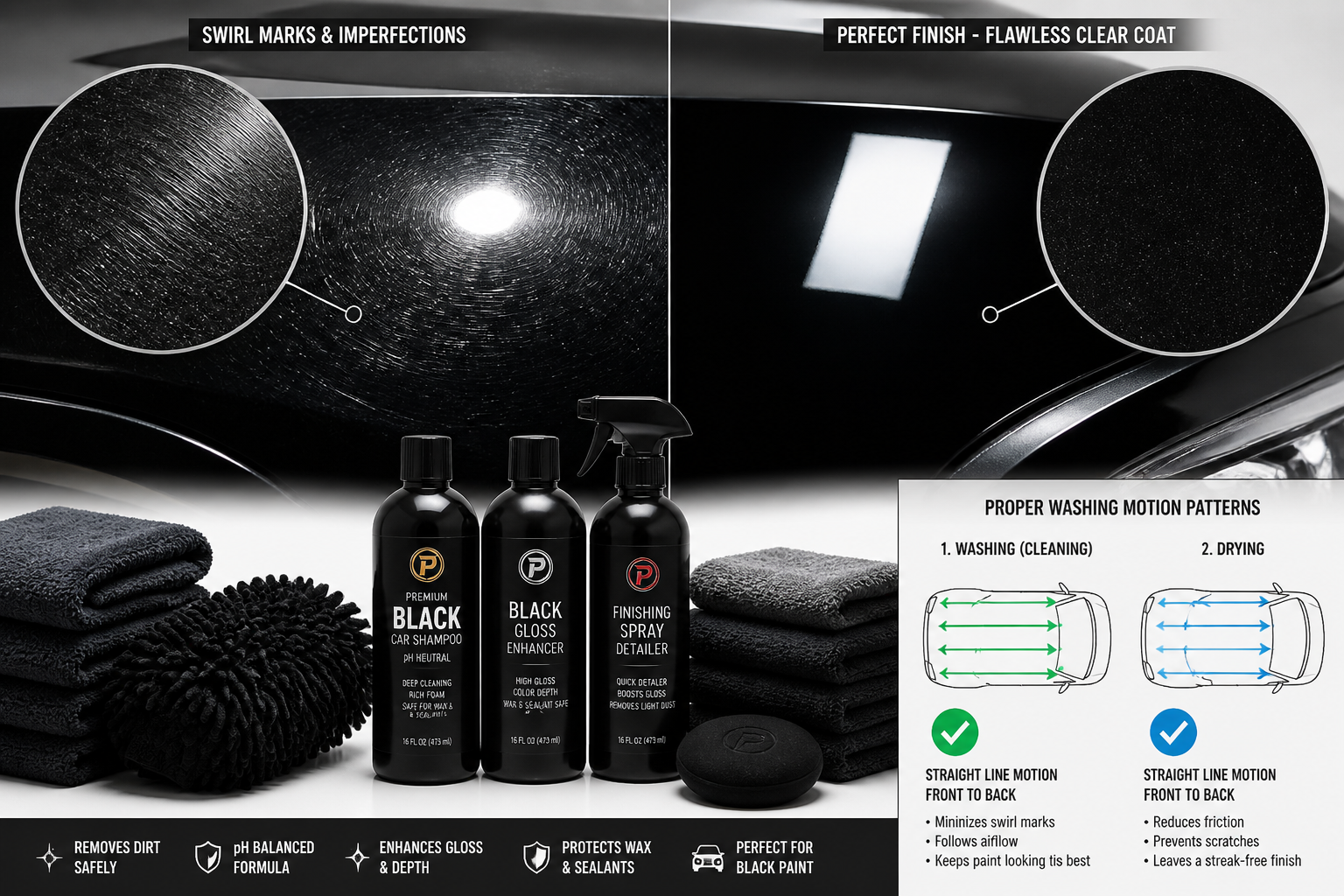
Swirl marks appear as fine circular scratches that create a spider web pattern across the paint surface.
These typically result from:
- Dirty wash tools that drag contaminants across the paint.
- Circular washing motions that create uniform scratch patterns.
- Automatic car washes with worn brushes or inadequate lubrication.
- Dry wiping without proper lubrication or clean materials.
Choose hand washing over automatic washes if you want to maintain a pristine black finish, as automated systems often use recycled water and abrasive brushes that guarantee swirl marks.
Essential Equipment to Wash a Black Car Without Swirl Marks
The right tools make the difference between a scratch-free finish and a swirl-marked disaster. Professional detailers rely on specific equipment designed for dark paint protection.
Required washing supplies:
- Two large buckets (5+ gallons each).
- Grit guards for both buckets.
- High-quality microfiber wash mitts (2-3 pieces).
- pH-neutral car shampoo formulated for dark colors.
- Microfiber drying towels or natural chamois.
- Soft-bristled wheel brush.
- Garden hose with adjustable nozzle.
Optional but recommended:
- Foam cannon or foam gun for pre-washing.
- Detail spray for final touch-ups.
- Separate bucket for wheel cleaning.
- Compressed air for drying crevices.
Avoid using household dish soap, which strips protective wax and can damage the clear coat. Similarly, skip old t-shirts or bath towels that may contain lint or rough fibers that scratch black paint.
Step-by-Step Method to Wash a Black Car Without Swirl Marks
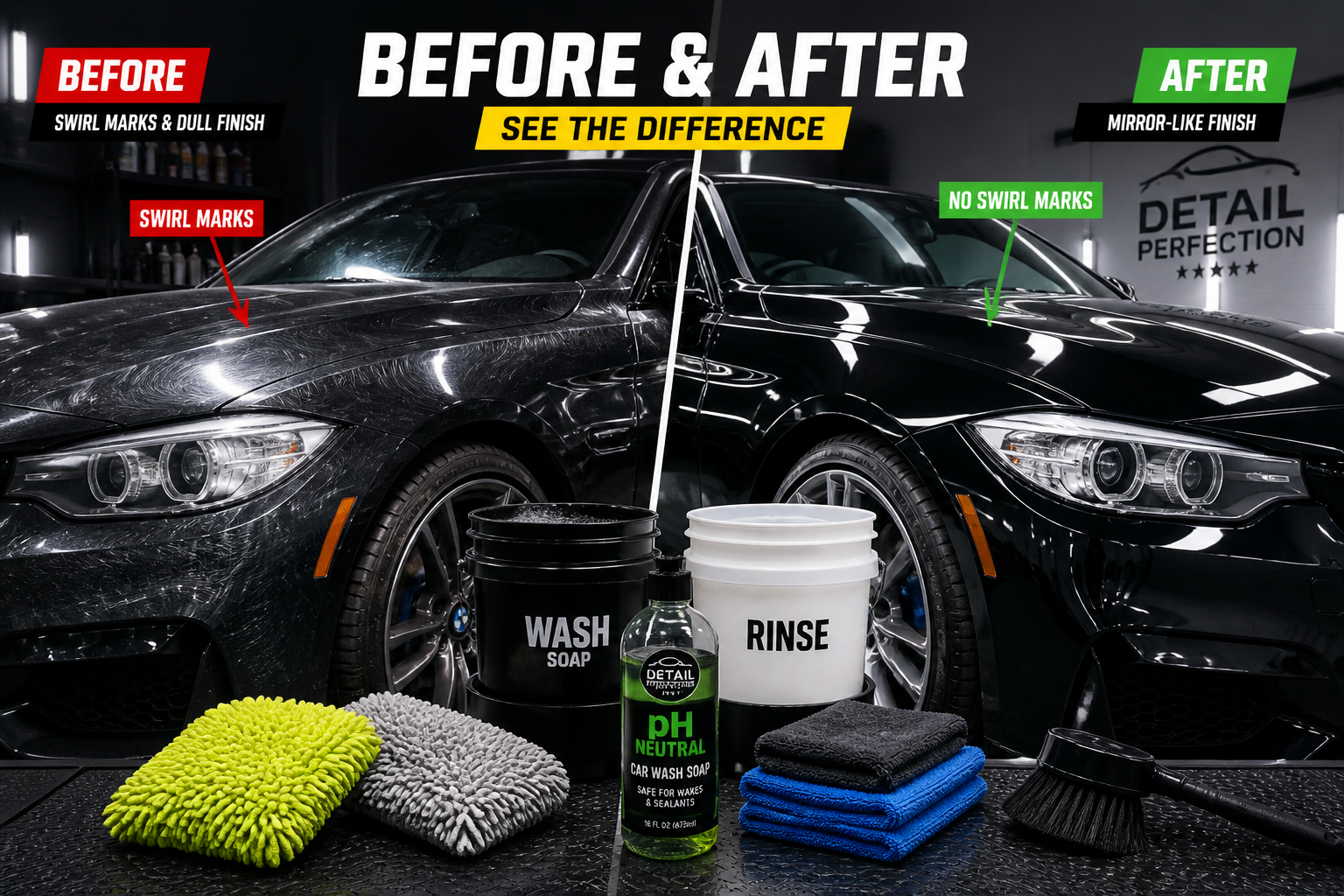
Step 1: Pre-rinse thoroughly
Spray the entire vehicle with water to remove loose dirt, salt, and debris. Pay extra attention to wheel wells, lower panels, and areas behind the bumpers where road grime accumulates.
Step 2: Set up the two-bucket system
Fill one bucket with clean rinse water and install a grit guard. Fill the second bucket with car shampoo mixed according to the manufacturer’s instructions, also with a grit guard. The grit guards trap dirt at the bottom, preventing contamination.
Step 3: Start with wheels and tires
Clean wheels first using a separate mitt or brush to avoid transferring brake dust to the paint. Rinse thoroughly before moving to the body panels.
Step 4: Wash from top to bottom
Begin with the roof and work downward in straight, overlapping lines. Rinse the mitt in the rinse bucket after each panel, then reload with soapy water. This prevents dirt accumulation on the washing tool.
Step 5: Rinse frequently
Don’t let soap dry on the surface. Rinse each section after washing, especially in warm weather or direct sunlight.
Step 6: Final rinse and dry
Remove all soap residue with a thorough rinse, then dry immediately using clean microfiber towels in straight motions, not circles.
Work in shade whenever possible, as hot surfaces cause soap to dry quickly and increase the risk of water spots on black paint.
Common Mistakes That Create Swirl Marks on Black Cars
Using dirty wash tools is the fastest way to scratch black paint. Even microscopic particles trapped in wash mitts act like sandpaper against the clear coat. Replace mitts when they become contaminated or show signs of wear.
Washing in direct sunlight causes soap to dry before rinsing, leaving mineral deposits and increasing friction during the washing process. Choose early morning, late evening, or overcast conditions for best results.
Circular scrubbing motions create the classic swirl pattern that’s highly visible on black surfaces. Always use straight, linear motions that follow the car’s body lines.
Skipping the pre-rinse means washing dirt directly into the paint rather than removing it first. This guarantees scratches, especially on lower panels where road debris accumulates.
Using one bucket allows dirt to contaminate the wash water, essentially spreading grime across the entire vehicle. The two-bucket method is non-negotiable for swirl-free results.
Avoid these mistakes and your black car will maintain its showroom appearance longer between professional detailing sessions.
Best Products for Washing Black Cars
Car shampoos designed for dark colors contain special polymers that enhance gloss and provide additional lubrication. Look for pH-neutral formulas that won’t strip existing wax or sealant protection.
Microfiber wash mitts with long, plush fibers safely lift dirt away from the paint surface. Choose mitts with at least 400 GSM (grams per square meter) density for optimal performance on black vehicles.
Distilled water eliminates mineral deposits that cause water spots on dark paint. If distilled water isn’t practical, consider a final rinse with filtered water in areas with hard water supplies.
Quality drying towels made from waffle-weave microfiber or natural chamois absorb water without dragging across the surface. Avoid terry cloth towels that can leave lint and create micro-scratches.
Replace wash mitts every 6-12 months, depending on usage frequency, as worn fibers lose their ability to safely clean without scratching.
How Often Should You Wash Your Black Car?
Black cars require washing every 1-2 weeks to prevent dirt buildup that necessitates aggressive scrubbing. Frequent, gentle cleaning maintains the finish better than infrequent deep cleaning sessions.
Wash immediately after:
- Driving in rain or snow (removes road salt and contaminants).
- Parking under trees (removes sap, pollen, and bird droppings).
- Highway driving (removes bug splatter and road film).
- Beach visits (removes salt air residue).
Environmental factors that increase washing frequency:
- Urban areas with high pollution.
- Dusty or construction zones.
- Areas with hard water that leave mineral deposits.
- Regions with frequent bird activity.
Regular maintenance washing takes less time and effort than correcting swirl marks through polishing or professional paint correction services.
Professional vs DIY Washing for Black Cars
DIY washing gives you complete control over technique and products, ensuring gentle treatment of black paint. The initial investment in quality tools pays for itself within a few months compared to professional services.
Professional detailing offers expertise and commercial-grade equipment but varies significantly in quality. Research local detailers and ask about their specific procedures for black vehicles before committing.
Mobile detailing services provide convenience but may lack the controlled environment needed for optimal results on black cars. Ensure they use clean water sources and fresh tools for each vehicle.
Choose professional services for paint correction, ceramic coating application, or when you lack the time or space for proper DIY washing. For routine maintenance, DIY washing often produces superior results at a lower cost.
Summary
Washing a black car without swirl marks requires the right technique, quality tools, and consistent attention to detail. The two-bucket method, microfiber wash mitts, and straight-line washing motions form the foundation of swirl-free maintenance. Pre-rinsing, working in shade, and proper drying techniques complete the process.
FAQ
Can I use automatic car washes on my black car?
Touchless automatic washes are acceptable occasionally, but avoid brush-type car washes that guarantee swirl marks on black paint. Hand washing always provides better results for dark vehicles.
What’s the best soap for black cars?
Use pH-neutral car shampoos specifically formulated for dark colors. These contain additional lubricants and gloss enhancers that protect black paint better than generic car soaps.
How do I remove existing swirl marks?
Light swirl marks may respond to polishing compound, but severe damage requires professional paint correction. Prevention through proper washing technique is more effective than correction.
Should I wax my black car after every wash?
Apply wax or sealant every 2-3 months, not after every wash. Over-waxing can build up residue that actually attracts dirt and makes future cleaning more difficult.
Can I wash my black car in the sun?
Avoid direct sunlight when possible. If you must wash in sunny conditions, work quickly in small sections and rinse frequently to prevent soap from drying on the surface.
What causes water spots on black cars?
Mineral deposits in water create white spots that are highly visible on black paint. Use distilled water for final rinses or dry the car immediately after washing to prevent spotting.
How many wash mitts do I need?
Use at least two mitts – one for the upper panels and one for the lower, dirtier areas. Some detailers use separate mitts for each major panel to minimize cross-contamination.
Is it better to air-dry or towel-dry?
Towel drying with clean microfiber prevents water spots but requires proper technique. Air drying works in low-mineral water areas but may leave spots in regions with hard water.
Can I use a pressure washer on black paint?
Yes, but maintain at least 12 inches distance and use appropriate pressure settings. Pressure washers excel at pre-rinsing but shouldn’t replace proper hand washing for the main cleaning process.
What temperature water should I use?
Lukewarm water works best – hot water can damage wax, and cold water reduces soap effectiveness. Match the water temperature roughly to the ambient air temperature.
How do I clean black car wheels without scratching?
Use dedicated wheel cleaning products and separate tools from those used on paint. Microfiber or soft-bristled brushes work better than harsh scrubbers that can damage wheel finishes.
