

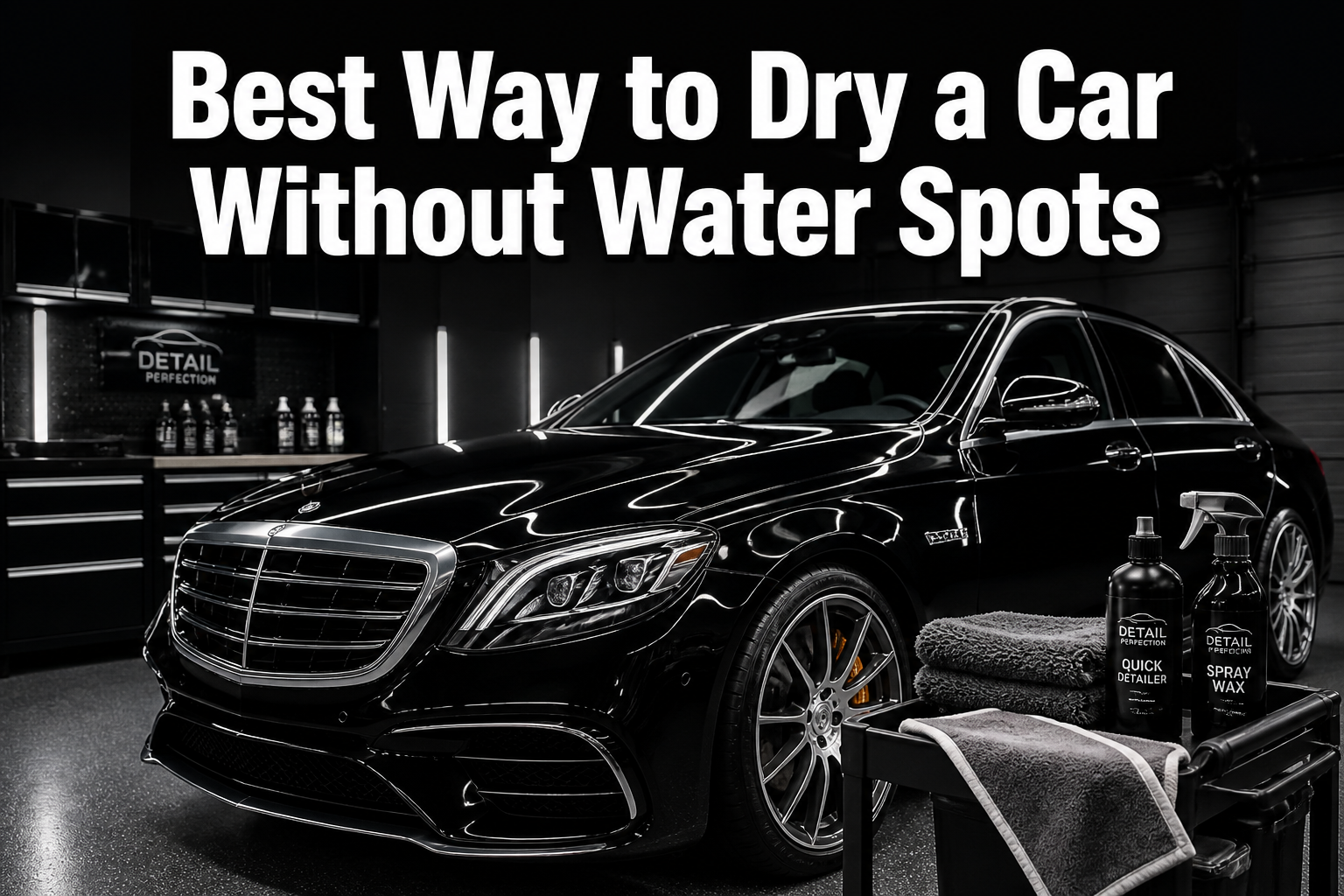
Water spots form on 85% of freshly washed cars when dried incorrectly, but using the right technique with quality microfiber towels and proper timing prevents them entirely. The key is removing water before it evaporates naturally, using a two-towel method with distilled water for final touches.
What Causes Water Spots on Cars?
Water spots occur when mineral-rich water evaporates on your car’s surface, leaving behind calcium, magnesium, and other dissolved minerals as white or cloudy marks. Hard water contains 7-10 grains per gallon of these minerals, making spot formation nearly inevitable without proper drying technique.
The three main types of water spots include:
- Type 1 (Mineral deposits): Surface-level spots that can be wiped away
- Type 2 (Bonded minerals): Spots that have bonded to the clear coat
- Type 3 (Etched spots): Permanent damage requiring professional correction
Choose immediate drying if your water has high mineral content, you’re washing in direct sunlight, or the ambient temperature exceeds 80°F. These conditions accelerate evaporation and increase spot formation risk.
How to Dry a Car Without Water Spots: The Two-Towel Method
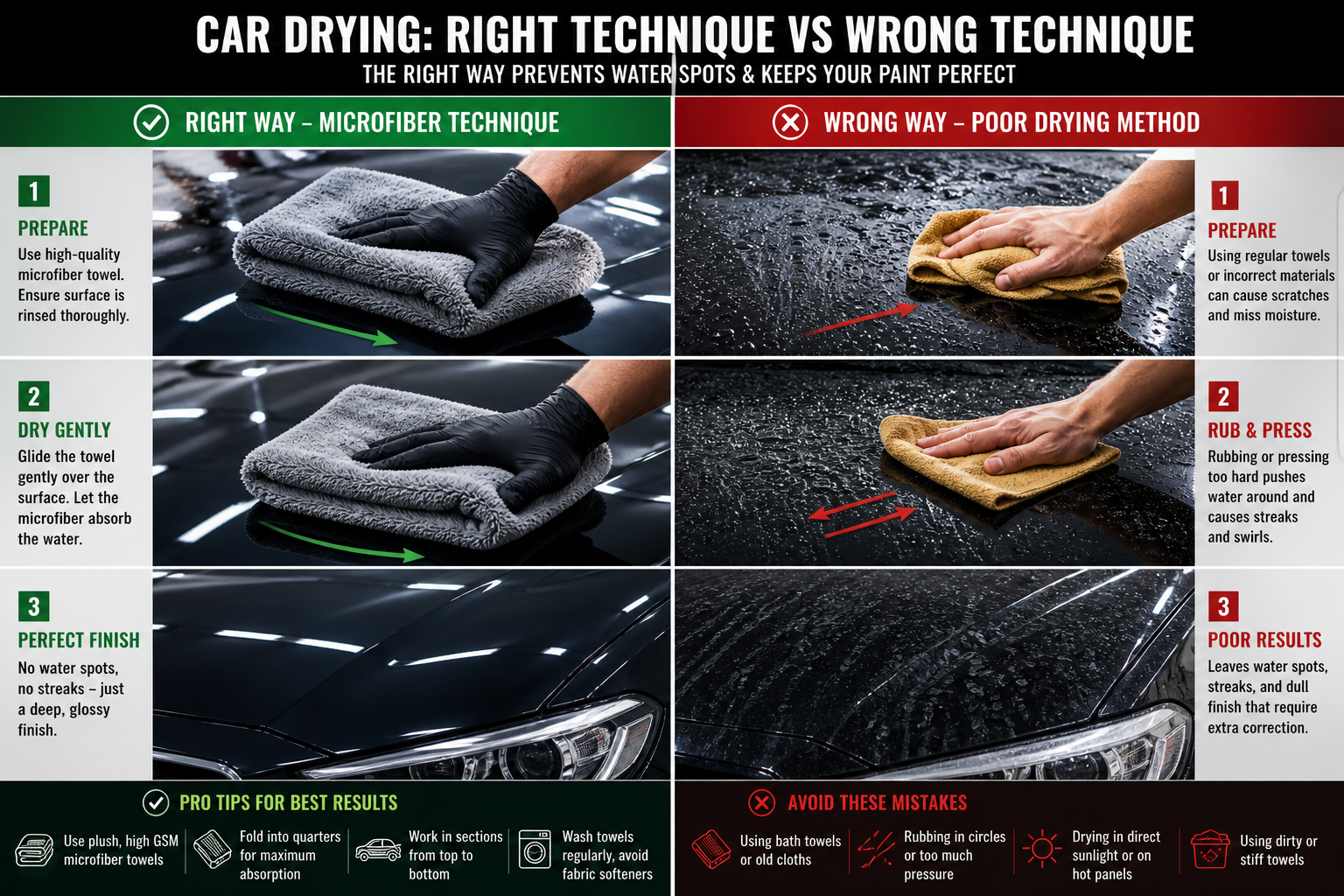
The most effective technique uses two high-quality microfiber towels with different purposes. Start with a 600+ GSM waffle-weave towel for initial water removal, followed by a 300 GSM flat-weave towel for final buffing.
Step-by-step process:
- Rinse with distilled water as the final step of washing.
- Work in shade and ensure the car surface is cool to the touch.
- Use the first towel to absorb 90% of standing water with gentle blotting motions.
- Apply quick detailer spray to lubricate the surface.
- Use the second towel for final drying with straight-line motions.
- Flip towels frequently to use clean sections.
Common mistake: Dragging a saturated towel across the paint creates micro-scratches and spreads minerals around rather than removing them.
Essential Tools and Products for Spot-Free Drying
Quality equipment makes the difference between a spotless finish and frustrating water marks. Professional detailers invest in specific tools that amateur car washers often overlook.
Required items:
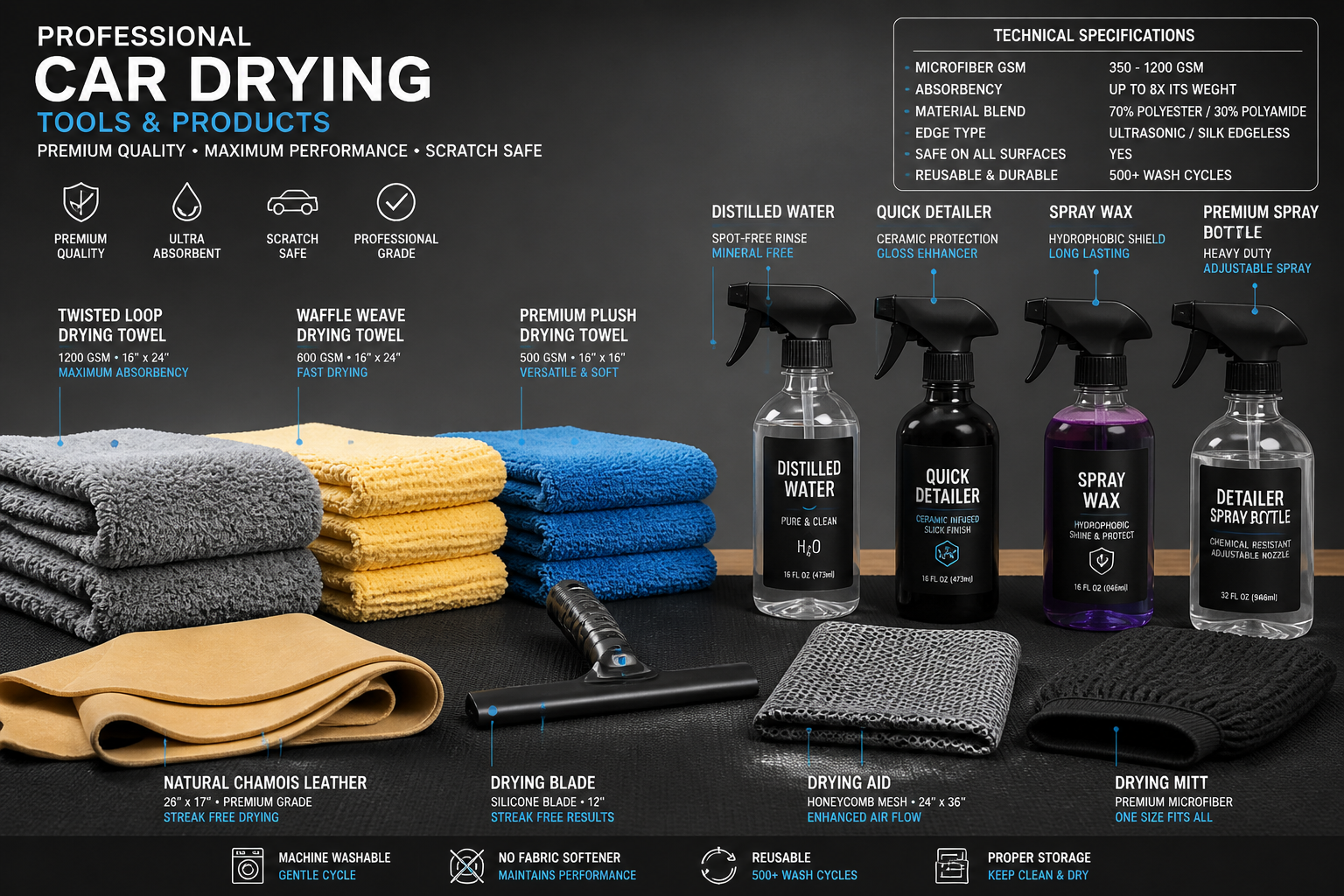
- Microfiber towels: Minimum 300 GSM, preferably 600+ GSM waffle-weave.
- Distilled water: For final rinse in hard water areas.
- Quick detailer spray: Provides lubrication and adds protection.
- Drying chamois (optional): Natural chamois for glass surfaces only.
- Compressed air (advanced): For removing water from crevices.
Choose synthetic chamois if you prefer traditional methods, but avoid using them on painted surfaces where microfiber performs better. Natural chamois works well for glass but requires proper maintenance to prevent bacterial growth.
Best Microfiber Towels for Drying Cars
Not all microfiber towels deliver the same results. The weave pattern, fiber density, and construction quality directly impact water absorption and scratch prevention.
Top specifications to look for:
- Weight: 600+ GSM for primary drying, 300-400 GSM for buffing.
- Weave: Waffle-weave for absorption, flat-weave for finishing.
- Fiber split: 80/20 polyester/polyamide blend.
- Edge type: Silk or satin edges to prevent scratching.
- Size: 16×24 inches minimum for efficient coverage.
Avoid towels with decorative borders, low GSM ratings under 200, or 100% polyester construction, which reduces absorbency by up to 40% compared to proper blends.
Timing and Environmental Factors
Environmental conditions control how quickly water evaporates and determine your available working time. Professional detailers plan their drying strategy based on weather conditions and surface temperature.
Optimal conditions:
- Temperature: Below 80°F ambient, cool surface to touch.
- Humidity: Above 40% relative humidity slows evaporation.
- Wind: Minimal air movement prevents accelerated drying.
- Shade: Complete shade or covered area is essential.
- Time of day: Early morning or late afternoon preferred.
Work faster when the temperature exceeds 85°F, the humidity drops below 30%, or you’re washing in partial sunlight. These conditions give you 2-3 minutes per panel before spot formation begins.
Advanced Techniques for Different Car Surfaces
Different materials require modified approaches to prevent damage while achieving spot-free results. Paint, glass, chrome, and plastic trim each respond better to specific techniques.
Surface-specific methods:
- Paint panels: Waffle-weave microfiber with straight-line motions.
- Glass: Flat-weave microfiber or quality chamois in circular motions.
- Chrome: Soft microfiber with quick detailer, immediate drying required.
- Black plastic trim: Damp microfiber only, no pressure applied.
- Convertible tops: Specialized fabric-safe products only.
Edge case: Matte paint finishes require extra care with minimal pressure and specific matte-safe quick detailers to avoid creating glossy spots in the finish.
Common Mistakes That Cause Water Spots
Even experienced car owners make errors that lead to water spotting despite good intentions. Understanding these mistakes helps you avoid repeating them.
Critical errors to avoid:
- Using dirty towels that spread contaminants across clean paint.
- Working in direct sunlight, which accelerates evaporation.
- Dragging saturated towels instead of lifting and repositioning.
- Skipping the distilled water rinse in hard water areas.
- Rushing the process without a proper sectional approach.
- Using household towels or paper products on paint.
Quick fix: If you notice spots forming during drying, immediately re-wet that section with distilled water and restart the drying process with a clean towel.
Conclusion
Drying your car without water spots requires the right combination of quality tools, proper technique, and favorable conditions. The two-towel method using premium microfiber towels, combined with distilled water rinsing and quick detailer application, virtually eliminates water spot formation when executed correctly.
Start by investing in quality 600+ GSM microfiber towels and work in shaded conditions whenever possible. Remember that timing matters more than speed – rushing the process often creates the problems you’re trying to avoid.
Frequently Asked Questions
Can I use a leaf blower to dry my car?
Yes, but only as a first step to remove standing water from crevices and panel gaps. You still need microfiber towels for final surface drying to prevent water spots.
How often should I replace microfiber drying towels?
Replace them every 6-12 months with regular use, or when they lose absorbency despite proper washing. Quality towels last 50-100 wash cycles.
Is chamois better than microfiber for drying?
Microfiber outperforms chamois for paint surfaces due to better absorption and lower scratch risk. Use chamois only on glass if you prefer the traditional method.
What’s the best quick detailer for drying?
Choose pH-neutral formulas with lubrication properties. Popular options include Chemical Guys Speed Wipe or Meguiar’s Ultimate Quik Detailer.
Can I dry my car with compressed air?
Compressed air works excellently for removing water from mirrors, door handles, and crevices, but you still need towels for painted surfaces.
Should I dry the wheels differently?
Yes, use separate towels for wheels to avoid transferring brake dust to paint. Wheel-specific microfiber towels prevent cross-contamination.
How do I remove existing water spots?
Light spots respond to white vinegar solution (1:1 with distilled water). Severe spots require polishing compound or professional correction.
Does car wax prevent water spots?
Quality wax and sealants reduce water spot adhesion by 60-70%, making removal easier, but proper drying technique remains essential.
Can I use a squeegee on my car?
Avoid squeegees on paint as they can trap particles and cause scratching. Use them only on glass surfaces with proper lubrication.
