

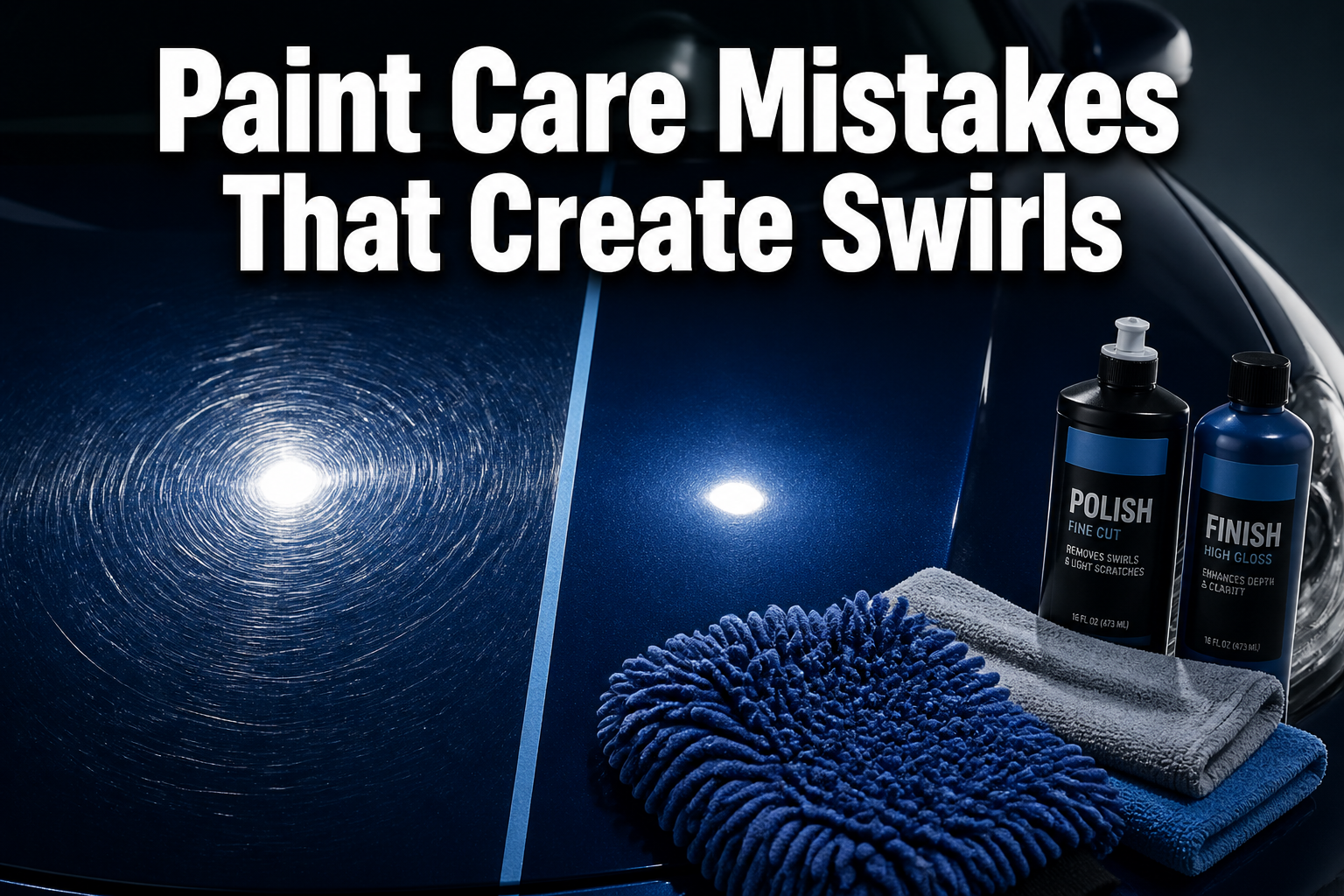
Paint care mistakes that create swirls include using dirty wash mitts, washing in direct sunlight, employing circular motions, and skipping proper drying techniques. These errors trap contaminants against paint surfaces and create microscopic scratches that appear as swirl marks under lighting.
Key Takeaways
- Contaminated wash tools are the leading cause of swirl marks during routine car care.
- Circular washing motions create spider web patterns of scratches across paint surfaces.
- Single-bucket washing allows dirt to recirculate and scratch paint repeatedly.
- Rough towels and chamois act like sandpaper on delicate, clear coat finishes.
- Washing in direct sunlight causes soap to dry too quickly and bond contaminants to paint.
- Skipping the clay bar treatment leaves embedded particles that scratch during washing.
- Automatic car washes with rotating brushes create thousands of micro-scratches.
- Using household cleaners strips protective wax and damages paint chemistry.
- Improper drying techniques drag water spots and minerals across paint surfaces.
What Washing Techniques Cause the Most Paint Care Mistakes?
The most damaging paint care mistakes occur during the washing process itself. Using a single bucket allows dirt and grit to accumulate in wash water, turning your mitt into an abrasive tool that scratches paint with every pass.
Critical washing errors include:
- Single-bucket method: Dirt stays suspended in the wash water and gets redistributed.
- Circular scrubbing motions: Creates characteristic spider web swirl patterns.
- Starting with the dirtiest areas: Loads wash mitt with maximum contamination first.
- Reusing dirty wash mitts: Trapped particles act like embedded sandpaper.
- Washing in direct sunlight: Soap dries before rinsing, bonding contaminants to paint.
Choose the two-bucket method if your car sees regular road use and you wash monthly or more. This technique uses one bucket for soapy water and another for rinsing the mitt clean between panel sections.
The most common mistake is assuming that soap alone provides enough lubrication to prevent scratching. In reality, microscopic particles become embedded in wash mitts within the first few swipes across painted surfaces.
Which Drying Methods Lead to Paint Care Mistakes?
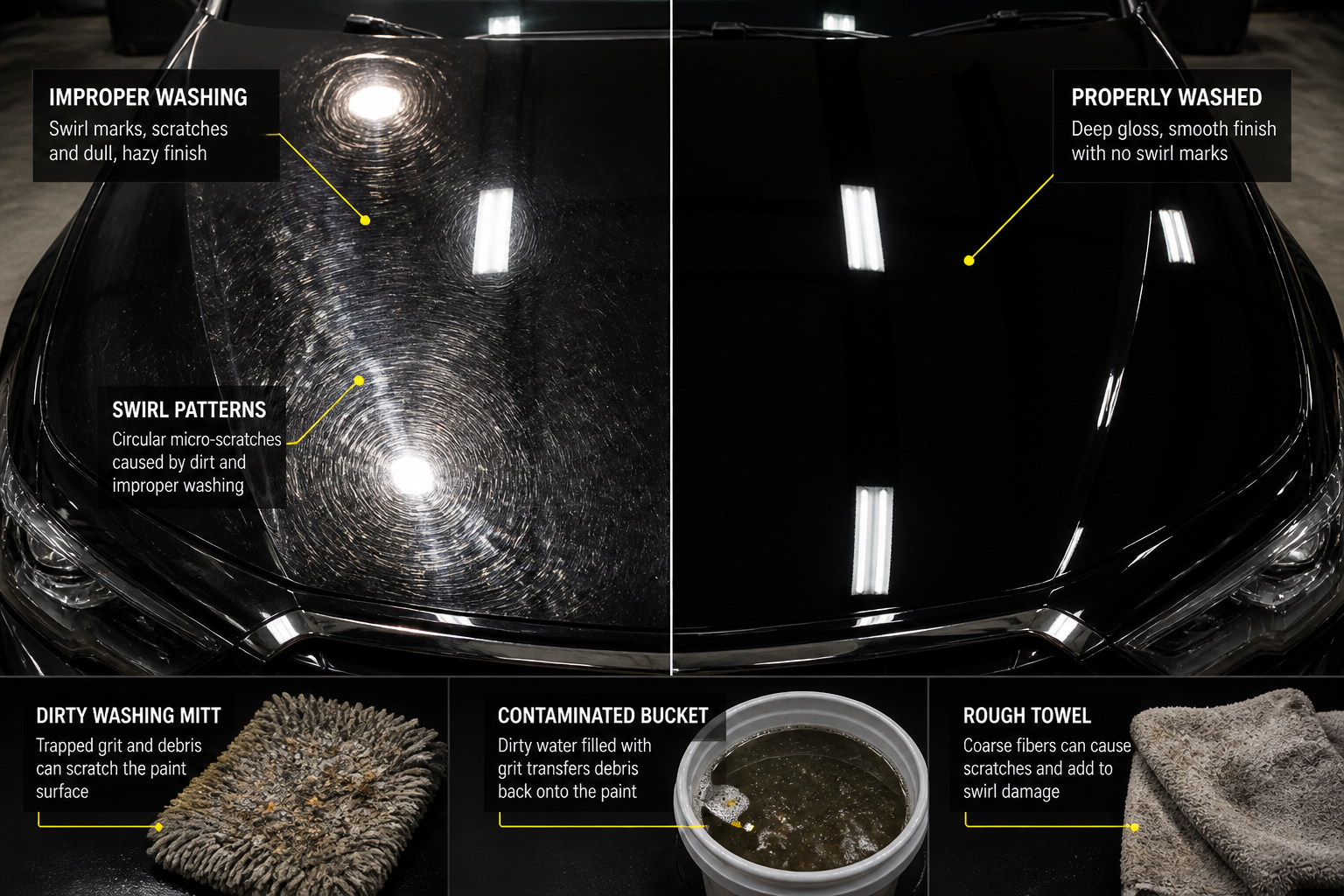
Improper drying creates more swirl marks than any other single step in car care. Dragging wet towels across paint surfaces pulls water spots, minerals, and remaining contaminants in straight lines across the clear coat.
Damaging drying practices:
- Dragging chamois or towels: Creates linear scratch patterns.
- Using terry cloth or old t-shirts: Rough fibers act as abrasives.
- Air-drying without intervention: Leaves mineral deposits that etch paint.
- Circular wiping motions: Compounds existing swirl damage.
- Reusing saturated towels: Spreads contamination across multiple panels.
Proper technique requires high-quality microfiber towels with at least 300 GSM density and a patting or blotting motion rather than dragging. Professional detailers use separate towels for different vehicle sections to prevent cross-contamination.
The key insight most car owners miss is that water itself becomes contaminated with minerals and particles during the washing process. Even “clean” rinse water can scratch paint if proper drying techniques aren’t followed.
How Do Automatic Car Washes Create Paint Care Mistakes?
Automatic car washes represent the highest-risk environment for paint damage due to contaminated brushes and aggressive mechanical action. These systems accumulate dirt and debris from hundreds of vehicles daily, turning cleaning equipment into paint-damaging tools.
Automatic wash damage factors:
- Rotating brushes collect grit from previous vehicles.
- Recycled water systems circulate contaminated rinse water.
- High-pressure contact forces particles deep into paint pores.
- Chemical concentrations often exceed safe levels for automotive paint.
- No pre-rinse inspection means heavy contamination gets ground in immediately.
Touchless systems cause fewer scratches but still present risks from high-pressure water forcing contaminants across paint surfaces and harsh chemical formulations that strip protective wax layers.
Professional detailers estimate that a single automatic car wash visit can create more swirl marks than six months of improper hand washing. The damage compounds because most drivers use automatic washes frequently without realizing the cumulative effect on paint quality.
What Products and Tools Cause Paint Care Mistakes?
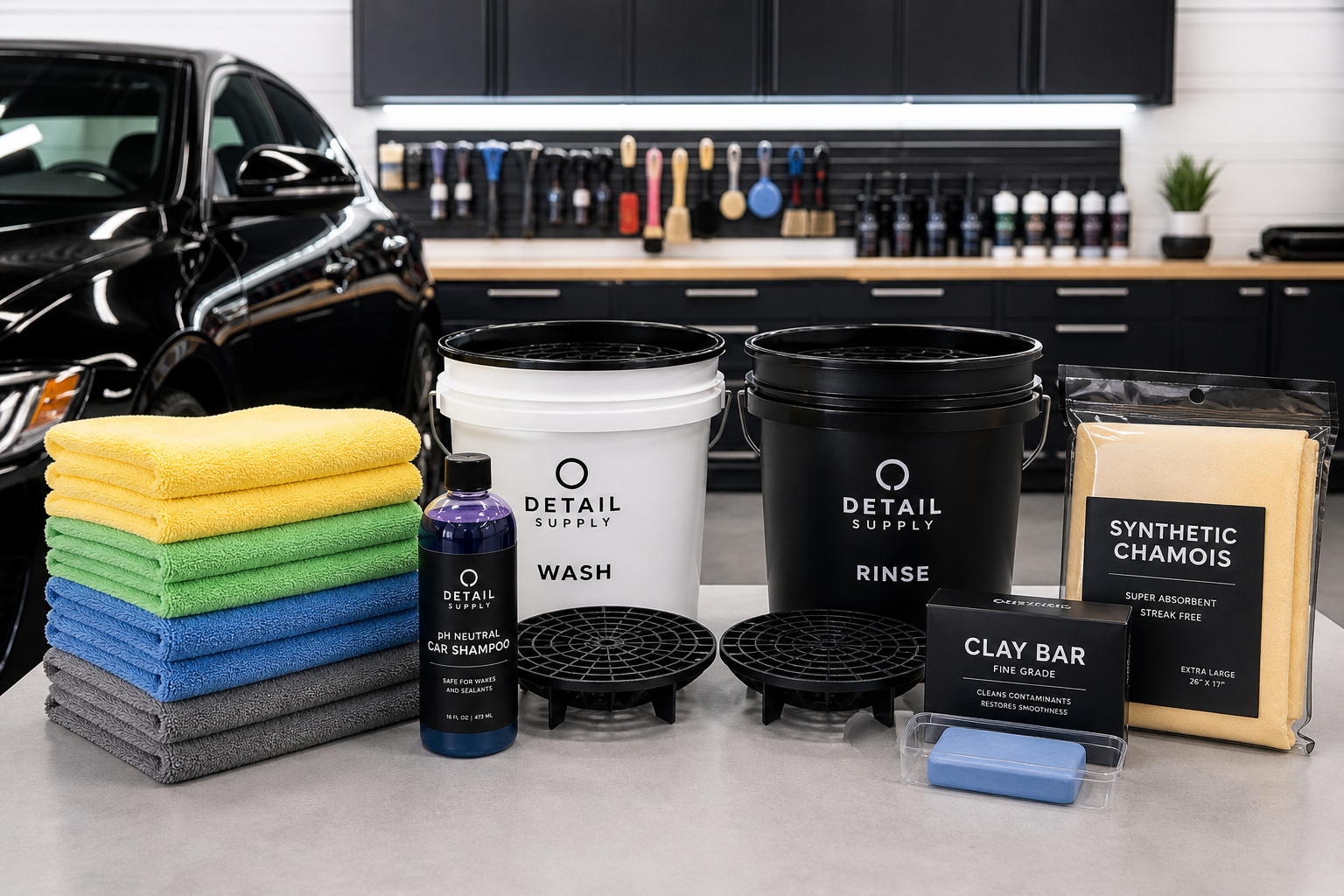
Using incorrect products transforms routine maintenance into paint-damaging activities. Household cleaners, rough towels, and contaminated tools create microscopic scratches that accumulate into visible swirl patterns over time.
Damaging products and tools:
| Product Type | Why It Damages Paint | Safe Alternative |
|---|---|---|
| Dish soap | Strips protective wax, too harsh | pH-neutral car shampoo |
| Terry cloth towels | Rough fibers scratch the clear coat | 300+ GSM microfiber |
| Natural chamois | Becomes abrasive when dirty | Synthetic chamois or microfiber |
| Household glass cleaner | Contains ammonia that damages the tint | Automotive glass cleaner |
| Paper towels | Wood fibers act like sandpaper | Waffle-weave microfiber |
Choose automotive-specific products if you wash your vehicle more than twice monthly or live in areas with hard water, road salt, or heavy pollution. Generic cleaners lack the pH balance and lubricity needed for safe paint contact.
The most expensive mistake involves using contaminated tools repeatedly. A $5 wash mitt can cause hundreds of dollars in paint correction costs if used improperly or not maintained between washing sessions.
When Do Environmental Factors Worsen Paint Care Mistakes?
Environmental conditions amplify the damage potential of improper paint care techniques. Hot surfaces, direct sunlight, and windy conditions create scenarios where even correct products can cause paint damage if timing and technique aren’t adjusted accordingly.
High-risk environmental conditions:
- Surface temperatures above 80°F: Soap dries too quickly, bonding contaminants.
- Direct sunlight exposure: Creates hot spots that accelerate chemical reactions.
- Windy conditions: Blow dust and debris onto wet paint surfaces.
- High humidity with pollution: Increases contamination adhesion to paint.
- Freezing temperatures: Make paint brittle and more susceptible to scratching.
Work in shade during cooler parts of the day when surface temperatures stay below 70°F, and wind speeds remain under 10 mph. Professional detailers often start work before sunrise or use portable shade structures to control environmental variables.
The critical factor most people ignore is paint surface temperature. Even correct washing techniques can cause damage when soap dries faster than it can be safely rinsed away, essentially gluing contaminants to the clear coat.
How Can You Prevent These Paint Care Mistakes?
Preventing swirl marks requires systematic changes to washing technique, tool selection, and environmental awareness. The investment in proper equipment and methods costs significantly less than professional paint correction services.
Prevention strategies:
- Implement two-bucket washing: One for soap, one for rinsing mitt clean.
- Use straight-line motions: Work from top to bottom in overlapping passes.
- Pre-rinse thoroughly: Remove loose dirt before any contact washing.
- Clay bar quarterly: Remove embedded contaminants that cause scratches.
- Wash in shade: Control surface temperature and drying time.
- Separate tools by function: Different mitts for wheels, paint, and glass.
- Replace microfiber regularly: Contaminated towels become abrasive tools.
Start with proper tools if you’re beginning a new car care routine: high-quality wash mitts, 300+ GSM microfiber towels, pH-neutral shampoo, and a two-bucket system with grit guards.
The most effective prevention involves understanding that paint care is about contamination management, not just cleaning. Every step should minimize the contact between abrasive particles and paint surfaces.
Final Thoughts
Paint care mistakes that create swirls stem from contamination management failures rather than cleaning technique alone. The most damaging errors involve using dirty wash tools, employing circular motions, and working in unsuitable environmental conditions that accelerate contamination bonding to paint surfaces.
Take these immediate steps to protect your vehicle’s paint: invest in a two-bucket wash system with grit guards, replace rough towels with high-quality microfiber, and always work in shade during cooler parts of the day. These changes prevent the majority of swirl-causing mistakes while requiring minimal additional time or expense.
The long-term value of proper paint care extends beyond aesthetics to vehicle resale value and clear coat longevity. Preventing swirl marks costs significantly less than correcting them through professional polishing services that can range from $300-800 depending on damage severity.
FAQ
How often should I replace my wash mitts and towels?
Replace wash mitts every 6-12 months, depending on use frequency. Microfiber towels should be replaced when they feel rough or fail to absorb water effectively, typically after 50-100 wash cycles.
Can I fix existing swirl marks without professional help?
Minor swirl marks can be removed using polishing compounds and microfiber applicators, but deep scratches require professional paint correction with machine polishers and multiple abrasive stages.
Is it safe to wash my car weekly?
Weekly washing is safe with proper technique and tools. The key is using adequate lubrication, clean tools, and gentle contact pressure to avoid accumulating microscopic damage.
Do ceramic coatings prevent swirl marks?
Ceramic coatings provide some protection against light scratches, but they won’t prevent damage from improper washing techniques. They make paint easier to clean, but don’t eliminate the need for careful contact methods.
What’s the biggest single mistake people make?
Using a single dirty bucket for washing continuously recontaminates the wash mitt with abrasive particles that scratch paint throughout the entire washing process.
How can I tell if my technique is causing damage?
Inspect paint under direct LED lighting or sunlight at various angles. Fresh swirl marks appear as fine scratches radiating from a central point, while proper technique leaves no new marks.
Are waterless wash products safe for regular use?
Waterless products work safely on lightly soiled vehicles, but shouldn’t replace traditional washing for heavily contaminated paint. They lack the lubrication needed for safe removal of embedded dirt and grit.
Should I dry my car immediately after washing?
Yes, but use proper technique. Pat or blot with clean microfiber towels rather than dragging. Air-drying leaves mineral deposits that can etch paint and create new contamination.
How much should I spend on proper washing equipment?
A complete setup with quality wash mitts, microfiber towels, two buckets with grit guards, and pH-neutral shampoo costs $75-150 but prevents thousands in paint correction expenses.
Can I use the same tools for wheels and paint?
Never use the same tools for wheels and paint. Brake dust and road grime on wheels contain highly abrasive particles that will severely scratch painted surfaces if cross-contaminated.
