

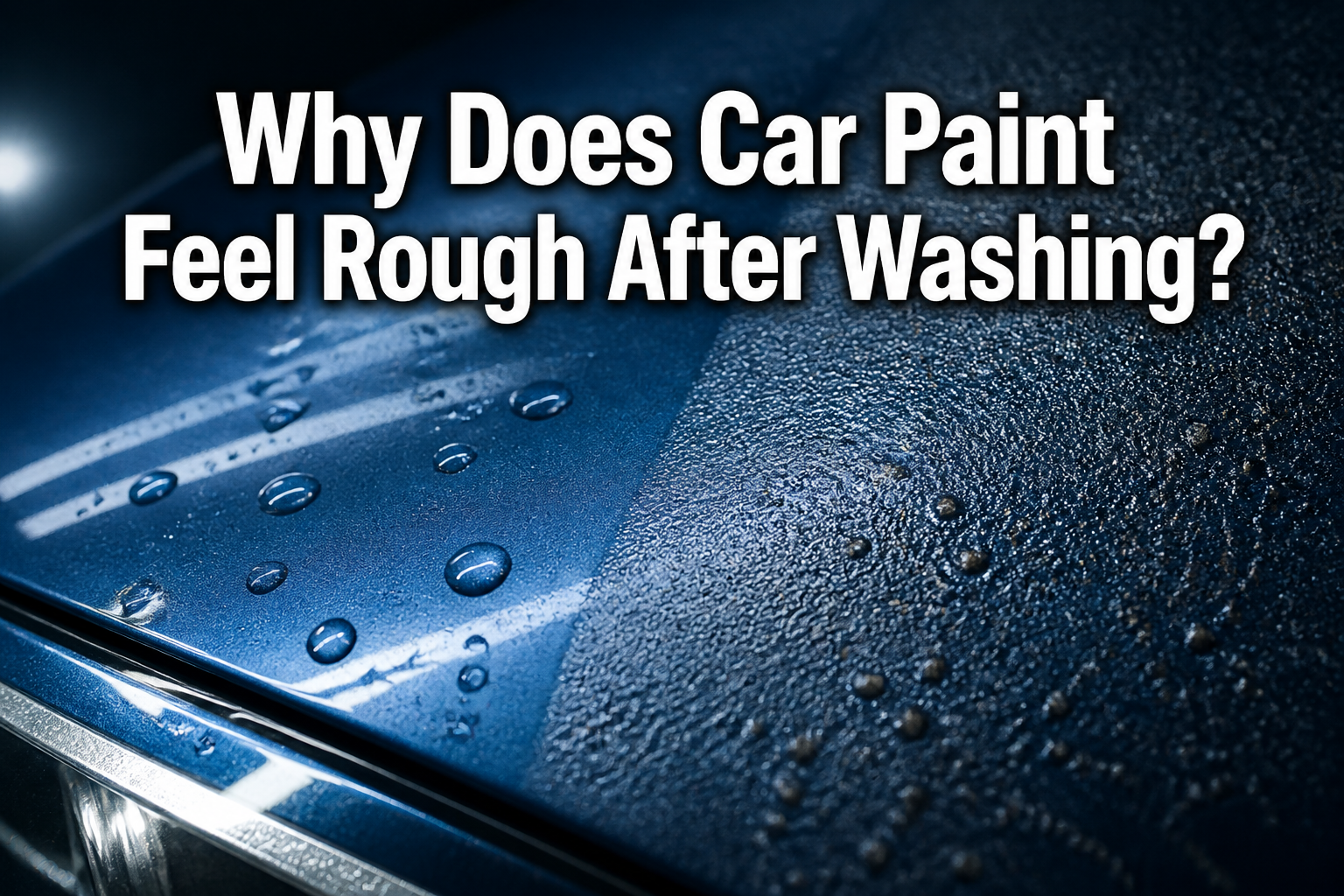
Car paint feels rough after washing because embedded contaminants like brake dust, tree sap, industrial fallout, and iron particles remain bonded to the paint surface even after soap and water removal. These microscopic particles create a sandpaper-like texture that washing alone cannot eliminate, requiring specialized decontamination methods like clay bar treatment or chemical decontaminants to restore smoothness.
Key Takeaways
- Contaminants bond chemically to paint surfaces and resist removal by standard washing methods.
- Iron particles from brake dust are the most common cause of post-wash roughness on vehicle surfaces.
- Tree sap and industrial fallout create sticky deposits that trap additional dirt and debris over time.
- Clay bar treatment is the most effective method for removing embedded surface contaminants.
- Chemical decontaminants can dissolve iron particles and other bonded substances without physical abrasion.
- Regular decontamination every 3-6 months prevents excessive buildup and maintains paint smoothness.
- Hard water minerals can leave deposits that contribute to a rough texture after washing.
- Improper washing techniques may push contaminants deeper into the paint surface.
- Paint protection, like wax or ceramic coatings, helps prevent contaminant bonding.
- Professional detailing may be necessary for severely contaminated paint surfaces.
What Causes Car Paint to Feel Rough After Washing?
Multiple types of contaminants embed themselves into your vehicle’s paint surface, creating a rough texture that standard washing cannot eliminate. These particles form chemical and mechanical bonds with the clear coat, requiring specialized removal techniques.
Primary contaminant sources include:
- Brake dust and iron particles: Generated by brake pad friction and deposited on all vehicle surfaces.
- Industrial fallout: Airborne metal particles from manufacturing facilities and rail transport.
- Tree sap and organic matter: Sticky substances that harden and trap additional debris.
- Road tar and asphalt: Petroleum-based materials that bond strongly to paint surfaces.
- Hard water minerals: Calcium and magnesium deposits left behind after water evaporation.
- Environmental pollutants: Acid rain, smog, and chemical compounds in urban areas.
The roughness occurs because these contaminants create microscopic peaks and valleys on what should be a smooth paint surface. Even thorough washing removes only loose dirt and grime, leaving bonded particles intact.
Choose clay bar treatment if you can feel roughness when running your hand over the paint after washing. Choose chemical decontamination if you notice orange or brown discoloration along with roughness, indicating iron contamination.
How Do Contaminants Bond to Car Paint Surfaces?
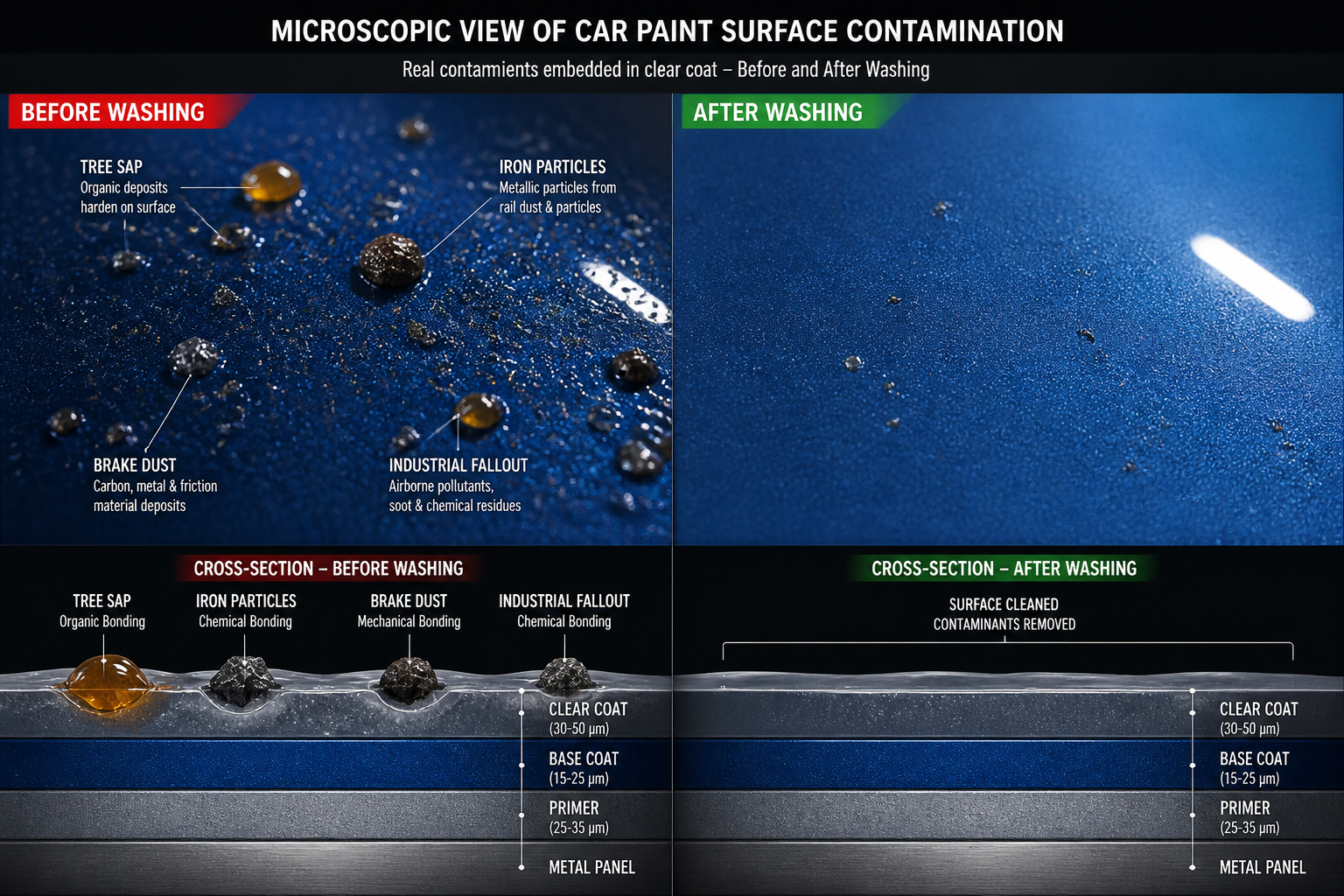
Contaminants attach to car paint through three primary mechanisms: chemical bonding, mechanical embedding, and electrostatic attraction. Understanding these processes helps explain why regular washing fails to restore smoothness.
Chemical bonding occurs when substances like tree sap, tar, and industrial chemicals form molecular connections with the paint’s clear coat. These bonds strengthen over time, especially when exposed to heat and UV radiation.
Mechanical embedding happens when small particles become physically trapped in microscopic imperfections in the paint surface. Brake dust and iron particles often lodge themselves into these tiny crevices, creating anchor points that resist water and soap removal.
Electrostatic attraction draws oppositely charged particles to the paint surface. Many environmental contaminants carry electrical charges that make them cling to vehicle surfaces even during washing.
Common mistake: Using excessive pressure during washing can actually push contaminants deeper into the paint surface, making them harder to remove later.
Edge case: Vehicles parked near industrial areas or construction sites may develop roughness within days of washing due to heavy contamination exposure.
Why Does Car Paint Feel Rough After Washing Despite Thorough Cleaning?
Standard car washing removes only surface-level dirt and loose debris, leaving embedded contaminants untouched. Soap and water lack the chemical properties and mechanical action needed to break the bonds between contaminants and paint surfaces.
Washing limitations include:
- Insufficient chemical strength: Car shampoos are formulated to be paint-safe, limiting their ability to dissolve bonded contaminants.
- Lack of mechanical action: Wash mitts and sponges cannot generate enough friction to dislodge embedded particles.
- Water temperature constraints: Cold water washing doesn’t soften hardened contaminants like tree sap and tar.
- Time limitations: Contaminants need extended contact time with specialized products for effective removal.
The “baggie test” provides a simple way to assess contamination levels. Place a plastic baggie over your hand and run it across the paint surface. If you feel roughness through the baggie, contaminants are present and require specialized removal.
Choose professional detailing if the roughness covers large areas or if you’re uncomfortable performing decontamination yourself. Choose DIY methods if the contamination is localized and you have the necessary products and time.
What Are the Most Effective Methods to Remove Paint Roughness?
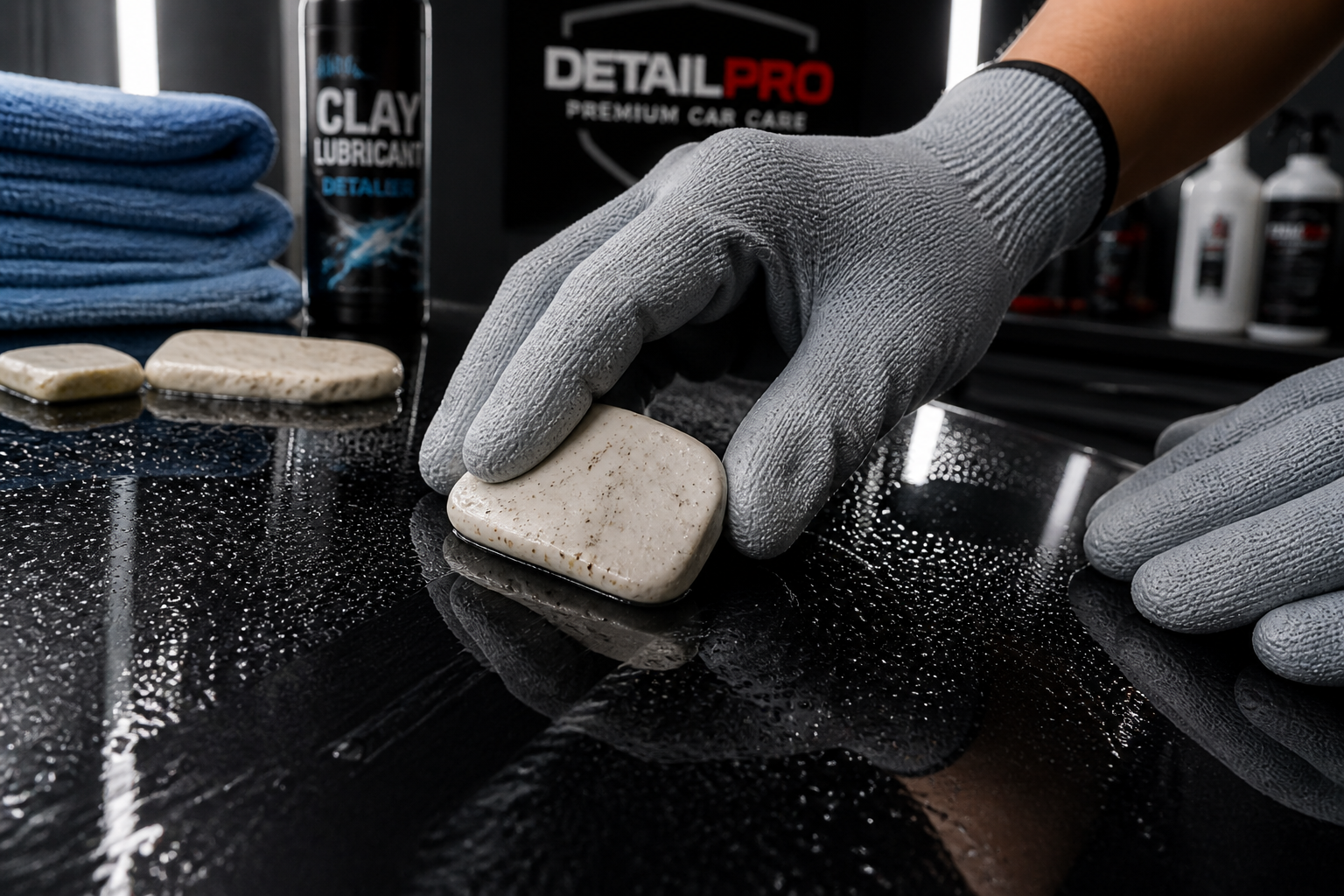
Clay bar treatment remains the gold standard for removing embedded contaminants from car paint surfaces. This process uses a specialized clay compound that safely pulls particles from the paint without causing damage.
Clay bar treatment steps:
- Wash the vehicle thoroughly to remove loose dirt and debris.
- Work in small sections (2×2 feet) to maintain proper lubrication.
- Apply clay lubricant generously to both the paint surface and the clay bar.
- Glide the clay bar across the surface using light pressure and straight motions.
- Fold and knead the clay frequently to expose clean surfaces.
- Wipe the area clean with a microfiber towel after each section.
- Apply paint protection (wax or sealant) to the treated surface.
Chemical decontamination offers an alternative approach using specialized products that dissolve specific types of contaminants:
- Iron removers: Dissolve brake dust and iron particles, often turning purple when active.
- Tar removers: Break down petroleum-based substances without damaging paint.
- Tree sap removers: Soften and dissolve organic deposits for easy removal.
Decision rule: Use clay bar treatment for general contamination and chemical decontaminants for specific issues like heavy iron deposits or stubborn tar spots.
How Often Should You Decontaminate Car Paint?
Most vehicles require decontamination every 3-6 months, depending on environmental exposure and driving conditions. Regular decontamination prevents excessive buildup that becomes increasingly difficult to remove over time.
Decontamination frequency factors:
- Urban driving: Every 3-4 months due to higher pollution and brake dust exposure.
- Highway driving: Every 4-6 months with less frequent stop-and-go traffic.
- Industrial areas: Every 2-3 months due to heavy airborne contaminants.
- Rural areas: Every 6 months with lower contamination exposure.
- Seasonal considerations: More frequent treatment is needed after winter road salt exposure.
Warning signs that indicate immediate decontamination needs:
- Paint feels rough even after thorough washing.
- Visible orange or brown spots on light-colored paint.
- Water doesn’t sheet properly off the paint surface.
- Wax or sealant doesn’t adhere evenly to the paint.
Choose professional services if you notice widespread contamination or if previous DIY attempts were unsuccessful. Choose DIY maintenance if you’re addressing routine contamination buildup.
Can Rough Paint Damage Be Prevented?
Paint protection significantly reduces contaminant bonding and makes future decontamination easier. Proper washing techniques and environmental awareness also help minimize contamination buildup.
Preventive measures include:
- Regular waxing: Creates a barrier layer that prevents direct contaminant contact with paint.
- Ceramic coatings: Provide long-term protection with superior chemical resistance.
- Covered parking: Reduces exposure to airborne contaminants and environmental factors.
- Proper washing technique: Use the two-bucket method and quality wash mitts to avoid scratching.
- Immediate spot treatment: Remove tree sap, bird droppings, and tar spots promptly.
Paint protection comparison:
| Protection Type | Duration | Contamination Resistance | Cost |
|---|---|---|---|
| Carnauba Wax | 2-3 months | Moderate | Low |
| Synthetic Sealant | 4-6 months | Good | Medium |
| Ceramic Coating | 2-5 years | Excellent | High |
Common mistake: Applying protection products over contaminated paint traps particles and reduces effectiveness.
Conclusion
Car paint feels rough after washing because embedded contaminants like brake dust, tree sap, and industrial fallout remain bonded to the surface despite thorough cleaning. These particles resist removal by standard washing methods and require specialized techniques like clay bar treatment or chemical decontamination to restore smoothness.
FAQ
Is it normal for car paint to feel rough after washing?
No, properly maintained paint should feel smooth after washing. Roughness indicates embedded contaminants that require specialized removal techniques like clay bar treatment.
Can I use household items to remove paint roughness?
Avoid household cleaners as they may damage automotive paint. Use only products specifically designed for automotive paint decontamination.
How do I know if my car needs clay bar treatment?
Run your hand over the paint surface after washing. If you feel roughness or bumps, clay bar treatment is needed to remove embedded contaminants.
Will the clay bar treatment damage my car’s paint?
When used properly with adequate lubrication, clay bar treatment is safe for automotive paint and actually improves its condition by removing harmful contaminants.
Can I prevent my car paint from becoming rough?
Regular waxing, covered parking, and prompt removal of contaminants like tree sap help prevent excessive buildup, but some contamination is inevitable with regular driving.
How long does clay bar treatment take?
Plan 2-4 hours for a complete vehicle, depending on size and contamination level. Working in small sections ensures thorough decontamination.
Should I clay bar my car before or after washing?
Always wash thoroughly before clay bar treatment to remove loose dirt that could scratch the paint during the clay bar process.
Can I reuse a clay bar?
Yes, clay bars can be reused multiple times if kept clean and properly stored. Discard when heavily contaminated or if dropped on the ground.
What’s the difference between clay bar and polishing?
Clay bar removes embedded contaminants, while polishing removes paint imperfections. Clay bar treatment should be performed before polishing for the best results.
Is professional paint decontamination worth the cost?
Professional service is worthwhile for severely contaminated vehicles or if you lack the time and products for DIY treatment. Expect to pay $100-300 for professional decontamination.
Can I clay bar a new car?
Yes, even new cars can have contamination from transport and dealer lot exposure. Clay bar treatment ensures optimal paint condition before applying protection.
How do I maintain smooth paint after decontamination?
Apply paint protection immediately after decontamination and maintain it according to product instructions. Regular washing with proper technique also helps preserve smoothness.
