

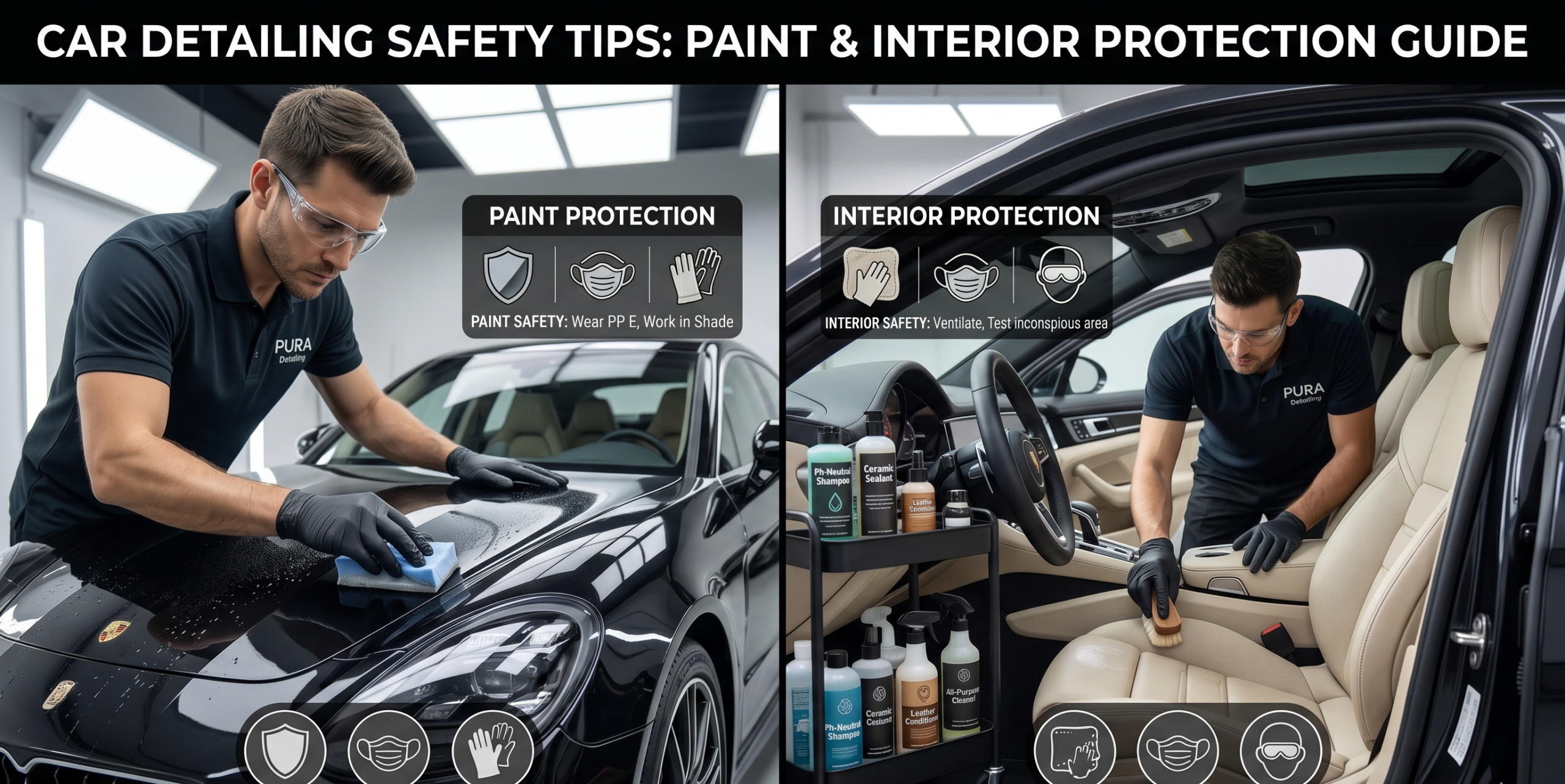
Car detailing transforms a weathered vehicle into a showroom masterpiece. However, the chemical compounds, high-speed machines, and physical strain involved pose real risks to both you and your vehicle.
Slapping on a coat of wax without understanding the chemical interactions or mechanical forces at play can permanently ruin a clear coat or cause severe chemical burns.
Essential Personal Protective Equipment (PPE) for Detailing
Detailing exposes you to airborne particulates, volatile organic compounds (VOCs), and corrosive liquids. Skipping basic protective gear can lead to chronic respiratory issues or immediate skin injuries.
Respiratory Protection
Many wheel cleaners, iron removers, and ceramic coatings release harsh fumes that damage lung tissue.
- Use a NIOSH-approved respirator with organic vapor cartridges when applying ceramic coatings or spraying acid-based wheel cleaners.
- Opt for a standard N95 dust mask during interior vacuuming and tornado cleaning to prevent inhaling microscopic mold, dander, and dried debris.
Eye and Skin Safeguards
- Nitrile Gloves: Heavy-duty, 5-mil nitrile gloves resist chemical breakthrough far better than latex. They protect your skin from absorbing toxic solvents and degreasers.
- Safety Glasses: High-speed dual-action (DA) polishers, sling compound fling. Splash-resistant safety glasses prevent these abrasive chemicals and flying debris from entering your eyes.
Chemical Safety and Material Safety Data Sheets (MSDS)
Every product in your detailing arsenal features a distinct chemical profile. Treating them as generic soaps invites disaster.
Understanding Product Labels
Before breaking the seal on a new product, consult its Safety Data Sheet (SDS), readily available on manufacturer websites like Meguiar’s or Chemical Guys. The SDS outlines the exact first-aid protocols, flammability ratings, and necessary handling precautions.
The Golden Rules of Chemical Dilution
- Never Mix Chemicals: Mixing an acid-based wheel cleaner with an alkaline degreaser can trigger dangerous chemical reactions, releasing toxic chlorine or chloramine gases.
- Pour Acid into Water: When diluting concentrated products, always add the chemical to the water, never the reverse. Pouring water into a concentrated acid can cause an aggressive, splashing exothermic reaction.
- Proper Labeling: If you transfer diluted products into secondary spray bottles, OSHA guidelines require clear labeling detailing the product name, dilution ratio, and primary hazards.
Safe Paint Correction and Machine Polishing Protocols
Machine polishing removes microscopic layers of clear coat to eliminate scratches. Without a precise technique, you risk burning straight through the paint down to the primer.
Inspecting Paint Depth
Modern factory clear coats are incredibly thin, often measuring between 35 and 50 microns.
- Use a digital paint depth gauge to measure the total thickness before touching the paint with a machine.
- If the readings reveal exceptionally thin paint, skip aggressive rotary compounding and opt for a gentle dual-action polish instead.
Master Machine Handling
- Keep the Polisher Moving: Holding a spinning pad in a single spot creates rapid friction heat. This heat softens the clear coat, causing it to delaminate or burn. Keep your machine moving across the panel at a steady pace of one inch per second.
- Manage the Cord: Drape the polisher’s power cord over your shoulder. A loose cord dragging across the vehicle paint will introduce deep, compounding scratches that ruin your correction work.
- Avoid Edges and Body Lines: Paint is thinnest on sharp body lines, curves, and panel edges. Tape these areas off using automotive masking tape to prevent the pad from burning through the paint instantly.
Interior Detailing Safety: Protecting Surfaces and Health
Vehicle interiors trap bacteria, biohazards, and delicate electronics. A careless approach can ruin expensive components or expose you to pathogens.
Managing Biohazards Safely
When cleaning severe neglect, mold, or bodily fluids, treat the interior as a biohazard zone.
- Wear thick eye protection, an N95 mask, and heavy nitrile gloves.
- Use specialized enzyme cleaners to break down organic matter completely.
- Ensure the vehicle doors remain wide open during the process to maximize cross-ventilation.
Shielding Sensitive Electronics
Modern dashboards house sensitive infotainment screens, digital gauge clusters, and intricate switchgear.
- Never spray liquid cleaners directly onto the dashboard or center console. The liquid can seep into the circuitry, causing immediate electrical shorts.
- Spray your cleaner directly into a microfiber towel, then gently wipe the surface.
- Use dedicated screen cleaners on displays to avoid stripping the delicate anti-glare coatings.
Ergonomics and Physical Health in the Detail Bay
Detailing demands hours of repetitive bending, kneeling, and reaching. Ignoring proper ergonomics leads to debilitating musculoskeletal strain.
Proper Lifting and Posture
- Bend at the Knees: When lifting heavy pressure washers, extractors, or water buckets, keep your back completely straight and lift using your legs.
- Use Rolling Creepers: Sit on an adjustable rolling detailing creeper when working on lower side panels, wheels, and rocker panels. This keeps your spine in neutral alignment and eliminates lower back stress.
Preventing Repetitive Strain Injuries (RSI)
- Take a dedicated five-minute stretch break every hour to relieve tension in your shoulders, wrists, and lower back.
- Switch hands periodically while polishing or vacuuming to distribute the physical workload evenly across both sides of your body.
Workspace Safety, Ventilation, and Environmental Hazards
Your detailing environment dictates the safety of your operation. Working in confined spaces or improper lighting breeds accidents.
Airflow and Lighting
- Maximize Ventilation: Never run an engine, use a pressure washer, or spray heavy chemicals inside a closed garage. Keep garage doors wide open and deploy high-velocity floor fans to pull toxic fumes and airborne dust out of the workspace.
- High-Output Lighting: Install bright, diffused LED overhead lights and use handheld inspection lights. Proper illumination exposes hidden chemical spills, trip hazards, and paint defects instantly.
Electrical and Water Safety
Water and electricity are a lethal combination.
- Plug every pressure washer, extractor, and polisher into a Ground Fault Circuit Interrupter (GFCI) outlet. GFCI outlets instantly cut power if an electrical short occurs, preventing severe electrocution.
- Keep all electrical extension cords and connections elevated off the wet floor using cord safety covers or rubber mats.
Advanced Paint Protection Application Safety
Applying modern ceramic coatings, paint protection film (PPF), or graphene coatings requires precision handling of highly volatile carrier solvents.
Applying Ceramic Coatings Safely
Ceramic coatings rely on strong solvent carriers to keep the liquid silica liquid until application. These solvents flash rapidly, releasing intense chemical odors.
- Apply coatings exclusively in well-ventilated settings while wearing your organic vapor respirator.
- Dispose of used coating leveling towels immediately. The residual coating cures rock-hard on the fabric; if reused, these hardened fibers will deeply scratch the next vehicle you touch.
Safely Preparing the Surface
Before applying protection, a panel wipe (isopropyl alcohol blend) is used to strip polishing oils. Isopropyl alcohol is highly flammable.
- Keep all panel wipes far away from hot engines, open flames, or any machinery that could emit an electrical spark.
Key Detailing Safety Actions
| Detailing Task | Primary Risk | Mandatory Safety Action |
| Wheel & Iron Removal | Chemical inhalation & skin burns | Wear nitrile gloves & safety glasses; work outdoors or with fans. |
| Machine Compounding | Paint burn-through & cord scratches | Monitor paint depth; loop the power cord over your shoulder; tape body lines. |
| Interior Dashboard Cleaning | Short-circuiting electronics | Spray cleaners onto microfiber towels, never directly onto switches. |
| Ceramic Coating | Volatile solvent inhalation | Use a NIOSH respirator with organic vapor cartridges; discard towels after use. |
| Pressure Washing | Electrocution from water contact | Plug all equipment into dedicated, functional GFCI outlets. |
Protecting Your Car and Yourself
Car detailing safety tips boil down to respecting your chemicals, your tools, and your body. By implementing high-grade personal protective equipment, checking paint depth before polishing, protecting interior electronics from liquid saturation, and plugging into GFCI outlets, you create a risk-free detailing environment.
True vehicle protection starts with the operator. Prioritize these safety measures on every project to achieve flawless, professional results while preserving your health and your vehicle’s integrity.
Frequently Asked Questions Regarding Detailing Safety
What should I do if a chemical splashes into my eyes?
Immediately flush your eyes with clean, lukewarm water for at least 15 continuous minutes at an eyewash station or sink.
Do not rub your eyes. Locate the product container, identify the active ingredients, and seek immediate medical attention or contact poison control.
Can I use a pressure washer safely on a car interior?
No. Pressure washers introduce excessive water volume and force that will permanently destroy electronic modules, delaminate headliners, and saturate seat foam, leading to systemic mold growth. Interior detailing requires controlled misting, extraction, or steam.
How do I store detailing chemicals safely long-term?
Store all detailing chemicals in a cool, dry, well-ventilated space completely out of direct sunlight. Ensure all caps are sealed tightly to prevent solvent evaporation.
Keep highly acidic or alkaline chemicals on low shelves to prevent accidental catastrophic spills.
