

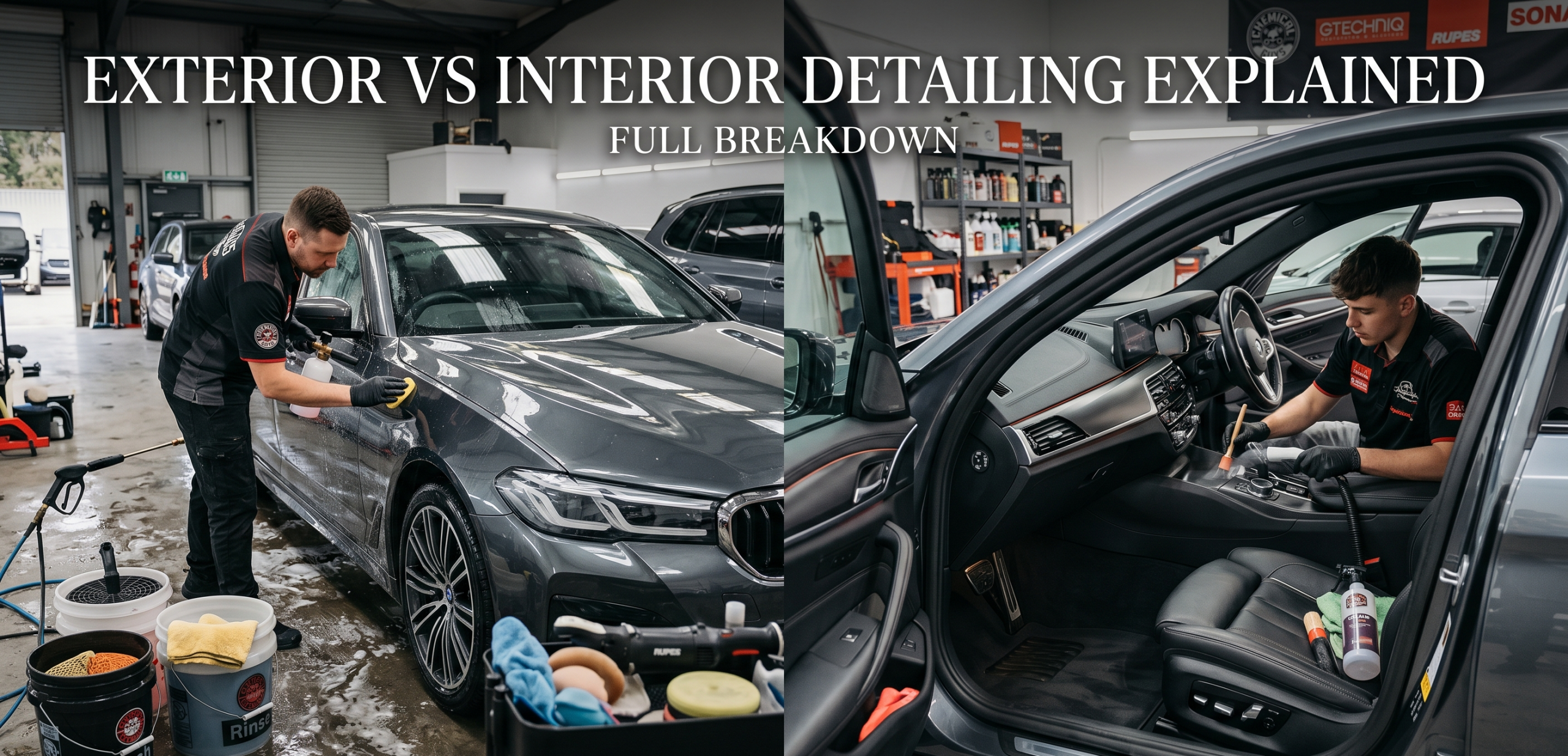
Car detailing is more than a standard car wash. While a quick rinse removes surface dust, detailing restores, preserves, and protects a vehicle from bumper to bumper.
To keep a car looking its best and maintain its resale value, car owners must understand the distinct differences, techniques, and benefits of both exterior and interior care.
What is Exterior Car Detailing?
Exterior detailing focuses on restoring and protecting the outside components of a vehicle. This includes the paint, clear coat, windows, wheels, tires, and chrome trim.
The primary goal is to eliminate surface contaminants, fix minor paint imperfections, and apply a shield against environmental damage like UV rays and road salt.
The Standard Exterior Detailing Process
Professional exterior care follows a strict sequence to prevent scratching the paint during the cleaning process.
- Wheels and Tires: Detailing always starts here. Specialized cleaners remove baked-on brake dust, road grime, and mud from the rims, wheel wells, and tire sidewalls.
- The Two-Bucket Wash: This technique uses one bucket filled with soapy water and a second bucket with clean water for rinsing the wash mitt. This prevents rubbing trapped dirt back onto the paint.
- Decontamination (Clay Bar Treatment): Even after a wash, microscopic particles like industrial fallout, tree sap, and tar remain stuck to the clear coat. Running a synthetic clay bar across the lubricated paint lifts these embedded contaminants, leaving the surface perfectly smooth.
- Paint Correction (Polishing): This step uses a machine polisher and abrasive compounds to remove fine scratches, swirl marks, and oxidation. It levels the clear coat to restore a mirror-like shine.
- Protection (Sealing or Coating): The final step seals the paint. Detailers apply paste wax, synthetic paint sealants, or ceramic coatings to safeguard the finish from weather elements.
What is Interior Car Detailing?
Interior detailing involves deep cleaning the entire passenger cabin. Because drivers spend all their time inside the car, this process impacts comfort, hygiene, and air quality.
It requires specialized tools to clean various materials, including leather, vinyl, plastics, carbon fiber, and natural fabrics.
The Standard Interior Detailing Process
Cleaning a cabin requires a top-down approach so falling dust does not ruin already-cleaned surfaces.
- De-cluttering and Vacuuming: All personal items, floor mats, and trash are removed. Detailers vacuum the seats, carpets, rear parcel shelf, and trunk thoroughly, using crevice tools to reach tight spaces.
- Surface Wipedown and Detailing: Dashboards, center consoles, door panels, and air vents are cleaned using specialized interior cleaners and soft makeup-style brushes. This removes body oils, dust, and spills without scratching delicate plastics.
- Upholstery Deep Cleaning: Fabric seats and carpets undergo hot water extraction or steam cleaning to lift deep stains and odors. Leather seats are cleaned with pH-balanced formulas and treated with conditioners to prevent cracking.
- Glass Cleaning: All interior windows, mirrors, and sunroofs are wiped down with ammonia-free glass cleaners to remove the hazy film caused by plastic outgassing and air conditioning systems.
- Sanitization and Deodorization: Ozone machines or antimicrobial sprays are often used at the very end to eliminate bacteria, mold spores, and persistent smells like cigarette smoke or pet odors.
Exterior vs Interior Detailing: Key Differences
While both processes aim to refresh a vehicle, they target completely different surfaces, use contrasting tools, and serve distinct purposes.
| Feature | Exterior Detailing | Interior Detailing |
| Primary Focus | Paint preservation, gloss restoration, and environmental protection. | Hygiene, stain removal, odor elimination, and material preservation. |
| Core Materials | Clear coat, metal, aluminum, glass, rubber tires, and exterior plastics. | Leather, fabric upholstery, carpet, vinyl, plastic, and electronics. |
| Common Tools | Pressure washers, foam cannons, dual-action polishers, clay bars, and microfiber mitts. | Wet/dry vacuums, steam extractors, compressed air tornador guns, and detail brushes. |
| Main Threat Addressed | UV rays, bird droppings, acid rain, road salt, and swirl marks. | Spills, ground-in dirt, skin oils, pet hair, bacteria, and UV fading. |
| Frequency Need | Every 3 to 6 months, depending on local weather and parking conditions. | Every 4 to 6 months, or more frequently for families, pets, and daily commuters. |
Why External Care and Internal Maintenance Matter?
Investing time or money into complete detailing yields measurable returns for vehicle owners.
Preservation of Resale Value
Cars are depreciating assets, but maintenance directly determines how much value they lose.
According to automotive valuation experts like Kelly Blue Book, a vehicle in “Excellent” cosmetic condition can command thousands of dollars more than the same model in “Fair” condition. Buyers judge a car’s mechanical history based on its visual presentation.
Corrosion Prevention
Road salt, moisture, and mud trap humidity against metal surfaces. Exterior detailing ensures that wheel wells, rocker panels, and undercarriages are free from corrosive build-up, preventing rust from eating through body panels.
Health and Allergen Reduction
The inside of a car can harbor millions of bacterial strains, dust mites, and pollen particles circulated by the HVAC system. Regular interior steam cleaning sterilizes surfaces, protecting passengers from respiratory irritants and airborne germs.
Essential Tools Used by Professional Detailers
Achieving professional results requires tools that go far beyond a standard garden hose and shop vac.
Exterior Tools
-
Dual-Action (DA) Polisher: A machine that oscillates and rotates simultaneously. This movement prevents heat build-up, making it safe for removing paint defects without burning through the clear coat.
-
Foam Cannon: An attachment for pressure washers that blends detailing shampoo with pressurized water, creating a thick layer of foam that loosens dirt before anyone touches the paint.
-
Iron Decon Removers: Chemical sprays that turn purple when they react with embedded iron particles from brake dust, dissolving them safely off wheels and paint.
Interior Tools
-
Hot Water Extractor: A machine that injects pressurized hot water and cleaning solution deep into carpet fibers, then instantly vacuums it back up along with dissolved dirt and stains.
-
Detailing Steam Cleaner: A tool that produces dry, high-heat steam to sanitize hard surfaces, dissolve sticky residue in cup holders, and refresh delicate leather without soaking it.
-
Compressed Air Air-Blow Guns: Used to blast dust, crumbs, and debris out of tight seams, seat tracks, and buttons where vacuum nozzles cannot fit.
How Often Should You Detail Your Vehicle?
There is no single answer for how often a car needs detailing, as it depends entirely on usage patterns and environmental exposure. However, establishing a consistent routine prevents damage before it becomes permanent.
Daily Commuters and Outdoor Parking
If a car is driven daily, parked under trees, or exposed to intense sun, it needs an exterior detail every 3 months.
The wax or sealant layer degrades quickly under harsh UV rays and bird droppings. The interior should be thoroughly detailed every 4 months to combat daily wear and tear.
Garaged Vehicles and Weekend Drivers
Vehicles kept in climate-controlled garages or driven primarily on weekends can stretch their detailing intervals. An exterior treatment every 6 months is usually sufficient to maintain protection. The interior can follow a similar 6-month schedule to prevent dust accumulation and keep leather conditioned.
Seasonal Requirements
For regions with harsh winters, a full exterior detail is critical in late autumn to apply a durable layer of sealant or ceramic spray before road salt drops.
A second deep clean in early spring removes all salt residue and chemical brine from the paint and undercarriage.
Can You Do It Yourself or Should You Hire a Pro?
Deciding between a DIY approach and hiring a professional depends on your budget, available time, and the current condition of the vehicle.
When to Choose DIY Detailing?
Maintaining a vehicle at home is highly rewarding and cost-effective for regular upkeep. If your car only needs a routine wash, vacuuming, light interior wiping, and a simple application of spray wax, DIY is ideal. A basic investment in microfiber towels, high-quality shampoos, and a safe interior cleaner can keep a well-maintained car looking pristine for pennies.
When to Hire a Professional Detailer?
Professional intervention becomes necessary when a vehicle requires deep restoration.
-
Paint Correction: Operating a rotary polisher to remove deep swirl marks requires training. An amateur can easily burn through paint layers, leading to expensive body shop repairs.
-
Ceramic Coating Application: True ceramic coatings require flawless surface preparation and precise application. Mistakes leave permanent high spots that require machine sanding to correct.
-
Severe Odor or Stain Removal: Removing mold, biological messes, or deep cigarette smoke requires commercial extractors, ozone generators, and professional chemical knowledge to execute safely.
Summary
Exterior and interior detailing are two halves of a complete automotive maintenance strategy. Exterior care focuses on paint correction and defense against elements like UV radiation and road salt.
Interior care prioritizes health, cleanliness, and material preservation through deep vacuuming, steaming, and sanitizing.
Balancing both ensures your vehicle remains a clean, comfortable environment while retaining its maximum financial value for the long haul.
