

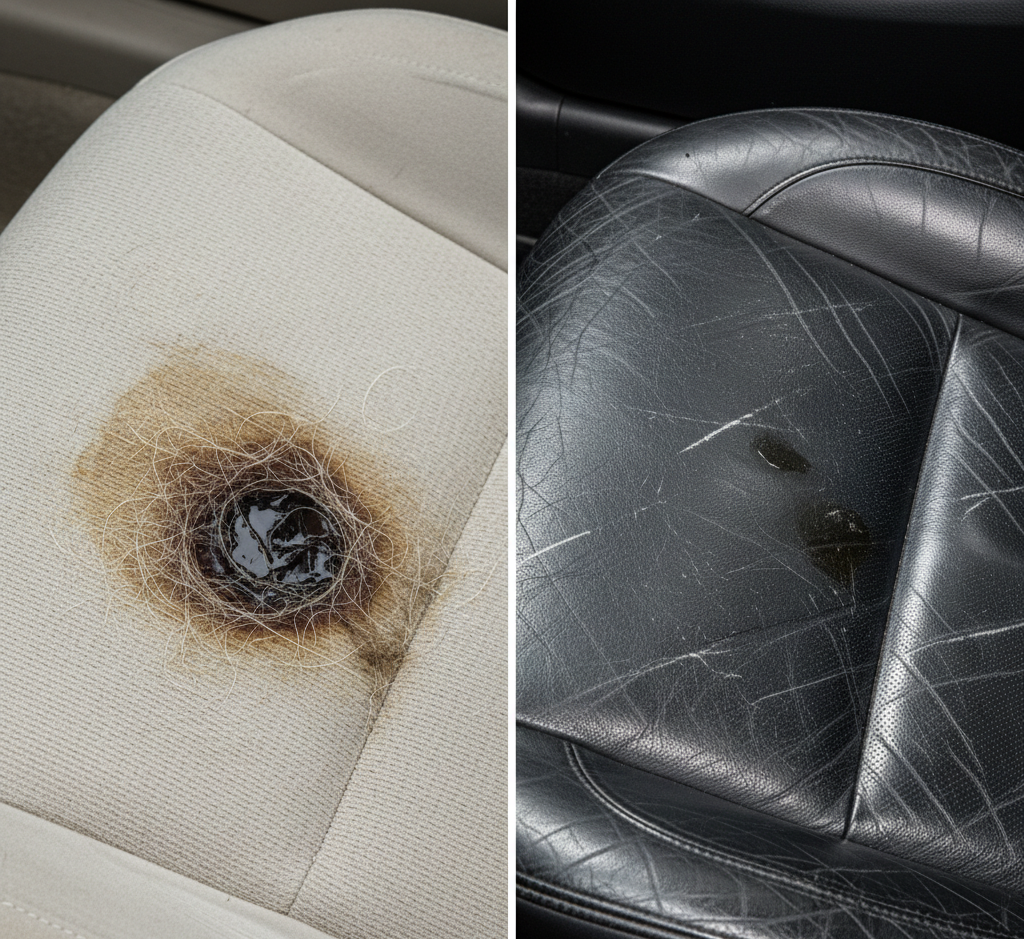
When choosing a vehicle interior, maintenance effort plays a major role in long-term ownership costs. The ongoing debate over cloth seats vs leather seats — which is harder to detail? comes down entirely to material behavior.
Fabric acts like a sponge. It absorbs spills instantly, locking dirt and odors deep within the foam cushion. Leather acts as a barrier. It keeps messes sitting on the surface but requires specialized chemical hydration to prevent long-term cracking.
If you need a rapid answer, cloth requires significantly more labor and heavy machinery to deep-clean. Leather takes less time to wipe down but demands precise chemical maintenance.
Cloth Seats vs Leather Seats — Which Is Harder to Detail?
Cloth seats are much harder to detail than leather seats. Woven fabric absorbs liquids, traps foul odors, and stubbornly holds onto pet hair. Removing a deep-set stain from a cloth cushion requires an upholstery extractor, mechanical agitation, and chemical enzymes.
Leather is easier to clean because liquids sit on top of a non-porous polyurethane clear coat. A simple wipe often removes fresh coffee spills or mud. However, leather is harder to maintain over the course of a decade. It requires regular conditioning routines to prevent permanent sun damage and physical cracking.
Why Fabric Seats Create Detailing Headaches?
Fabric seats look simple, but their porous physical nature creates a serious detailing challenge. Woven materials trap microscopic dirt particles and trap moisture.
Liquid Absorption and Deep Wicking
When a beverage spills onto fabric, gravity pulls the liquid straight past the fabric into the foam cushion. Surface wiping only masks the visible problem. The stain will eventually wick back to the surface as the moisture evaporates.
Removing this deeply embedded liquid requires saturating the entire seat with a targeted surfactant cleaner. You then have to pull the liquid out using industrial vacuum suction physically.
Stubborn Odor Retention
Smoke, fast food, and human sweat are permanently trapped inside woven nylon fibers. Cheap masking sprays fail quickly because they only cover the smell.
True odor removal requires breaking down the organic matter that supports the bacteria living inside the cushion. Detailers must use specialized enzymatic cleaners formulated specifically to digest these organic compounds.
Embedded Debris and Pet Hair
Dog hair weaves itself directly into cloth threads like tiny needles. Standard shop vacuums lack the suction power to pull these hairs out.
You need specialized rubber detailing brushes or pumice stones. You must manually scrape the hair loose from the woven fibers before a vacuum can successfully remove it.
The Reality of Cleaning Leather Interiors
Automotive leather is rarely raw, untreated hide. Modern vehicles use coated leather, meaning you are actually cleaning a thin polyurethane topcoat. Understanding this plastic-like coating dictates your entire cleaning approach.
Surface Cleaning Simplicity
Most interior messes sit right on top of this protective clear coat layer. You rarely need heavy extraction machinery.
A dedicated, pH-balanced leather cleaner and a soft-bristled detailing brush will effectively agitate surface dirt. You wipe the lather away with a clean microfiber towel, leaving the seat looking new.
The Need for Hydration and UV Protection
The clear coat on leather dries out rapidly from extreme cabin temperatures. Left untreated in the sun, the finish will quickly crack, peel, and fade.
Detailing leather requires a mandatory second step: applying a dedicated conditioner or ceramic coating. This chemical application restores flexibility and adds UV inhibitors to block sun damage.
Vulnerability to Physical Abrasions
While leather naturally repels liquids, it fails against sharp physical objects. Denim pants rivets, pet claws, and sliding keys leave permanent scratches in the coating.
You cannot extract or wash out a deep scratch from a leather seat. Repairing physical damage requires heavy sanding, precise color matching, and re-spraying the surface dye.
Step-by-Step: Removing Specific Stains from Cloth
Different stains require completely different chemical approaches. Throwing a generic all-purpose cleaner at every spot will often set the stain permanently into the fabric.
Treating Organic Protein Stains
Blood, sweat, and dairy spills fall into the protein category. Hot water will instantly cook these proteins, permanently setting them into the fabric fibers.
Always use cold water to rinse protein stains. Apply an enzymatic cleaner, let it dwell for 10 minutes to break down the bacteria, and extract with cold water.
Removing Tannin Stains
Coffee, tea, and fruit juices contain tannins that leave distinct brown or yellow rings. These require a slightly acidic cleaner to neutralize the color.
Spray the affected area with a dedicated tannin spotter. Gently agitate the surface with a soft brush, then extract with hot water to lift the neutralized color molecules.
Eliminating Grease and Oil
Grease from food or automotive mechanics acts as a binder, holding dirt to the fabric. You must break the oil bond before trying to wash the seat.
Use a highly alkaline degreaser to emulsify the oil. Let the chemical sit for three minutes, agitate with a drill brush, and extract heavily with boiling water.
Step-by-Step: Curing Common Leather Defects
Leather presents its own unique set of detailing problems. Using the wrong chemicals to address these issues will strip the factory dye right off the seat.
Removing Blue Jean Dye Transfer
Light-colored leather seats frequently turn blue from denim dye transferring during friction. This dye bonds tightly to the polyurethane topcoat.
Do not use harsh magic erasers, as they act like sandpaper and will remove the clear coat. Use a strong leather cleaner and a dedicated synthetic clay pad to shave the dye off the surface gently.
Cleaning Perforated Ventilated Seats
Modern luxury cars feature tiny holes in the leather for heated and cooled seats. Spraying cleaner directly onto the seat will flood these mechanical pores and damage the internal electronics.
Always spray your cleaner directly into your detailing brush, not the seat. Agitate the surface lightly, and immediately wipe it dry to prevent liquid from sinking into the ventilation holes.
Softening Hardened Leather
Years of neglect turn supple leather seats into hard, cardboard-like surfaces. This happens when the natural oils underneath the clear coat completely evaporate.
Restoring this requires a heavy restorative serum, not a standard daily conditioner. Massage the serum into the leather by hand, park the car in the hot sun to open the pores, and let the product soak in for 24 hours.
Essential Equipment Breakdown for Cloth Interiors
Restoring fabric requires heavy physical extraction tools.
- Hot Water Extractor: This machine sprays heated water into the seat cushion and immediately vacuums it back out. It is the only way to remove embedded liquid grime physically.
- Drill Brush Attachment: Manual scrubbing causes severe arm fatigue. A medium-stiffness nylon brush attached to a cordless drill agitates fibers effectively and lifts heavy stains quickly.
- Chemical Surfactants: You need formulas that break surface tension. This allows water to penetrate the seat foam deeply rather than sitting on top.
Required Equipment for Leather Restoration
Leather care focuses entirely on chemical balance and gentle mechanical agitation.
- Boar’s Hair Brush: Stiff nylon brushes scratch delicate leather coatings. Boar’s hair is aggressive enough to clean textured pores but gentle enough to leave the finish totally intact.
- pH-Neutral Cleaner: Harsh degreasers strip the factory topcoat over time. Neutral cleaners safely lift dirt without degrading the essential protective layer. According to general guidelines from the International Detailing Association, maintaining pH balance prevents premature material failure.
- Water-Based Conditioner: Avoid greasy, cheap silicone-based dressings. Water-based products penetrate the topcoat to nourish the material beneath without leaving a slick, shiny residue.
The Role of Steam Cleaning in Auto Detailing
Steam provides a massive advantage for both materials, but you must use it differently depending on the surface.
Steaming Cloth Seats
Steam acts as a powerful pre-treatment for heavily soiled fabric. The extreme heat melts hardened candy, gum, and old spills.
Shooting steam directly into a cloth seat opens the woven fibers. This allows your chemical cleaners to penetrate deeper, making the final water extraction phase much faster.
Steering Leather Seats
You must use extreme caution when steaming leather. Holding a steam nozzle too close to the surface will literally melt the polyurethane clear coat and warp the leather hide.
Wrap a microfiber towel around the steam nozzle. Gently glide the warm towel over the leather surface to safely lift body oils and dirt without risking heat damage.
Labor Investment: Time Required for Both Materials
Detailing time impacts both weekend DIY enthusiasts and professional auto businesses as they schedule their day.
Time Spent on Fabric Interiors
A heavily soiled fabric interior requires three to five hours of intense physical labor. You must dry vacuum, pre-treat spots, agitate, extract, and wait for the seats to fully dry.
Drying time is the biggest hurdle. Driving a vehicle with damp cloth seats promotes dangerous mold growth and creates a terrible mildew smell inside the cabin. You often need to leave industrial air movers running inside the car overnight.
Time Spent on Leather Interiors
A standard leather interior takes about 1 to 2 hours to detail fully. The physical process is straightforward: spray, scrub, wipe, and condition.
Drying time is virtually zero. Once you wipe the protective conditioner into the seat, the car is ready to drive immediately.
Maintenance Routines to Prevent Future Damage
Stopping the damage before it starts is the ultimate detailing secret. Preventive care drastically reduces your workload later.
How to Protect Cloth Seats?
Apply a hydrophobic fabric guard to the seats when they are brand new or freshly extracted. This creates a microscopic chemical barrier over the individual threads.
When you spill a drink, the liquid will bead up on the surface rather than sink into the cushion. This gives you plenty of time to grab a paper towel and wipe it away before a stain sets.
How to Protect Leather Seats?
Apply an automotive interior ceramic coating. Traditional lotion conditioners wash away quickly and only last a few weeks.
Ceramic coatings form a semi-permanent bond with the polyurethane topcoat. This offers 6 to 12 months of protection against dye transfer, liquid spills, and intense UV rays.
Final Thoughts on Interior Upkeep
The final verdict on cloth seats vs leather seats — which is harder to detail? Heavily leans toward cloth. Fabric demands significantly more physical labor, specialized extraction machinery, and extended, frustrating drying times.
Leather provides a much easier, flat surface to clean, provided you stay consistent with your chemical conditioning routines. Choose cloth if you prioritize the initial vehicle cost and extreme-temperature comfort, but always choose leather if you want rapid, easy cleanup for daily messes and spills.
