

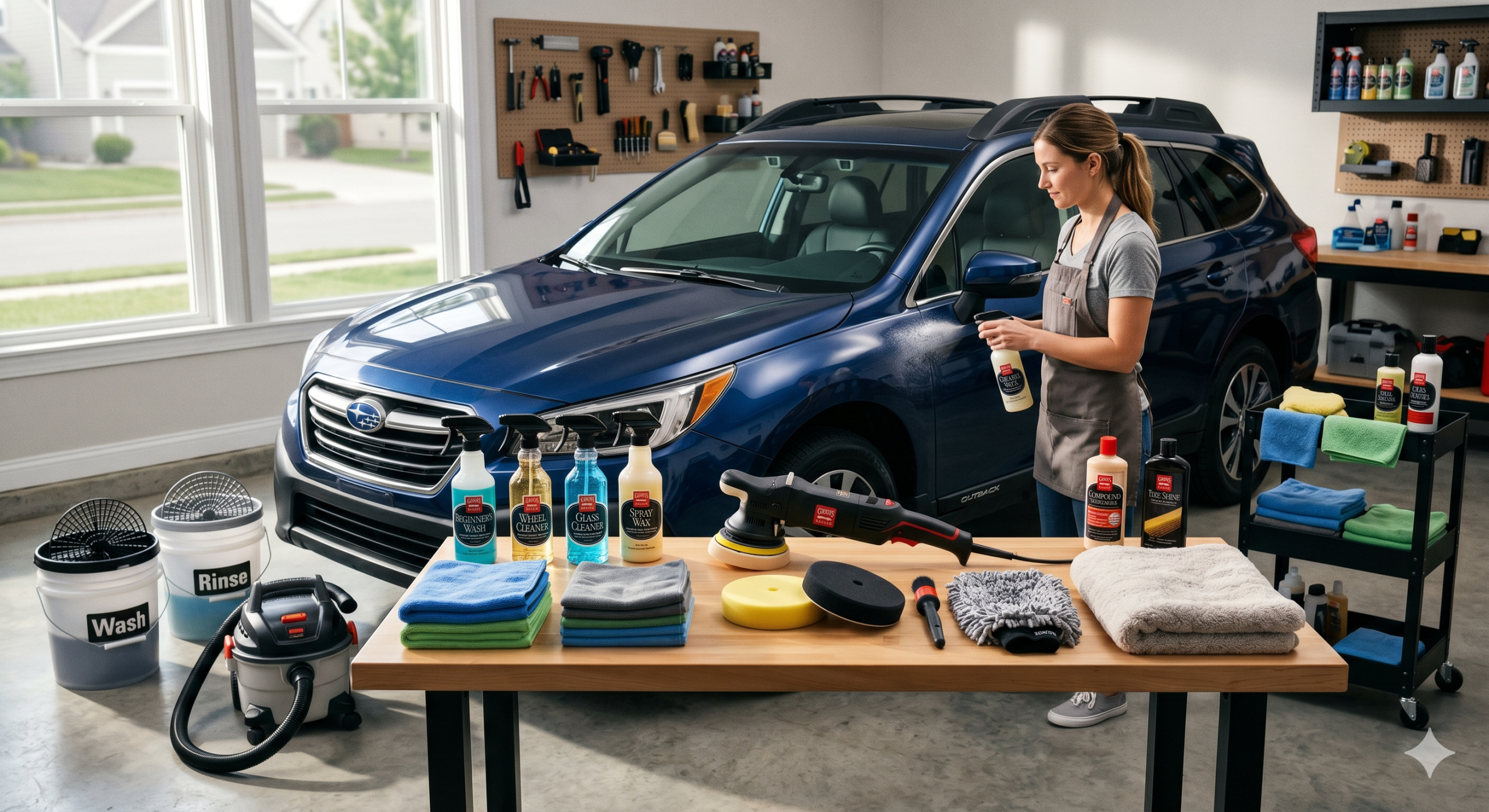
Maintaining a vehicle’s finish requires moving past the basic garden hose and single kitchen sponge. Standard washing methods often push abrasive dirt particles across the clear coat, creating web-like swirl marks that dull the paint over time. True deep cleaning relies on specialized equipment designed to isolate debris and protect sensitive automotive surfaces.
Getting your vehicle to look pristine does not require a commercial budget. Knowing which basic tools to buy first helps you achieve excellent results safely at home.
What Car Detailing Tools Do Beginners Actually Need First?
Beginners should focus entirely on foundational gear that minimizes the risk of scratching the paint.
The absolute minimum toolkit consists of a dedicated two-bucket setup with grit filters, multiple plush microfiber cloths, an ergonomic wash mitt, and a specialized wheel barrel brush. These simple items form your primary defense against fine surface marring.
As your skills grow, you can expand your collection to include electric pressure washers, foam cannons, and dual-action machine polishers.
Choosing the correct tool for each specific surface prevents costly damage to clear coats, leather, and interior electronics.
Essential Exterior Wash and Decontamination Equipment
The Two-Bucket System and Grit Filters
The classic single-bucket approach is the fastest way to ruin automotive paint. When you rinse a dirty mitt in your soapy water, abrasive road grit mixes back into the solution and gets rubbed back onto the vehicle.
The two-bucket method solves this problem completely. One bucket holds your fresh, soapy shampoo solution, while the second contains pure rinse water.
- Soap Bucket: Clean Mitt Applies Soap to Car.
- Rinse Bucket: Dirty Mitt Dips Here First to Drop Grit.
You must place a radial plastic filter, often called a grit guard, at the bottom of both buckets. These filters sit a few inches above the floor of the bucket.
They trap heavy dirt particles underneath the screen, stopping them from floating back up into your cleaning media.
Microfiber Wash Mitts
Ditch traditional flat sponges. Synthetic sponges trap dirt directly between their flat surface and your clear coat, acting like fine sandpaper.
Instead, select a plush microfiber wash mitt, ideally made with a deep chenille caterpillar-strand weave.
These soft microfibers gently lift and wrap around loose dirt particles, pulling them completely away from the delicate paint surface until you rinse the mitt.
Heavyweight Drying Towels
Allowing water to evaporate naturally on a vehicle leaves behind ugly mineral deposits that can etch into your paint. Never use old cotton bath towels, which lack the absorbency needed and can cause fine scratches.
Invest in dedicated microfiber drying towels with a pile weight of 400 to 1200 grams per square meter (GSM).
A twisted-loop microfiber structure or a waffle-weave pattern works best, allowing a single large towel to safely soak up all the water from a standard sedan without needing to be wrung out once.
Clay Bars and Dedicated Lubricants
Washing only removes loose surface dirt. Over time, industrial fallout, brake dust, and tree sap bond tightly to the clear coat, leaving a rough, bumpy texture.
A synthetic detailing clay bar physically shears off these bonded contaminants. To use it safely, you must spray a generous amount of slick clay lubricant or a diluted quick detailer across the panel.
The clay glides smoothly across the lubricated surface, catching and removing embedded grit to leave the paint feeling completely smooth.
Professional Wheel and Tire Cleaning Gear
Wheels and tires face intense road heat, corrosive brake dust, and thick road grime. Because this debris is highly abrasive, you must use a dedicated set of tools that never touch your vehicle’s paintwork.
| Tool Type | Specific Purpose | Ideal Material |
| Barrel Brush | Reaches deep inside the wheel rim behind the spokes | Flexible nylon bristles with a covered tip |
| Face Brush | Scrubs the flat, forward-facing parts of the wheel | Soft, feathered synthetic bristles |
| Tire Scrub Brush | Removes blooming, old dressings, and heavy mud | Stiff, short-bristled nylon |
Always wash your wheels and tires before moving to the rest of the vehicle. This order stops highly corrosive brake dust and dirty water from splashing onto freshly cleaned body panels.
Must-Have Interior Deep Cleaning Tools
Wet-Dry Shop Vacuum Cleaners
A standard domestic vacuum cleaner cannot handle the heavy dirt, small stones, and moisture found inside a vehicle. A dedicated wet-dry shop vacuum with a high horsepower rating is an essential interior tool.
Look for a model featuring a flexible, long hose and narrow crevice attachments to easily reach deep down between the seat rails and center consoles.
Detail Brushes
The tight seams around dashboard buttons, air vents, and steering wheel stitching quickly collect dust and skin oils. Soft boar’s hair or ultra-fine synthetic detailing brushes are perfect for gently agitating these intricate zones.
Using a soft brush lifts trapped dirt out of tight crevices far better than simply wiping with a cloth alone.
Advanced Machinery for Growing Your Setup
Once you master the manual washing basics, adding power tools will save you time and deliver a much higher level of finish.
Electric Pressure Washers and Foam Cannons
A quality electric pressure washer operating between 1400 and 1800 PSI provides plenty of cleaning power without risking damage to modern automotive paint or rubber trim.
Pairing a pressure washer with a brass-body foam cannon lets you blanket the vehicle in a thick layer of snow foam.
This thick foam clings to the vertical panels for several minutes, breaking down and softening heavy road grime before you ever touch the vehicle with a wash mitt.
Dual-Action Machine Polishers
To eliminate swirl marks and light scratches permanently, you need to step up to a machine polisher. For absolute beginners, a dual-action (DA) polisher is the only safe option.
Unlike professional rotary polishers that spin in a fixed circle and can quickly burn through thin, clear coats, a dual-action machine spins and oscillates at the same time.
This complex orbital movement distributes heat evenly across the panel, making it incredibly safe for beginners while still providing enough correction power to restore a brilliant shine.
How Do I Safely Dry a Vehicle Without Scratching the Paint?
The Gold Standard for Drying: Always apply a dedicated spray sealant or a slick, quick detailer to the wet panel as a drying aid before touching it with your towel. This step adds an extra layer of lubricity, drastically reducing friction and preventing fine scratches.
To dry your car safely, use the following sequence to avoid swirl marks completely:
- Use a pressure washer or an open-ended garden hose to run a gentle sheet of water over the vehicle from the top down, letting gravity pull most of the standing water off the surface.
- Mist a high-quality spray wax or a drying aid lightly across the damp body panels.
- Lay a clean, high-GSM microfiber drying towel flat across a panel and gently pull it toward you by its corners. Avoid pressing down hard or rubbing the towel in circular motions.
- Switch to a smaller, dry microfiber cloth to clean out hidden water pools in the door jambs, side mirrors, and exterior trim pieces.
Essential Safety Gear for Beginners
Many automotive cleaning chemicals are highly acidic or strongly alkaline. To protect yourself, always wear heavy-duty nitrile gloves to shield your skin from chemical burns and moisture.
When spraying wheel cleaners, iron decontaminators, or strong carpet shampoos, wear clear safety glasses to stop accidental chemical splashes from reaching your eyes.
If you are working inside an enclosed cabin with strong interior cleaners, always keep the doors wide open to ensure plenty of fresh airflow.
Choosing Your First Detailing Supplies
When buying your first set of tools, choose quality over quantity. Avoid cheap, multi-piece kits found at big-box stores, as they often contain harsh nylon brushes and low-grade, scratch-prone towels. Buying a few well-made microfibers, a couple of durable buckets, and a reliable wash mitt will give you a safer, more effective setup that lasts for years.
Using the proper tools turns vehicle maintenance from a frustrating chore into an enjoyable, rewarding hobby.
