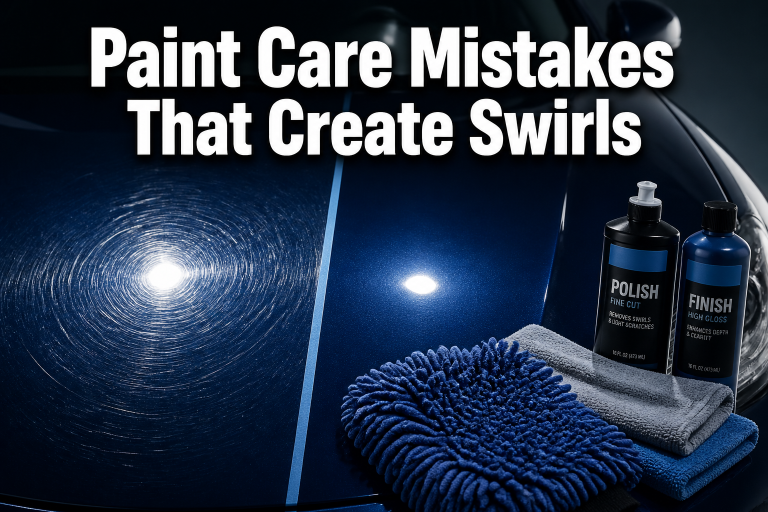
Most daily drivers should be waxed every 2-3 months to maintain paint protection and appearance. Cars parked outdoors or driven in harsh conditions may need waxing monthly, while garage-kept vehicles driven occasionally can extend intervals to 4-6 months.
Key Takeaways
- Standard frequency: Every 2-3 months for typical daily drivers
- Harsh conditions: Monthly waxing for cars exposed to sun, salt, or pollution
- Protected vehicles: Every 4-6 months for garage-kept cars with light use
- Water test: When water stops beading on paint, it’s time to rewax
- Synthetic waxes: Last 4-6 months compared to 2-3 months for natural carnauba
- Climate matters: Hot, sunny regions require more frequent waxing
- Washing frequency: Weekly washing helps extend wax protection intervals
What Determines How Often to Wax a Daily Driver?
Daily drivers need waxing every 2-3 months under normal conditions, but several factors affect this timeline. The frequency depends on your car’s exposure to elements, storage conditions, and driving patterns.
Primary factors that influence waxing frequency:
- Storage location: Outdoor parking requires monthly waxing, while garage storage extends intervals to 4-6 months
- Climate conditions: UV exposure, temperature extremes, and humidity accelerate wax breakdown
- Driving environment: Highway driving, construction zones, and industrial areas increase contamination
- Wax type: Synthetic sealants last 4-6 months versus 2-3 months for natural carnauba wax
- Paint condition: Newer paint holds wax longer than oxidized or damaged surfaces
The water bead test provides the most reliable indicator for rewaxing. When water no longer forms tight beads on clean paint and instead sheets off or sits flat, the protective wax layer has worn away.
Choose monthly waxing if your daily driver sits outdoors in sunny climates, faces road salt exposure, or accumulates heavy contamination from industrial fallout.
How Weather Affects Daily Driver Wax Protection?
Weather conditions directly impact how long wax protection lasts on daily drivers. UV rays break down wax molecules, while temperature fluctuations cause expansion and contraction that weakens the protective barrier.
Hot climates (above 85°F regularly):
- Wax every 4-6 weeks during the summer months.
- UV rays accelerate wax degradation by 50-75%.
- Park in shade when possible to extend protection.
Cold climates with road salt:
- Monthly waxing during the winter months.
- Salt and de-icing chemicals strip wax rapidly.
- Focus extra attention on lower panels and wheel wells.
Humid environments:
- Standard 2-3 month intervals are usually sufficient.
- Higher humidity can actually help preserve some wax types.
- Monitor for increased contamination from airborne particles.
Seasonal adjustment strategy: Apply a durable synthetic sealant before harsh seasons (winter or intense summer), then maintain with spray waxes between full applications.
Different Wax Types and Their Longevity on Daily Drivers
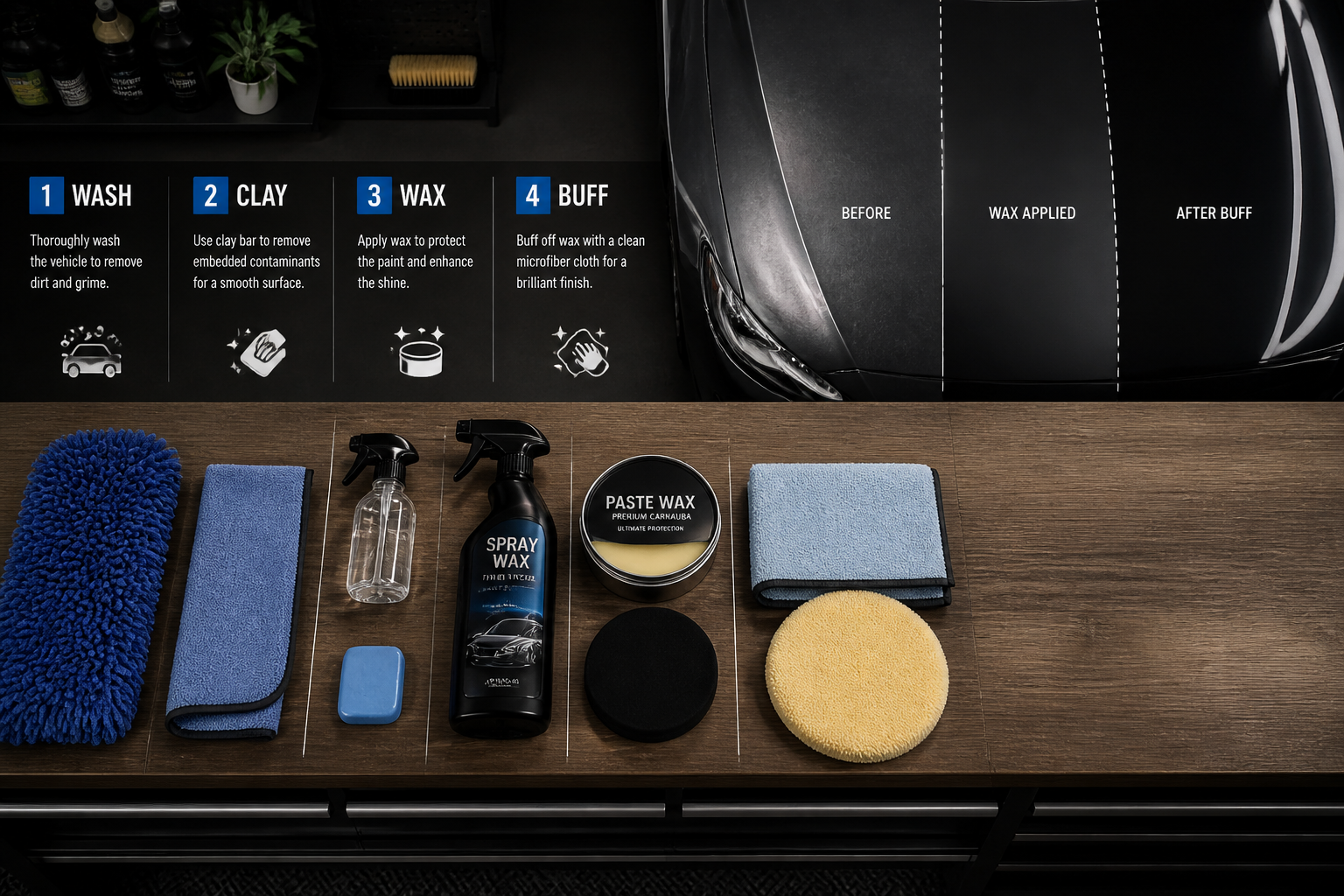
The type of wax significantly affects protection duration for daily drivers. Understanding each option helps optimize your maintenance schedule and budget.
Carnauba paste wax:
- Duration: 2-3 months.
- Best for: Show cars and weekend vehicles.
- Pros: Deep, warm shine and water beading.
- Cons: Requires frequent reapplication for daily drivers.
Synthetic polymer sealants:
- Duration: 4-6 months.
- Best for: High-mileage daily drivers.
- Pros: Superior durability and UV protection.
- Cons: Less warm appearance than carnauba.
Spray waxes:
- Duration: 2-4 weeks.
- Best for: Maintenance between full wax jobs.
- Pros: Quick application during regular washing.
- Cons: Minimal standalone protection.
Ceramic coatings (professional):
- Duration: 1-3 years.
- Best for: New vehicles with perfect paint.
- Pros: Maximum protection and easy maintenance.
- Cons: High upfront cost and professional application required.
For most daily drivers, synthetic sealants offer the best balance of protection duration and cost-effectiveness, requiring only 3-4 applications per year.
Signs Your Daily Driver Needs Rewaxing
Recognizing when wax protection has degraded helps maintain optimal paint condition without over-waxing. Several visual and tactile indicators signal it’s time to reapply protection.
Visual indicators:
- Water forms large, flat sheets instead of tight beads.
- Paint appears dull or hazy even after washing.
- Contaminants like tree sap or bird droppings are harder to remove.
- Swirl marks become more visible in direct sunlight.
Touch test:
- Clean paint feels rough or textured to the fingertips.
- Contaminants stick to the paint surface during washing.
- Towels drag across the paint instead of gliding smoothly.
Performance indicators:
- Washing takes longer due to increased dirt adhesion.
- Water spots form more readily after rain or washing.
- Paint shows increased susceptibility to staining.
Common mistake: Waiting until the paint looks obviously neglected. Proactive waxing based on water beading performance prevents paint damage and maintains resale value more effectively than reactive maintenance.
Step-by-Step Waxing Schedule for Daily Drivers
A systematic approach to waxing daily drivers ensures consistent protection while minimizing time investment. This schedule adapts to different usage patterns and environmental conditions.
Monthly maintenance (harsh conditions):
- Week 1: Full wash and inspect wax condition.
- Week 2: Apply spray wax during regular wash.
- Week 3: Basic wash and dry.
- Week 4: Full strip and rewax if water beading fails.
Quarterly maintenance (normal conditions):
- Month 1: Strip old wax, clay bar if needed, apply fresh protection.
- Month 2: Spray wax maintenance during weekly washes.
- Month 3: Monitor water beading, prepare for next full wax cycle.
Seasonal approach:
- Spring: Deep clean and apply durable sealant for summer protection.
- Summer: Monthly spray wax maintenance, monitor UV damage.
- Fall: Strip and rewax before winter weather arrives.
- Winter: Focus on frequent washing to remove salt, and light wax touch-ups.
Time-saving tip: Combine waxing with other maintenance tasks like tire rotation or oil changes to create efficient service intervals.
Cost-Effective Waxing Strategies for Daily Drivers
Managing wax costs for daily drivers requires balancing protection quality with budget constraints. Smart product selection and application techniques maximize value without compromising paint health.
Budget-friendly product combinations:
- Base layer: Annual synthetic sealant ($15-25).
- Maintenance: Spray wax for monthly touch-ups ($8-12).
- Total annual cost: $25-40 versus $100+ for frequent premium waxes.
DIY versus professional services:
- DIY full wax: 2-3 hours, $10-15 in products.
- Professional service: $50-150, saves time but increases annual costs.
- Hybrid approach: Professional application twice yearly, DIY maintenance.
Bulk purchasing strategy:
- Buy concentrate formulas that dilute 4:1 or higher ratios.
- Purchase during off-season sales (fall/winter for summer products).
- Share large containers with neighbors or car enthusiast groups.
Long-term value calculation: Regular waxing preserves paint condition, maintaining higher resale values that offset maintenance costs. A well-maintained daily driver can retain 10-15% more value than neglected vehicles.
FAQ
How do I know if my daily driver needs waxing more than every 3 months?
Perform the water bead test monthly. If water stops forming tight beads and instead sheets off or sits flat on clean paint, increase waxing frequency regardless of the calendar schedule.
Can I wax my daily driver too often?
Over-waxing rarely damages paint but wastes time and money. Most paints can handle monthly waxing, but applying new wax over existing protection provides minimal additional benefit.
Does washing frequency affect how often I need to wax?
Yes, frequent washing with harsh detergents strips wax faster. Weekly washing with pH-neutral soap helps preserve wax protection, potentially extending intervals by 2-4 weeks.
Should I use a different wax in summer versus winter?
Summer benefits from UV-resistant synthetic sealants, while winter requires more frequent applications of any wax type due to salt and harsh conditions. Product type matters less than application frequency.
How long should I wait between washing and waxing?
Wax should be applied to completely clean, dry paint. Wait at least 24 hours after washing to ensure all moisture has evaporated, especially from panel gaps and trim areas.
Can I use spray wax as my only protection method?
Spray waxes provide temporary protection lasting 2-4 weeks. For daily drivers, use spray wax as maintenance between quarterly applications of paste wax or sealant for adequate long-term protection.
Does garage parking really extend wax life significantly?
Garage storage can double wax protection duration by eliminating UV exposure and reducing temperature fluctuations. Garage-kept daily drivers often need waxing only every 4-6 months.
What’s the minimum wax protection needed for paint health?
Paint needs continuous wax protection to prevent oxidation and contamination bonding. Never let more than 6 months pass without some form of wax or sealant protection, regardless of storage conditions.
Conclusion
Waxing frequency for daily drivers depends on storage conditions, climate, and driving patterns, with most vehicles requiring protection every 2-3 months. Cars parked outdoors or driven in harsh conditions need monthly attention, while garage-kept vehicles can extend intervals to 4-6 months.
The water bead test provides the most reliable indicator for rewaxing timing, regardless of calendar schedules.