Spending hours scrubbing your car seats and vacuuming the floor mats should leave your vehicle smelling like a showroom. However, many drivers experience a frustrating phenomenon: a pungent, musty, or chemical odor that appears only after the job is finished.
This “post-cleaning funk” is common, but it indicates that something went wrong during the process.
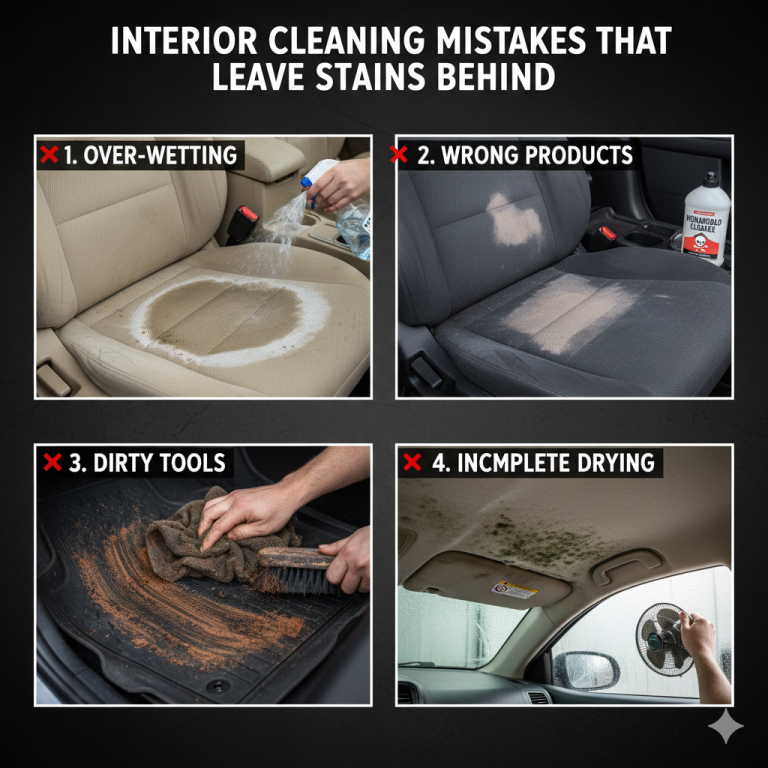
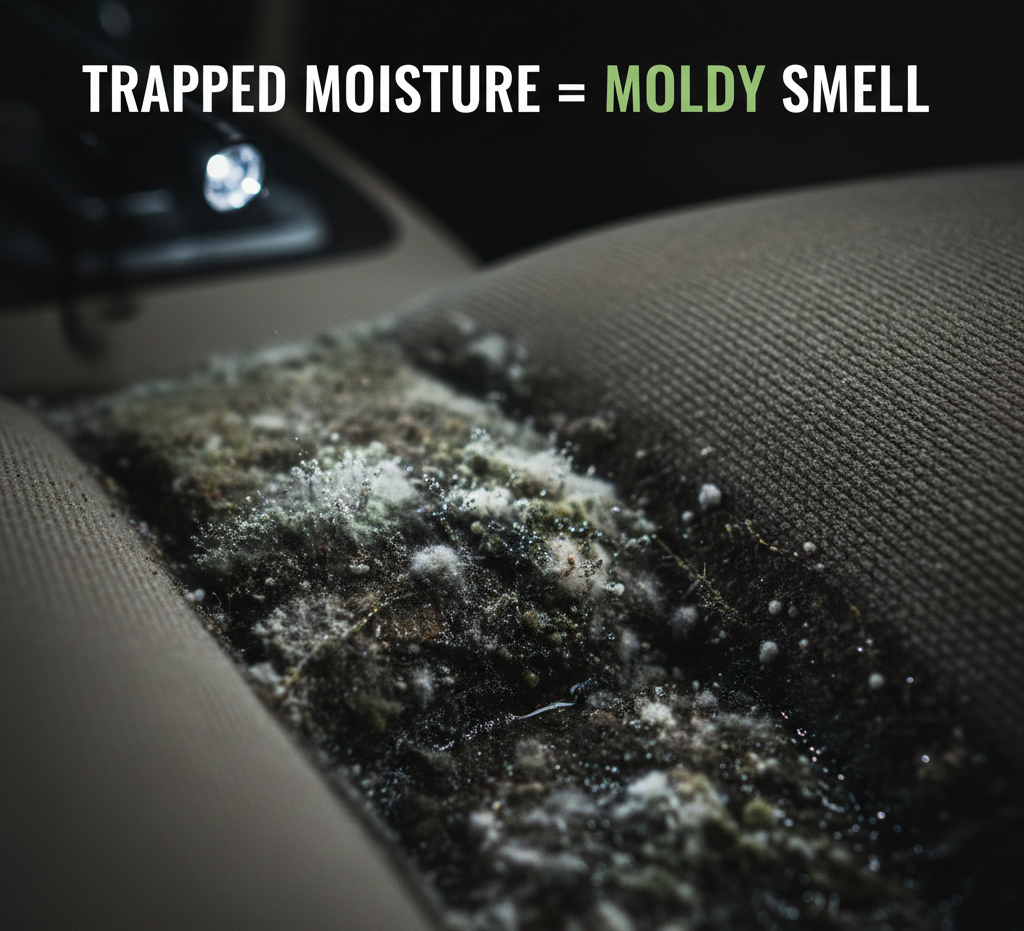
The most frequent reason a car smells worse after interior cleaning is trapped moisture. When water or liquid cleaners penetrate deep into seat foam or thick carpeting and fail to dry completely, they create a breeding ground for bacteria and mold. Within hours, that “clean” dampness turns sour, mildew-like.
Why Your Freshly Cleaned Car Stinks?
If you are looking for a quick explanation, the smell usually stems from one of three sources:
- Excessive Humidity: Water trapped in the padding of the seats or the under-carpet insulation.
- Waking Up Old Stains: Liquid cleaners can “reactivate” dried spills (like old milk or pet accidents) by pulling them to the surface.
- Chemical Off-gassing: Strong detergents or low-quality “new car” scents can leave a heavy, nauseating oily residue.
To eliminate the smell, you must prioritize airflow and heat to pull moisture out of the fabrics immediately.
1. The Moisture Trap: The Number One Culprit
Most DIY detailers and even some professionals use too much water. Whether you are using a dedicated carpet extractor or a spray bottle and a brush, liquid moves downward through gravity. While the fabric surface feels dry to the touch within an hour, the thick polyurethane foam inside the seat remains saturated.
How Mildew Develops?
Mold spores exist everywhere. When you provide them with a dark, damp, and warm environment like a closed car parked in the sun, they begin to colony-form rapidly. This biological growth produces microbial volatile organic compounds (mVOCs), which our noses perceive as a “locker room” or “wet dog” smell.
The Problem with Insulation
Modern vehicles use thick sound-deadening material under the carpet. Once this heavy padding gets wet, it acts like a sponge. It is nearly impossible to dry this layer without industrial-grade air movers or removing the seats entirely.
2. Reactivating Deep-Seated Odors
Vehicles accumulate “ghost smells” over time. These are dried residues from spilled drinks, sweat, and organic matter that have settled deep into the fibers. In their dry state, these particles might not emit a strong scent.
The “Wicking” Effect
When you apply a liquid cleaner, you are essentially re-liquefying those old spills. As the fabric dries, the liquid moves from the bottom of the fiber to the tip through capillary action—this is known as “wicking.” This process brings old, rotted proteins or sugars to the surface, where they can finally off-gas into the cabin air.
According to Car and Driver, professional detailing often requires multiple passes with a dry vacuum to ensure these reactivated contaminants are fully removed rather than just moved around.
3. Chemical Reactions and Off-Gassing
Sometimes the “bad smell” isn’t biological; it’s chemical. If you use several different cleaning products—one for the leather, one for the plastic, and another for the carpet—their vapors mix in the confined space of the cabin.
- pH Imbalance: Using high-alkaline degreasers on natural fibers can cause a chemical “burn” scent.
- Low-Quality Fragrances: Many inexpensive interior cleaners use oil-based scents designed to mask odors rather than eliminate them. When these oils heat up in a parked car, they can smell rancid or overly synthetic.
- Surfactant Residue: If you don’t rinse the soap out of the carpet, the sticky residue will actually attract more dirt and hold onto smells more aggressively than clean fibers.
4. The Cabin Air Filter: The Forgotten Variable
Sometimes the cleaning process itself isn’t the problem, but it highlights an existing issue. When you clean the dashboard and vents, you might disturb dust and mold spores that have settled in the HVAC system.
If you haven’t changed your cabin air filter recently, it may be loaded with organic debris. After a deep clean, you are likely more sensitive to the car’s air quality. Turning on the AC to “dry out” the interior can pull air through a moldy filter, immediately ruining the cabin’s fresh scent. Experts at reputable automotive sites recommend replacing this filter every 12,000 to 15,000 miles to maintain air purity.
5. Dislodging Debris in Hard-to-Reach Areas
When you vacuum or use compressed air to clean out “the gap” between the seats and the center console, you might be moving old food particles or organic waste without actually removing them.
By blowing air into these crevices, you break up a solid piece of old food into smaller particles, increasing its surface area. This allows the odor to escape more freely into the cabin. If any moisture from your cleaning spray reaches these newly exposed particles, the decay process accelerates.
Essential Steps to Fix a Stinking Car Interior
If your car currently smells worse after a cleaning, do not panic. Follow these steps to remediate the odor before mold becomes a permanent resident.
Maximize Ventilation
The first rule of car detailing is that the job isn’t done until the car is bone-dry.
- Windows Down: If you have a secure garage, leave all windows and the trunk open overnight.
- Air Movers: Place a high-velocity floor fan inside the car, aiming it directly at the most damp carpet areas.
- The Heater Method: If it’s a humid day, start the engine, turn the heater to its maximum setting, and turn on the AC (which acts as a dehumidifier). Let it run for 20 minutes with the windows cracked slightly to let the moisture escape.
Use an Odor Neutralizer (Not a Mask)
Avoid “hanging trees” or vent clips, which only add more chemicals to the air. Instead, look for:
- Enzyme Cleaners: These are effective at removing odors from organic sources (such as milk or pet urine). The enzymes “eat” the odor-causing bacteria.
- Activated Charcoal: Placing bags of bamboo charcoal under the seats can help absorb lingering moisture and chemical vapors over several days.
The Ozone Treatment
For severe cases where mold has already taken hold, professional detailers use ozone generators. Ozone ($O_3$) is a highly reactive gas that oxidizes odor molecules and kills bacteria on contact.
- Note: Ozone is a lung irritant. This process should be done only in an empty vehicle, followed by thorough airing out.
How to Prevent Odors During Future Cleanings?
To ensure your next cleaning session results in a truly fresh interior, change your technique:
- Dry Vacuum First: Spend 70% of your time vacuuming while the interior is dry. Removing the bulk of the dirt before adding liquid prevents “mud” from forming in the carpet fibers.
- Use Low-Moisture Techniques: Instead of soaking the seats, spray your cleaner onto a microfiber towel or a soft brush first, then agitate the surface.
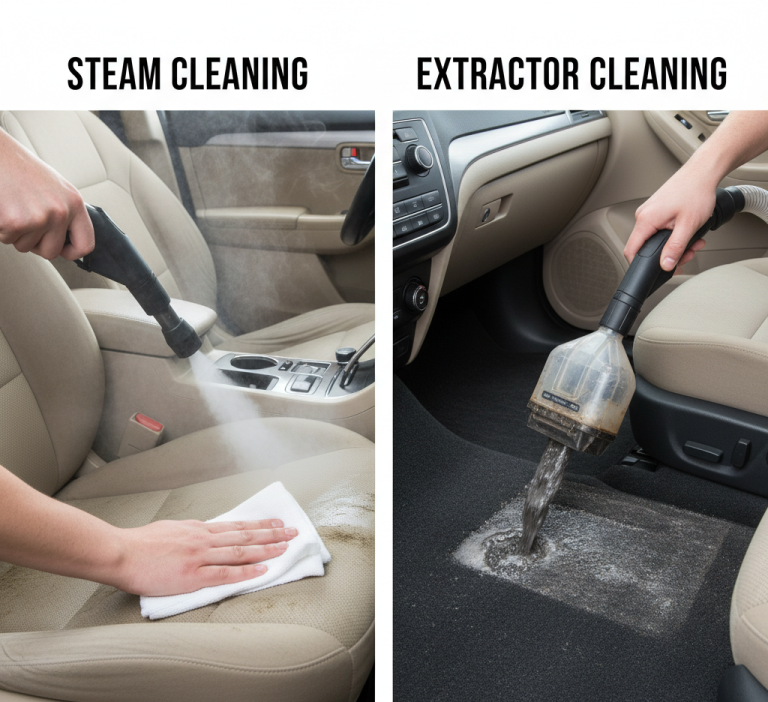
- Invest in an Extractor: If you plan on deep cleaning frequently, a machine that sprays and immediately sucks up the liquid is far superior to manual scrubbing.
- Check the Weather: Never deep-clean your interior on a rainy or highly humid day. Choose a day with low humidity and plenty of sunlight to assist the drying process.
Summary of Post-Cleaning Odor Causes
| Cause | Smell Profile | Primary Solution |
|---|---|---|
| Trapped Moisture | Sour, mildew, old socks | High-velocity fans and heat |
| Wicked Stains | Specific (e.g., old coffee/milk) | Re-clean with enzyme cleaner |
| Chemical Off-gassing | Sharp, oily, artificial | Ventilation and charcoal bags |
| Dirty Air Filter | Dusty, stale | Replace the cabin air filter |
Conclusion
A car that smells worse after interior cleaning is almost always a victim of “too much of a good thing.” Water is a powerful cleaning tool, but without a strategy for extraction and evaporation, it becomes an enemy of your vehicle’s upholstery.
By focusing on dry-cleaning methods, using pH-neutral chemicals, and ensuring the vehicle is completely dry before closing the doors, you can maintain a fresh environment. Remember, “clean” doesn’t have a scent—if you smell anything at all after a detail, there is likely still work to be done.
For more information on maintaining vehicle health, you can visit the National Institute for Occupational Safety and Health (NIOSH) to learn about the effects of mold and dampness in confined spaces.
Keeping your car dry is the most effective way to protect both your investment and your respiratory health. Don’t let a simple cleaning task turn into a long-term mold problem—ventilate early and often.