How can I remove pet hair from car seats faster? The most efficient approach is to break the static cling that holds the strands to your upholstery.
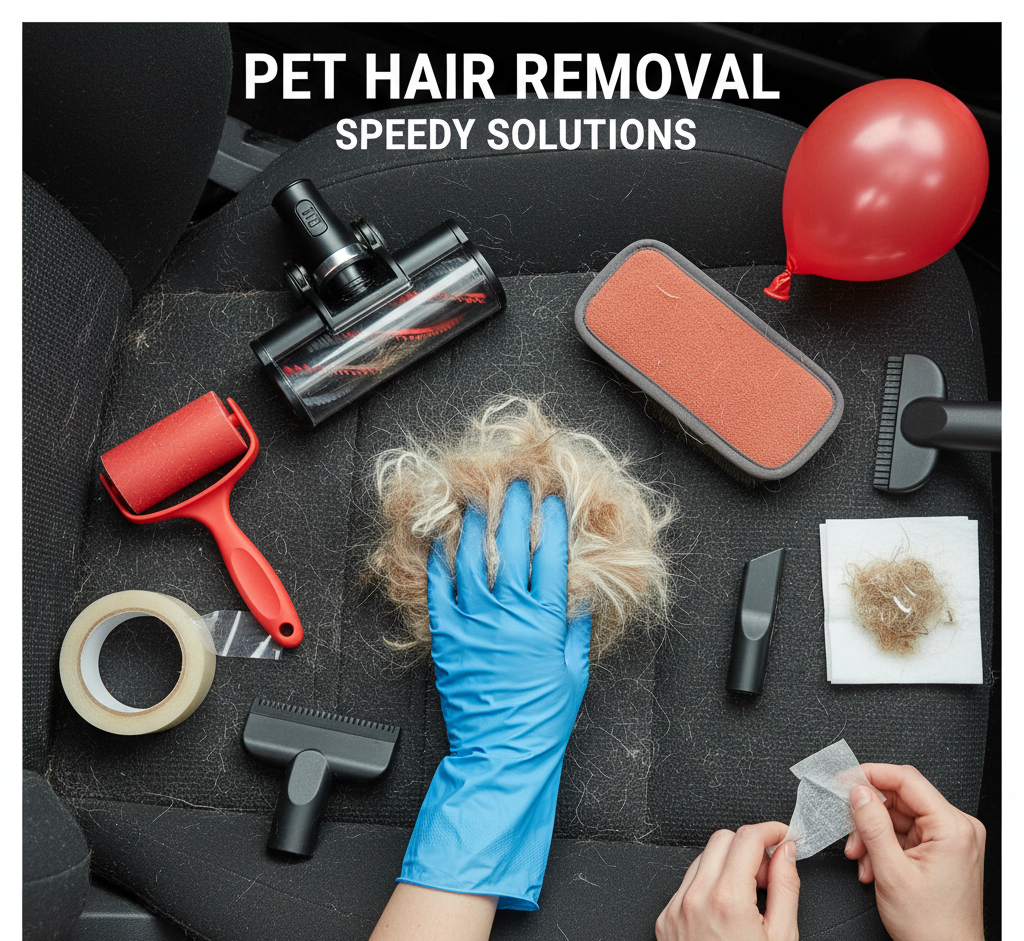
To clean your vehicle immediately, lightly mist the fabric with a mixture of water and liquid fabric softener. Put on a standard rubber cleaning glove and sweep your hand across the surface in short, deliberate strokes.
The rubber grips the fine strands, pulling them out of the woven fibers and gathering them into manageable clumps.
You can then easily pick up these clusters or vacuum them away in seconds.
Why Fur Clings to Vehicle Upholstery?
Vehicle interiors act like magnets for loose fur. Most automotive cloth is a synthetic blend, such as nylon or polyester. These materials naturally generate static electricity when they are rubbed together.
When your dog moves around in the back, the friction charges both the fabric and the fur. This static charge locks the strands deep within the woven patterns.
Short, coarse strands from breeds like Beagles or Pugs present a unique challenge. These behave like tiny needles, weaving themselves directly into the fabric matrix. Standard vacuuming often fails because the suction cannot overcome the physical entanglement and static bond.
5 Fastest Methods to Clean Car Seats
Different severity levels require different interventions. Here are the most efficient tactics to clear out a furry interior, ranked by accessibility.
1. The Rubber Glove Strategy
This remains the most accessible and effective trick. The friction between a dry rubber glove and synthetic upholstery generates a localized charge that outcompetes the fabric’s grip.
- Purchase a thick pair of standard dishwashing gloves with textured palms.
- Keep the gloves completely dry for maximum friction.
- Press your hand firmly against the seat and pull toward yourself in one direction.
- Gather the resulting fur balls and dispose of them.
2. The Fabric Softener Spray
Liquid fabric softener contains chemical compounds designed to eliminate static electricity. Neutralizing the static bond forces the fur to release its grip on your seats.
- Mix two teaspoons of liquid fabric softener with water in a standard spray bottle.
- Mist the affected areas lightly. Do not soak the cushions.
- Wait 3 minutes for the solution to penetrate and discharge the static.
- Wipe the area down with a dry microfiber cloth or a rubber squeegee.
3. The Window Squeegee Technique
A standard glass squeegee works exceptionally well on wide, flat seating areas. The rubber blade acts like a plow, dragging embedded hairs out of the fabric pores.
- Use a clean, dry squeegee designed for windshields or home windows.
- Start at the top of the backrest and pull down in overlapping rows.
- Apply moderate pressure to dig the blade into the textile.
- Collect the accumulated pile at the bottom crease of the cushion.
4. Pumice Stones for Stubborn Strands
Detailers frequently use pumice stones for extreme cases, particularly on carpets and durable cloth. The abrasive texture catches fine, needle-like strands that rubber tools miss.
- Purchase a pumice stone specifically marketed for auto detailing to avoid scratching plastics.
- Drag the block gently across the surface in a single direction.
- Avoid using pumice on delicate fabrics, leather, or synthetic vinyl.
- Vacuum the loosened debris immediately to prevent it from resettling.
5. Duct Tape and Heavy-Duty Lint Rollers
Standard clothing lint rollers often lack sufficient adhesive strength for automotive fabrics. You need aggressive tackiness to lift embedded coats.
- Wrap a layer of heavy-duty duct tape around your hand, sticky side out.
- Press your hand firmly onto the localized hairy spots, then peel them away.
- Alternatively, purchase industrial-strength pet hair lint rollers designed for furniture.
- Use this method for quick touch-ups rather than deep cleaning an entire cabin.
Essential Tools for Auto Detailing
Professional results require professional-grade equipment. Upgrading your detailing arsenal drastically reduces the time spent scrubbing.
Specialized Silicone Brushes
Silicone detailing brushes feature thick, flexible bristles that grab fur without damaging fragile weaves. They operate on the same principle as rubber gloves but offer a more ergonomic grip. Look for brushes with a wedge-shaped tip to reach tight crevices between the center console and the front buckets.
High-Powered Automotive Vacuums
Household vacuums often lack the specific attachments needed for automotive terrain. You need a machine with a narrow crevice tool and a motorized brush head.
The motorized head physically beats the fabric, vibrating loose particles to the surface before the suction pulls them away. For comprehensive advice on selecting machines with high CFM (Cubic Feet per Minute) ratings, review guidelines from Consumer Reports.
Material-Specific Cleaning Instructions
Your approach must change based on your vehicle’s interior trim. Using the wrong tool can cause permanent damage to premium surfaces.
Clearing Leather and Vinyl
Leather and synthetic leather alternatives reject static cling, making them much easier to manage. Fur rests on the surface rather than embedding into the material.
- Avoid abrasive tools like pumice stones or stiff nylon brushes.
- Use a soft microfiber towel lightly dampened with a dedicated leather cleaner.
- Wipe the surface gently, folding the towel frequently to trap the gathered strands.
- Vacuum the seams heavily, as shedding tends to accumulate in the stitching trenches.
Handling Nylon and Woven Cloth
Cloth interiors require aggressive agitation. The woven nature of the material acts like a net, catching and holding debris from your pets.
- Start with the fabric softener trick to kill the static charge.
- Follow up with a silicone brush, scrubbing in tight circles to dislodge the needles.
- Use a high-powered wet/dry shop vacuum to extract the loosened material.
- Finish with a sticky roller to catch the remaining top-layer fuzz.
Preventative Measures to Reduce Shedding
The absolute best way to handle a messy cabin is to prevent the mess entirely. Implementing a few pre-ride strategies saves hours of detailing work later.
Invest in Quality Seat Covers
A dedicated hammock-style cover provides a physical barrier between your dog and your upholstery. These covers hook over the front and rear headrests, creating a suspended protective basin.
When the ride ends, unhook the cover, pull it out of the doors, and shake it out in the yard. Choose covers made from waterproof, heavy-duty Oxford fabric for maximum durability and easy wipe-downs.
Pre-Ride Grooming Routines
Brushing your dog thoroughly before they jump into the truck removes the loose undercoat from the outside, rather than the inside. A five-minute brushing session removes most of the dead coat. Consult the ASPCA’s resources for guidance on selecting the right deshedding tools for your breed.
Use a Travel Crate
If your vehicle accommodates it, securing your pet in a travel crate keeps shedding confined to a single, easily cleanable plastic tray. This also significantly increases passenger safety during hard braking. Crate training requires patience, but it keeps your vehicle’s interior in pristine condition and maintains its resale value.
Tackling the Floor Carpets and Trunk Liners
Often, the flooring material presents a tougher challenge than the seats. Automotive carpet is densely packed and highly fibrous.
To tackle the trunk liner or the footwells, use a pumice stone or a specialized carpet rake. The rigid tines of a carpet rake pull hair up from the base of the carpet fibers. Combine the raking motion with immediate, trailing vacuum suction to prevent the debris from settling back into the pile.
If the carpet smells like a wet dog, sprinkle a liberal amount of baking soda over the dry floorboards after removing the visible fur. Let it sit overnight to absorb the embedded odors before vacuuming it up the next morning.
Summary
Learning exactly how to remove pet hair from car seats faster transforms a frustrating chore into a quick, systematic process. Stop relying on weak household vacuums and start utilizing friction, static neutralization, and targeted agitation.
Combine the rubber glove technique with a fabric softener mist for immediate, noticeable results.