You spend hours scrubbing your vehicle’s seats, and they look pristine while wet. The next morning, the fabric dries, and those ugly brown rings reappear. So, exactly why do water stains come back after cleaning the car interior?
The short answer is wicking. When you use too much liquid, the surface dirt gets pushed deep into the seat cushion. As the top fabric layer dries, the moisture trapped inside the seat cushion rises to the surface. This rising moisture carries the deep-seated dirt back up with it, depositing a fresh stain right where you just scrubbed.
We will cover the exact science behind returning upholstery stains. You will learn professional detailing techniques to permanently remove dirt, eliminate soap residue, and properly dry your seats.
The Core Reasons Stains Reappear on Auto Upholstery
Returning spots are rarely caused by a failure to scrub hard enough. The issue usually stems from chemical and physical reactions within the seat foam.
The Wicking Effect Explained
Wicking is the most common cause of stain returns. Car seats consist of a thin layer of fabric over a thick block of absorbent polyurethane foam.
When you spray a liquid cleaner, it pushes surface grime down into that foam core. The top layer dries first, creating a moisture gradient. Capillary action forces the wet, dirty water from the bottom of the foam up to the dry fabric surface. Once the water finally evaporates, the dirt remains behind as a visible ring.
Leftover Detergent and Soap Residue
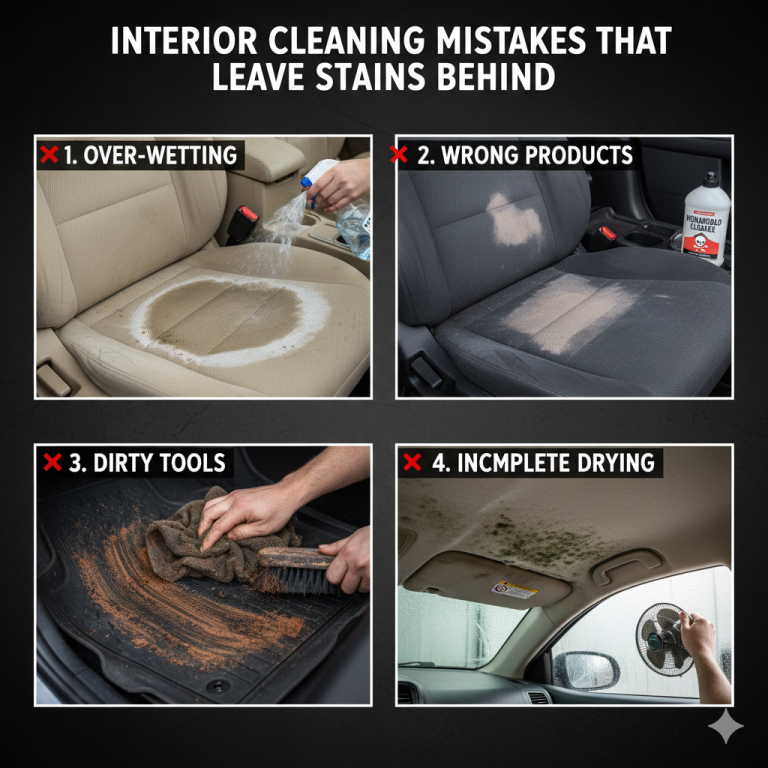
Using too much cleaning product is a massive mistake. Traditional upholstery shampoos create heavy suds that are incredibly difficult to rinse out completely.
If you leave soapy residue in the fabric fibers, that dried soap becomes a magnet for new dirt. Every time you slide into the seat, the sticky residue pulls dust from your clothes. The original stain hasn’t returned; instead, you have created a new stain anchored by leftover detergent.
Overwetting the Cushion Foam
Many car owners treat their seats like dirty laundry, soaking them completely with water. Vehicle seats are not designed to be submerged.
Overwetting takes days to dry completely. This prolonged dampness not only ensures wicking but also creates a favorable environment for mold and mildew. If your car interior smells musty a few days after cleaning, overwetting is the culprit.
Hard Water Minerals
The water from your garden hose contains dissolved minerals, such as calcium and magnesium. When you use tap water to scrub your interior, the water eventually evaporates.
The heavy minerals do not evaporate. They remain embedded in the seat fibers, leaving behind chalky, white, or light brown rings. This is why professional detailers frequently rely on distilled water. For more information on how hard water affects surfaces, read this USGS water hardness guide.
How to Stop Water Stains from Coming Back?
To defeat wicking and residue, you must shift from surface scrubbing to deep extraction.
Follow these rules to prevent returning spots:
- Vacuum deeply first: Remove all dry dust before introducing any liquids.
- Limit your liquids: Lightly mist the surface instead of pouring water on the seat.
- Use low-sudsing cleaners: Choose enzymatic cleaners or specialized upholstery formulas that do not require heavy rinsing.
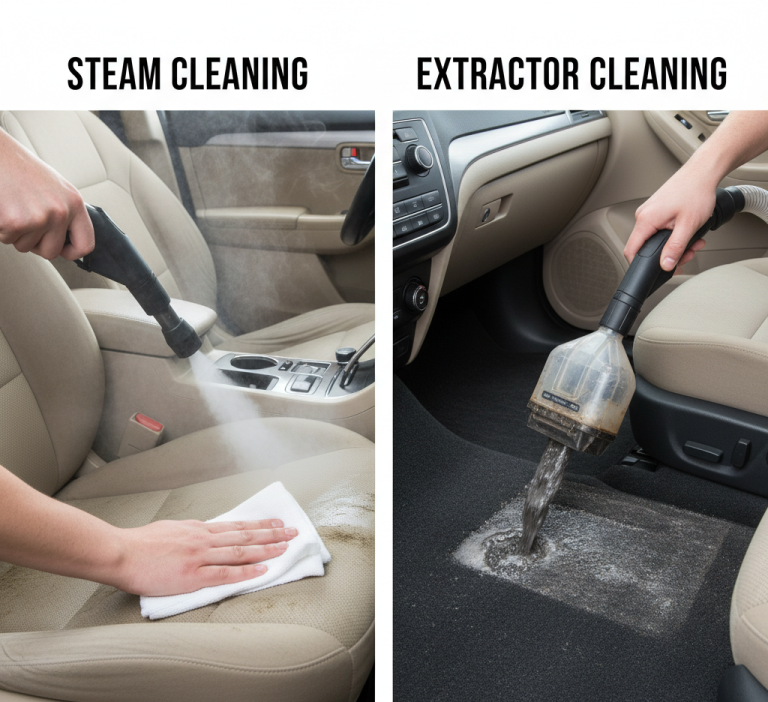
- Extract the moisture: Use a wet/dry shop vacuum or a dedicated carpet extractor to remove the dirty water from the foam.
- Force the drying process: Use fans and open doors to dry the fabric rapidly before deep moisture can rise.
Step-by-Step Guide to Removing Stubborn Car Interior Stains
If you want to remove an old water ring permanently, you need the right tools and a structured method.
Step 1: Dry Brushing and Vacuuming
Never apply liquid to a dusty car seat. If you spray cleaner onto dry dust, you instantly create mud. This mud sinks directly into the foam.
Use a stiff-bristle detailing brush to agitate the dry fabric. This breaks up loose dirt, dead skin cells, and dried mud. Follow up immediately with a high-powered vacuum. Use a crevice tool to remove debris from the stitching and seams.
Step 2: Choosing the Right Cleaner Formulation
Avoid household dish soaps or heavy laundry detergents. These products are too concentrated for auto interiors.
Opt for an oxygen-based upholstery cleaner or an enzymatic stain remover. Enzymatic cleaners actually break down organic proteins found in sweat and food spills. Dilute the cleaner exactly as the manufacturer recommends.
Step 3: Agitation and Dwell Time
Spray a light, even mist of your chosen cleaner over the entire seat panel, not just the stained area. Cleaning edge-to-edge prevents water rings from forming at the borders of your work area.
Allow the product to sit for three to five minutes. This dwell time lets the chemicals encapsulate the dirt particles. Take a clean detailing brush and gently scrub the fabric in a cross-hatch pattern (up and down, then left to right).
Step 4: The Extraction Phase
This is the most critical step for preventing returning stains. You must physically remove the dirty liquid from the seat.
If you own a dedicated carpet extractor, use it to inject clean water and vacuum it up simultaneously. If you do not have an extractor, wrap a dry, clean microfiber towel around the nozzle of a wet/dry shop vacuum. Press the nozzle firmly into the seat and drag it slowly. The vacuum pulls the moisture, while the towel catches surface dirt.
Step 5: Accelerated Drying
The faster the seat dries, the less time wicking has to occur. Do not let the car sit closed up in a dark garage.
Park the vehicle in direct sunlight and roll all the windows down. If the weather is poor, place a portable floor fan inside the car, aiming it directly at the wet seats. You can also turn on the vehicle and run the air conditioning system, as AC naturally acts as a dehumidifier, pulling moisture from the cabin air.
The Chemistry of Car Seat Cleaning
Understanding the pH scale can help you fight specific types of interior spots. Different spills require different chemical reactions to break down.
- Alkaline Cleaners (pH 8-14): Best for organic soils like dirt, grease, and sweat. Most all-purpose interior cleaners fall into this category.
- Acidic Cleaners (pH 1-6): Best for inorganic stains like hard water spots, road salt, or coffee rings.
- Neutral Cleaners (pH 7): Safe for regular maintenance, but often too weak for heavy, returning water rings.
If you have cleaned a coffee stain three times and it keeps returning, your cleaner might be too alkaline. Switching to a slightly acidic interior cleaner can neutralize the tannins in coffee. You can learn more about stain chemistry from the American Cleaning Institute.
Essential Tools for Permanent Stain Removal
Attempting to clean auto upholstery with just a rag and a bucket of water usually leads to failure. Upgrading your equipment makes the job highly effective.
- Wet/Dry Shop Vacuum: Essential for removing moisture from foam padding.
- Drill Brush Attachments: Soft-bristled brushes that attach to a cordless drill save your arms and provide consistent agitation.
- Microfiber Towels: Look for light-colored towels so you can see the dirt transferring from the seat to the cloth.
- Pump Sprayer: A pressurized garden sprayer provides a much finer, more controllable mist than a standard trigger bottle.
- Distilled Water: Using purified water guarantees you will not leave mineral deposits behind.
Dealing with Specific Types of Returning Stains
Not all returning rings are caused by plain water. Identify the source of the initial spill to treat the returning mark effectively.
Sweat and Body Oil Rings
Sweat contains salt and proteins that bind tightly to synthetic seat fibers. During hot weather, sweat soaks deep into the seat bolsters. To permanently remove these, use an enzymatic cleaner. The enzymes break down the proteins, preventing the stain from wicking back to the surface.
Rainwater Spots on Seats
Leaving your window cracked during a rainstorm leaves behind distinct, rigid water circles. Rainwater picks up heavy pollutants and dust as it falls. Treat rainwater spots with a mild vinegar solution (one part white vinegar to three parts distilled water) to break down the environmental minerals.
Spilled Drinks and Sugary Liquids
Soda and juice spills are notoriously difficult to clean up. The sugar dries into a hard, sticky crystal deep in the foam. Water alone will reactivate the sugar, pulling it back up. You need a dedicated upholstery extractor to flush the area with hot water, dissolve the sugar crystals, and then vacuum them away.
Common Mistakes When Cleaning Car Seats
Many popular DIY cleaning hacks actually cause long-term damage to automotive fabrics. Avoid these common pitfalls.
Using Baking Soda Incorrectly
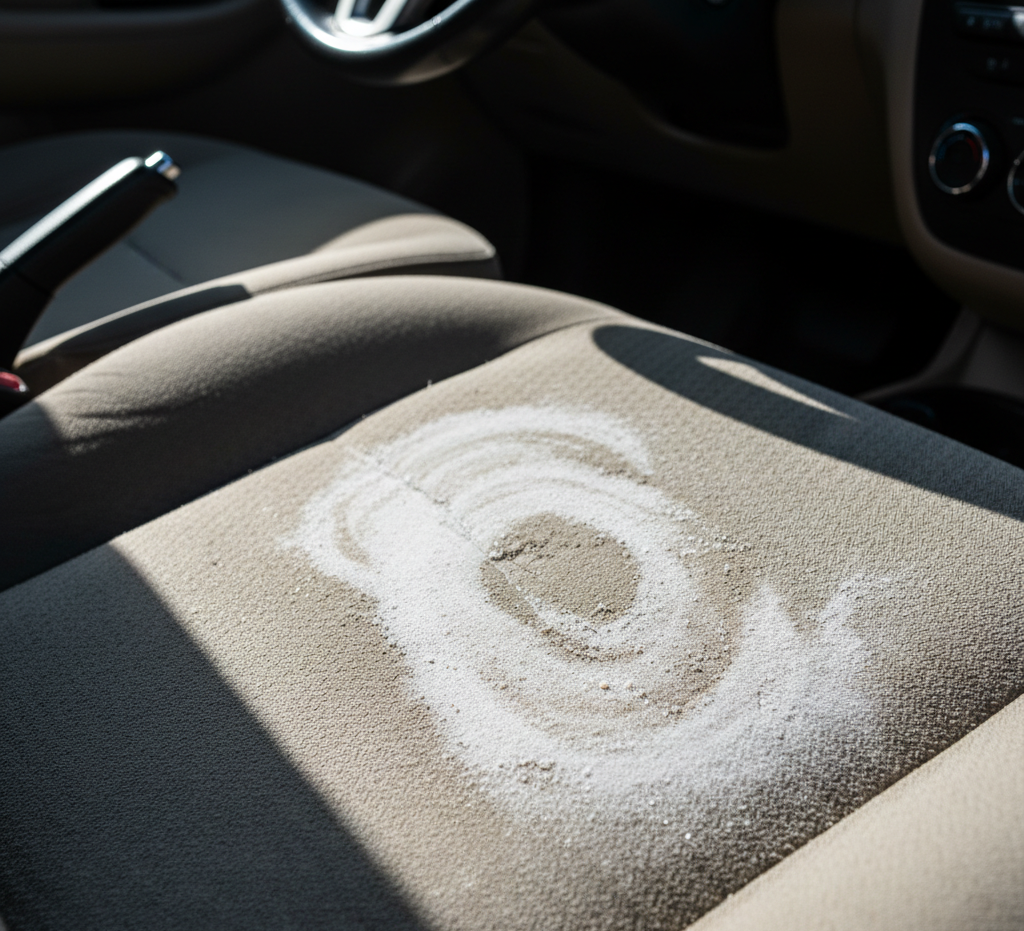
Many online guides suggest dumping baking soda on wet seats to absorb odors. Baking soda is highly alkaline and abrasive. Once it gets wet, it forms a hard paste inside the seat fabric that is nearly impossible to vacuum out. This paste will cause permanent white rings.
Aggressive Scrubbing
Automotive upholstery is durable but not invincible. Scrubbing a single spot violently with a stiff brush will fray the synthetic fibers. Once the fabric is frayed, it will appear darker than the surrounding area, mimicking a permanent stain.
Spot Cleaning Instead of Panel Cleaning
If you only spray cleaner on a two-inch stain, you push the dirt outward into a larger circle. Always clean the entire seat bottom or the entire backrest from seam to seam. This ensures the entire panel dries at the same rate, preventing border rings.
Protecting Your Car Upholstery From Future Spills
Once you finally conquer the returning water marks, you need to protect the fabric. Preventative maintenance stops wicking before it can start.
Applying a Fabric Protectant
After the seats are 100% dry, apply a hydrophobic fabric guard. These sprays coat the individual fibers in a protective polymer. When you spill water on treated fabric, the liquid beads up on the surface instead of sinking into the foam.
Routine Maintenance Vacuuming
Dirt acts like sandpaper on your upholstery. The more dirt sitting on the surface, the faster spills will turn into muddy stains. Vacuum your interior weekly to remove the dry soil.
Keep Microfiber Towels in the Glovebox
The faster you react to a spill, the less likely it is to soak into the lower foam core. Keep a clean, dry microfiber towel in your car. If you spill a drink, blot the area immediately. Press straight down to absorb the liquid; never wipe or rub, as this pushes the liquid deeper.
Final Thoughts on Auto Upholstery Care
Tackling dirty vehicle interiors requires patience and the correct methodology. Understanding the physical mechanics of the seats is the key to success.
By managing your liquid usage, prioritizing strong extraction, and ensuring rapid airflow, you can overcome the wicking effect. You no longer have to wonder why water stains come back after cleaning the car interior.