

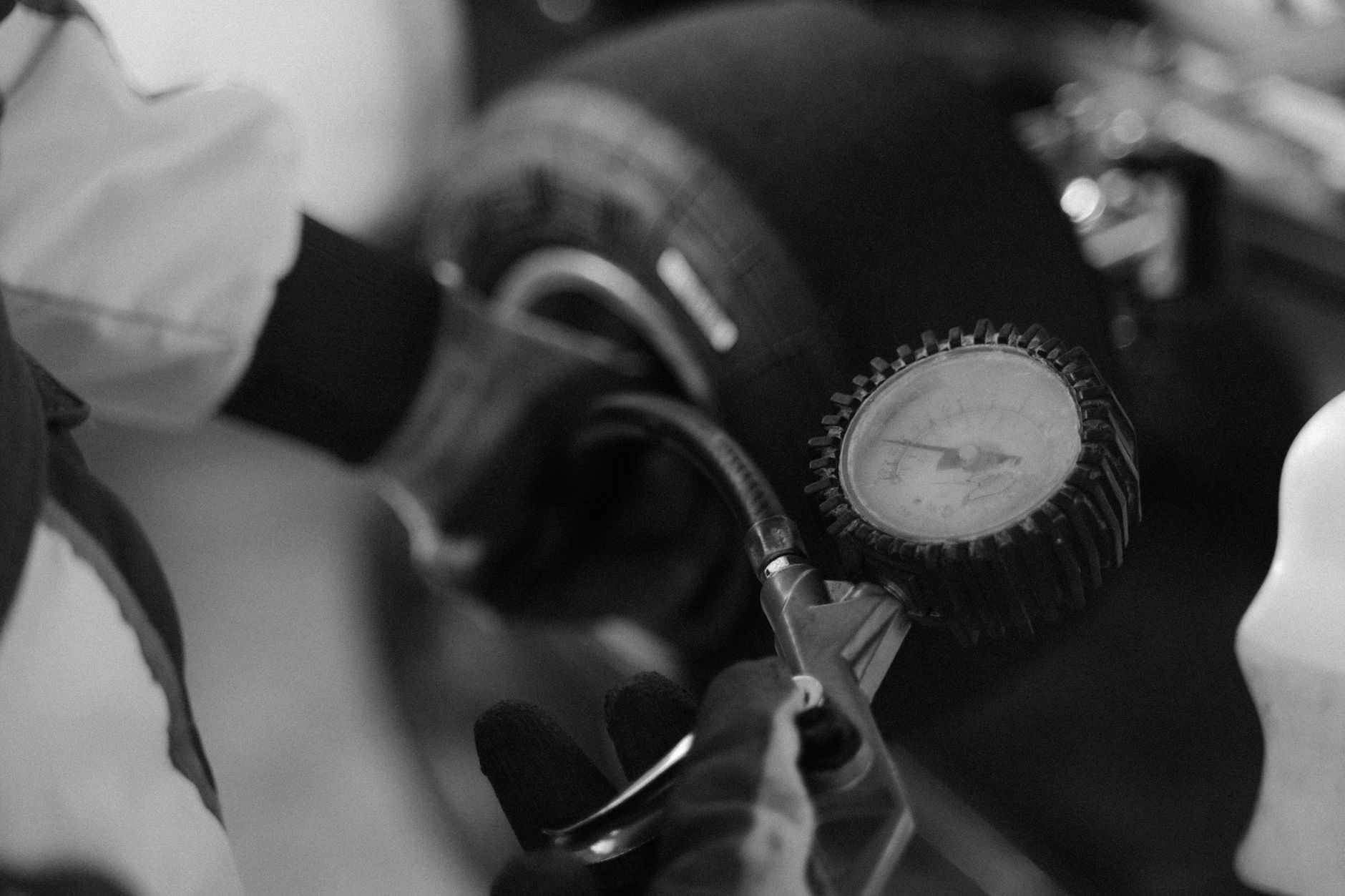
The One Thing Most Drivers Get Wrong
I’ve spent years working with cars, and if there’s one thing I see over and over, it’s drivers ignoring tire pressure. People check their oil, top up their washer fluid, and even clean their headlights.
But tire pressure? Most of them just glance at the tires, think “looks fine,” and move on.
Here’s the problem: a tire that looks fine to the naked eye can be dangerously low or overinflated. I’ve seen cars running 20 PSI on a tire that should be 29, and the driver had no idea because the sidewall didn’t look flat.
That’s because modern tire sidewalls are stiff enough to hold their shape even when the internal pressure is way off.
So I decided to run a real-world test. I took two identical cars, both Mazda MX-5s, both fitted with the same scrubbed-in set of tires, and set their pressures differently.
One car ran at the manufacturer-recommended 29 PSI all around. The other ran at 20 PSI (underinflated) and later at 40 PSI (overinflated). I tested braking from 60 mph and then lapped a track in mixed conditions to see how each setup behaved.
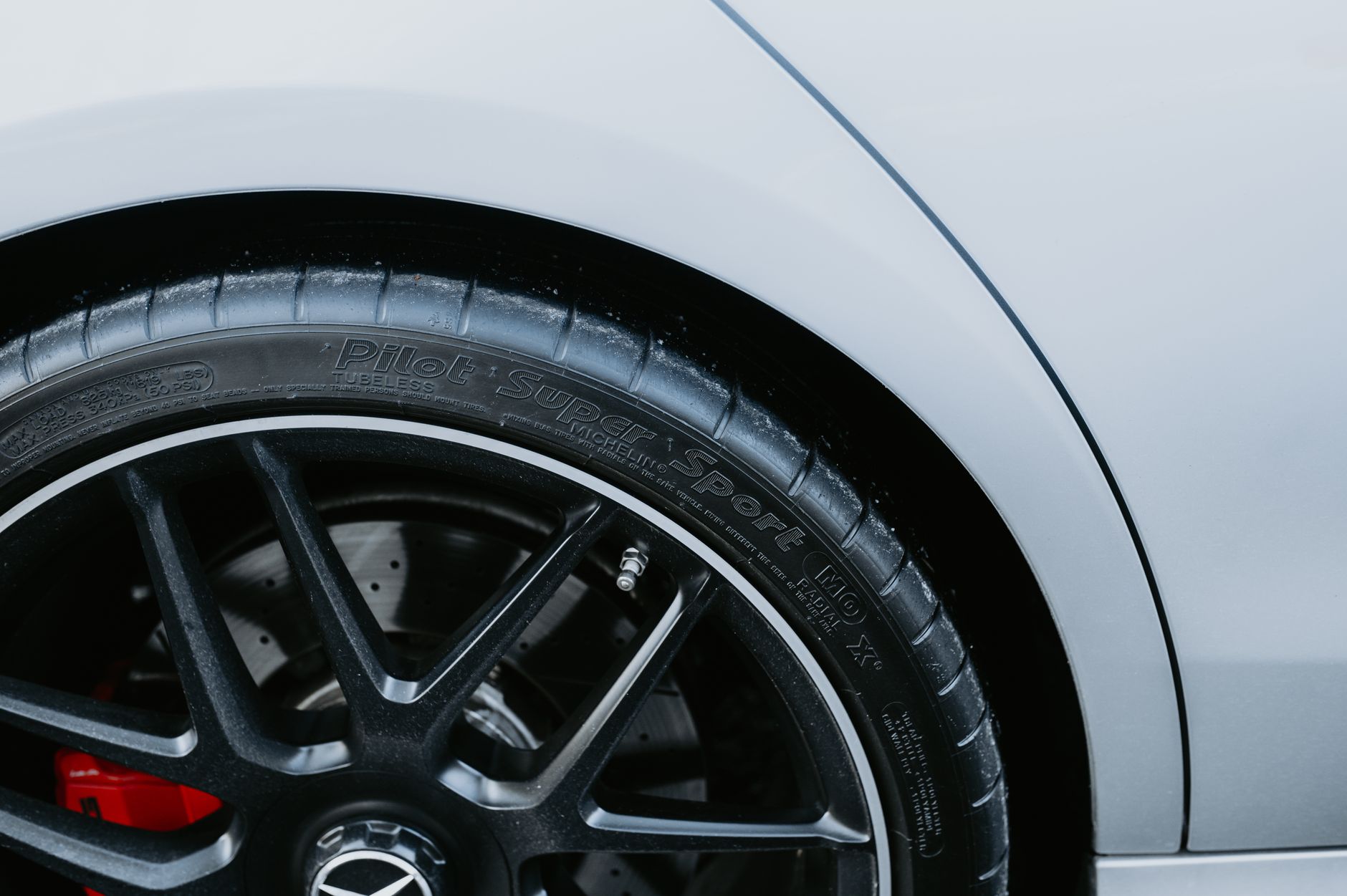
How I Tested Tire Pressure: Braking and Handling?
I used a dry track that had some damp patches from recent rain. For the braking test, I accelerated to 60 mph, then slammed on the brakes at a marked line, clutching in, and measured where the car stopped. I repeated this with each pressure setting.
For the handling test, I lapped the same circuit in the rain and on drying tarmac, pushing the car hard enough to provoke slides and see how each setup responded.
The tires were all the same model, a UK-developed sport tire, and they were scrubbed in beforehand. No cheat tires, no variable except the air inside.
Braking Test Results: Correct vs. Wrong Pressure
Let’s start with the underinflated car at 20 PSI. When I hit the brakes from 60 mph, the stopping distance felt okay, the ABS was working overtime, and the car did stop.
But when I dropped cones, the distance was noticeably longer than I expected.
Then I tried the overinflated car at 40 PSI. It actually stopped a bit shorter than the underinflated car.
That surprised me at first, but I think I understand why: when you overinflate, the tire balloons in the middle, but as soon as you hit the brakes, the forward load pushes the contact patch back down, giving you a bigger contact area during the stop.
It’s not ideal, you’re still losing grip on the outer edges, but it behaves better than a severely underinflated tire in straight-line braking.
Finally, the correctly inflated car is at 29 PSI. It stopped earlier than both—by more than a meter. On a greasy surface, that extra meter could be the difference between a close call and a collision.
Handling Test: Overinflation Will Bite You
Braking is one thing. Handling is where things get scary.
When I drove the overinflated car at 40 PSI around the track, I felt the rear end get twitchy immediately. The car felt pointy, sharp initial turn-in, but then the back would snap loose with almost no warning.
On a damp corner, I barely touched the throttle, and the car spun. I mean, full-on, nearly-into-the-hedge spin.
That narrowed contact patch from an overinflated tire means you have less rubber on the road. On dry asphalt, you might not notice it.
On wet roads or in emergency maneuvers, you lose grip suddenly and without much progressive warning. If you’re driving a rear-wheel-drive car or any car with a sensitive chassis, overinflated tires will turn a normal corner into a crash.
A mistake I see people make is thinking “more air = more safety” or “higher pressure = better fuel economy.”
Yes, you might save a marginal amount of fuel, but you’re trading it for dramatically reduced grip in the wet. That’s not a trade worth making.
What About Underinflation? The Wet Surface Trap
Here’s where the results get interesting. On dry tarmac, the underinflated car at 20 PSI felt almost identical to the correctly inflated car.
I could push it through corners, feel the progressive slide, and the grip was surprisingly good. In fact, some race teams run slightly lower pressures on dry circuits to increase the contact patch.
But as soon as I hit a damp patch, the grip vanished. It went from full traction to zero in a split second—a sudden, unpredictable breakaway that would catch any driver off guard.
The reason is that an underinflated tire squirms more, and on wet surfaces, the tread blocks can’t clear water effectively.
The tire lifts from the center of the contact patch, reducing braking and cornering grip exactly when you need it most.
So while underinflated tires felt fine in the dry, they were terrifying in the wet. And since most of us drive in mixed conditions, you can’t rely on “it felt fine in the parking lot.”
The Part-Worn Tire Warning Nobody Talks About
During my testing, I also looked at some part-worn tires used tires sold as cheaper alternatives. The video I referenced had two examples: one with a visible shoddy repair, and another that looked fine on the outside but had an internal patch that was hidden.
I’ve seen this myself at garages. People buy part-worn tires to save £30, not realizing they’re trusting their safety to a repair done by an unknown person in an unknown shop.
Some repairs are fine. But some are done incorrectly, running a car at 70 mph with a patch that’s about to fail is a gamble you don’t want to take.
If you must buy used tires, inspect the inside carefully. Look for any bulge, mismatch, or signs of improper repair. But honestly? New tires are cheap insurance. You wouldn’t trust a used parachute.
Frequently Asked Questions
What is the correct tire pressure for my car?
Look in your owner’s manual or on the sticker inside the driver’s door jamb. Do not use the pressure listed on the tire sidewall; that’s the maximum safe pressure for the tire, not the recommended pressure for your car. For my test car (a Mazda MX-5 Mark III), Mazda recommends 29 PSI all around with the standard 205/45R17 tires.
Is it safe to buy used/part-worn tires?
It can be, but you have to inspect them thoroughly. Check the inside for any repaired patches, bulges, or mismatched rubber. If you see any visible repair, ask the seller for details. If they can’t tell you, walk away. The risk of a hidden fault outweighs the savings.
Why does overinflation make the car more dangerous in corners?
Overinflated tires have a smaller, narrower contact patch. That means less rubber is gripping the road. On dry pavement, you might not notice, but on wet or uneven surfaces, the reduced contact area leads to sudden loss of traction. It also makes the car feel “snappier,” more prone to oversteer or understeer without gradual warning.
How often should I check my tire pressure?
At least once a month, and before any long journey. Tire pressure can drop 1-2 PSI per month naturally. If your car has a tire pressure monitoring system (TPMS), don’t rely on it alone; it only warns you when pressure is critically low, not when it’s slightly off.
