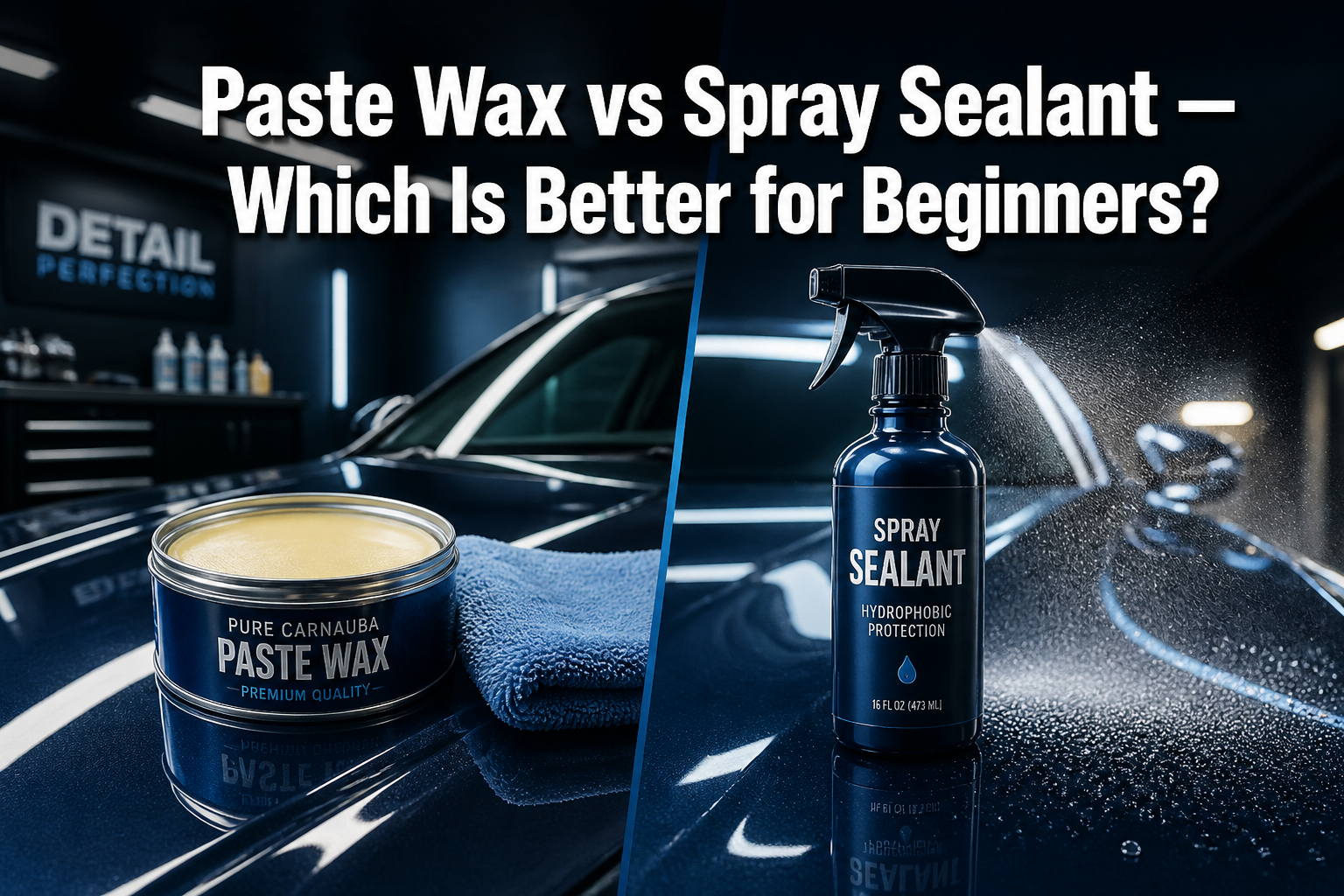
Spray sealant is generally better for beginners due to its easier application process and longer-lasting protection. While paste wax provides superior depth of shine and traditional appeal, spray sealants offer 4-6 months of protection compared to paste wax’s 2-3 months, require less technique to apply properly, and cost less per application for most car owners starting their detailing journey.
What’s the Real Difference Between Paste Wax and Spray Sealant?
Paste wax contains natural carnauba wax that creates a warm, deep shine, while spray sealants use synthetic polymers that bond chemically to paint for longer-lasting protection. The fundamental difference lies in their composition and how they interact with your car’s clear coat.
Paste wax works by filling microscopic imperfections in the paint surface with natural wax molecules. This creates the signature “wet look” that car enthusiasts prize. However, natural wax breaks down faster under UV exposure and heat, typically lasting 8-12 weeks in normal conditions.
Spray sealants contain synthetic acrylic or polymer compounds that form stronger molecular bonds with the paint. These synthetic chains resist breakdown from environmental factors, protecting for 4-6 months. The trade-off is a slightly more artificial-looking shine that some describe as “clinical” compared to wax’s warmth.
Choose paste wax if you prioritize maximum gloss depth and don’t mind frequent reapplication. Choose spray sealant if you want longer protection with easier maintenance.
Which Product Offers Better Protection for Your Car?
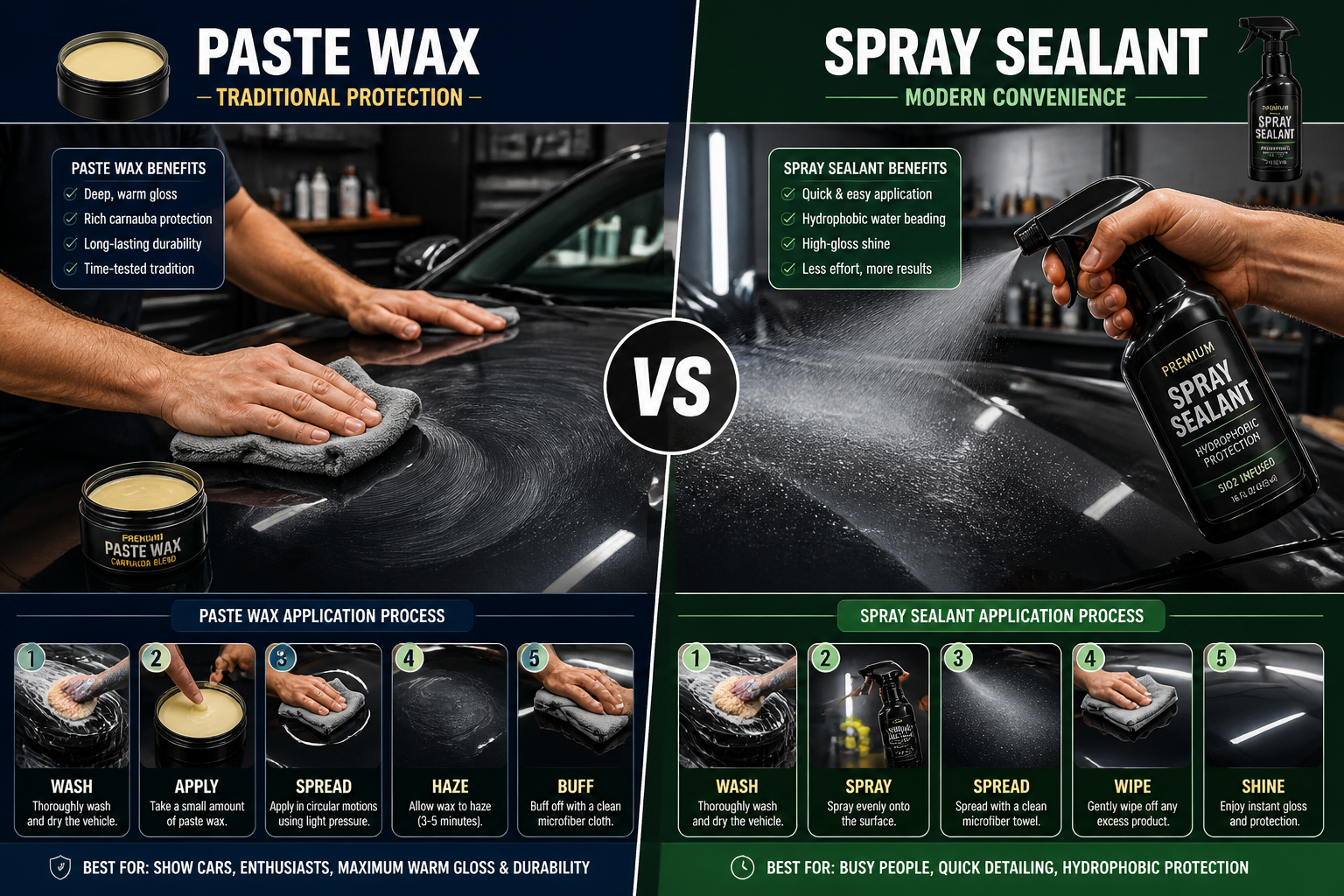
Spray sealants provide superior long-term protection against environmental damage, while paste wax excels at enhancing paint appearance. For beginners focused on paint preservation, sealants win this category decisively.
Protection Duration
- Spray sealants: 16-24 weeks of water beading and UV protection.
- Paste wax: 8-12 weeks before noticeable degradation.
- Extreme weather: Sealants maintain performance in temperatures from -20°F to 140°F.
Environmental Resistance
Synthetic sealants handle harsh conditions better than natural wax. They resist:
- UV degradation: Polymer chains don’t break down as quickly as natural wax.
- Chemical contamination: Better resistance to acid rain, bird droppings, and tree sap.
- Temperature extremes: Won’t melt off in summer heat or become brittle in winter.
Water Behavior
Both products create hydrophobic surfaces, but with different characteristics:
- Sealants: Tight, uniform water beads that sheet off quickly.
- Paste wax: Larger, rounder beads with more dramatic visual effect.
Common mistake: Expecting paste wax to last as long as advertised. Most paste wax claims of “6-month protection” apply only under ideal garage storage conditions, not daily driving exposure.
How easy is the application for Someone Just Starting?
Spray sealants are significantly easier for beginners to apply correctly, with much lower risk of application errors that damage the finish. The learning curve difference is substantial enough to influence your first purchase decision.
Spray Sealant Application Process
- Wash and dry the car completely.
- Spray product onto 2×2-foot sections.
- Spread evenly with a microfiber cloth using straight lines.
- Allow to cure for 5-10 minutes (product-dependent).
- No buffing required — simply move to the next section.
Total time: 15-20 minutes for an average sedan.
Skill level: Minimal — difficult to mess up.
Paste Wax Application Process
- Prepare surface: must be completely clean and cool
- Apply a thin layer: using circular motions with the applicator pad
- Work in small sections: 2×2 feet maximum to prevent over-curing
- Monitor haze formation: timing varies by temperature and humidity
- Buff removal: requires proper technique to avoid streaking
- Final inspection: check for missed spots or residue
Total time: 45-60 minutes for an average sedan.
Skill level: Moderate technique affects results significantly.
Beginner Error Tolerance
Spray sealants forgive mistakes like uneven application or delayed spreading. Paste wax punishes errors with streaking, hazing, or difficult removal if left on too long.
What Are the Real Costs When Starting Your Car Care Routine?
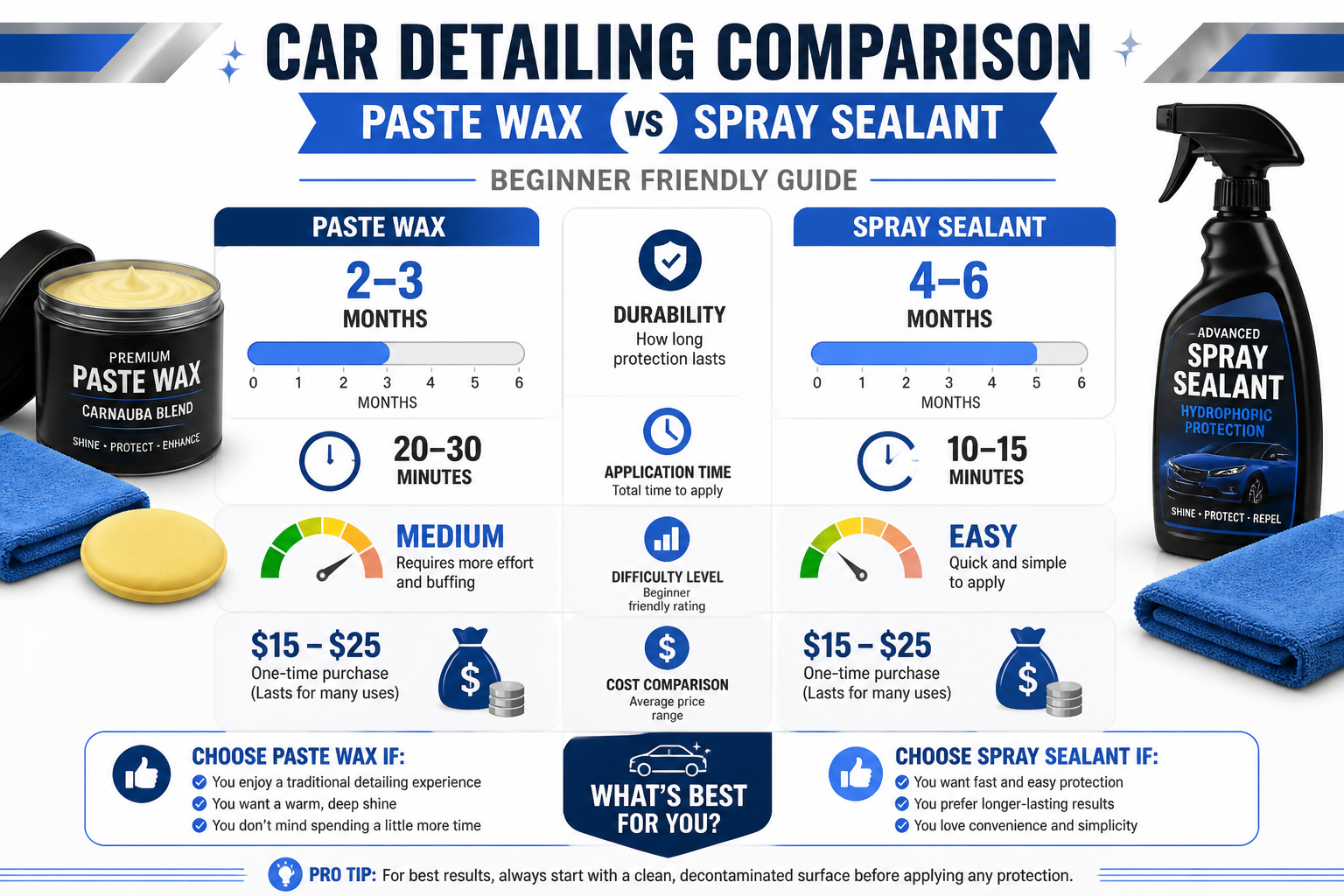
Spray sealants typically cost less per application and require fewer supporting products, making them more budget-friendly for beginners. The initial investment and ongoing costs favor sealants significantly.
Initial Product Costs
- Quality spray sealant: $15-25 for 16oz bottle (8-12 applications).
- Quality paste wax: $20-40 for 12oz container (6-10 applications).
- Cost per application: Sealant $2-4, paste wax $3-6.
Required Tools and Accessories
Spray sealant needs:
- Microfiber cloths (2-3 pieces): $10-15.
- Basic wash supplies: $20-30.
- Total startup cost: $45-70.
Paste wax needs:
- Microfiber cloths (4-6 pieces): $15-25.
- Foam applicator pads: $8-12.
- Buffing cloths (specific type): $10-15.
- Basic wash supplies: $20-30.
- Total startup cost: $70-120.
Long-term Value Analysis
Over one year of monthly applications:
- Spray sealant: 3 applications needed, total cost ~$18-36.
- Paste wax: 5-6 applications needed, total cost ~$30-60.
Hidden costs: Paste wax often requires paint correction products if applied incorrectly, adding $30-50 to your initial investment.
When Should You Choose Paste Wax Over Spray Sealant?
Choose paste wax when appearance trumps convenience, and you have time to master proper application technique. Specific scenarios favor traditional wax despite its drawbacks for beginners.
Ideal Paste Wax Scenarios
- Show cars or garage queens: Maximum gloss depth matters more than durability.
- Dark paint colors: Carnauba wax enhances depth on black, dark blue, and burgundy finishes.
- Cool, dry climates: Natural wax performs better without extreme heat and humidity.
- Weekly maintenance routine: You enjoy the ritual and have time for frequent reapplication.
Paint-Specific Considerations
Single-stage paint (older cars without a clear coat) benefits more from natural wax oils that nourish the paint. Modern clear coat finishes work equally well with either product type.
Seasonal Strategy
Many experienced detailers use a hybrid approach: spray sealant as base protection with paste wax layered on top for special occasions. This combines durability with maximum gloss but requires advanced technique.
Edge case: If you live in an area with minimal sun exposure and garage storage, paste wax can last nearly as long as sealant while providing superior appearance.
How Do Performance and Results Compare in Real-World Use?
Spray sealants deliver more consistent results across different weather conditions and user skill levels, while paste wax provides variable results that depend heavily on application technique. Real-world performance often differs from controlled test conditions.
Durability in Daily Driving
Spray sealants maintain protective properties longer under normal driving conditions:
- Highway driving at 70+ mph.
- Parking under trees or in direct sunlight.
- Exposure to automatic car washes.
- Winter road salt and summer heat.
Paste wax degrades faster but provides better initial water behavior and gloss depth when fresh.
Maintenance Requirements
- Sealant maintenance: Simple spray-and-wipe touch-ups every 2-3 months.
- Wax maintenance: Complete reapplication every 6-8 weeks for optimal protection.
Visual Results Over Time
- Month 1: Paste wax shows superior gloss and water beading.
- Month 2: Performance gap narrows significantly.
- Month 3: Spray sealant maintains protection while wax shows degradation.
- Month 4+: Sealant continues protecting while wax needs reapplication.
Professional tip: The “best” choice depends on whether you prioritize peak performance (paste wax) or consistent long-term results (spray sealant).
Final Thoughts
The paste wax vs spray sealant debate for beginners has a clear winner: start with spray sealant. The combination of easier application, longer-lasting protection, and lower cost makes spray sealants the logical choice for anyone new to car care.
Spray sealants provide 4-6 months of reliable protection with minimal technique required, while paste wax demands proper application skills and frequent reapplication every 2-3 months. For beginners, the risk of application errors with paste wax often outweighs its superior gloss benefits.
FAQ
Can you apply spray sealant over paste wax?
No, spray sealants won’t bond properly over wax. You must remove existing wax with a decontamination wash or clay bar before applying sealant.
How long should you wait between coats of paste wax?
Wait 12-24 hours between paste wax coats to allow complete curing. Most paste waxes don’t benefit from multiple coats anyway.
Do spray sealants work on all paint colors?
Yes, spray sealants work equally well on all paint colors and finishes, including matte paint (check product specifications first).
Which product is better for black cars?
Paste wax traditionally provides deeper gloss on dark colors, but modern spray sealants have closed this gap significantly while offering better protection.
Can beginners use both products together?
Advanced technique only. Apply spray sealant first as base protection, then paste wax on top. This requires experience to avoid streaking or bonding issues.
How do you know when protection is wearing off?
Water stops beading on the surface or forms large, flat sheets instead of tight beads. This typically occurs after 8-12 weeks for wax, 16-24 weeks for sealant.
Are expensive paste waxes worth the cost for beginners?
No, mid-range products ($20-30) perform nearly as well as premium options ($50+) for beginners still learning proper technique.
Can you apply these products in direct sunlight?
Spray sealants tolerate warm surfaces better than paste wax. Both work best in shade with cool paint surfaces for optimal results.
How many cars can one bottle treat?
A 16-oz spray sealant treats 8-12 average cars. A 12oz paste wax container treats 6-10 cars when applied properly in thin layers.
Do you need special clothes for removal?
Spray sealants work with any clean microfiber cloth. Paste wax removal benefits from plush, high-GSM microfiber cloths to prevent streaking.
Which product works better in winter conditions?
Spray sealants handle winter road salt and temperature extremes better than natural wax, which can become brittle in freezing weather.
How soon can you wash the car after application?
Wait 12-24 hours before washing to allow complete curing, regardless of which product you choose.