

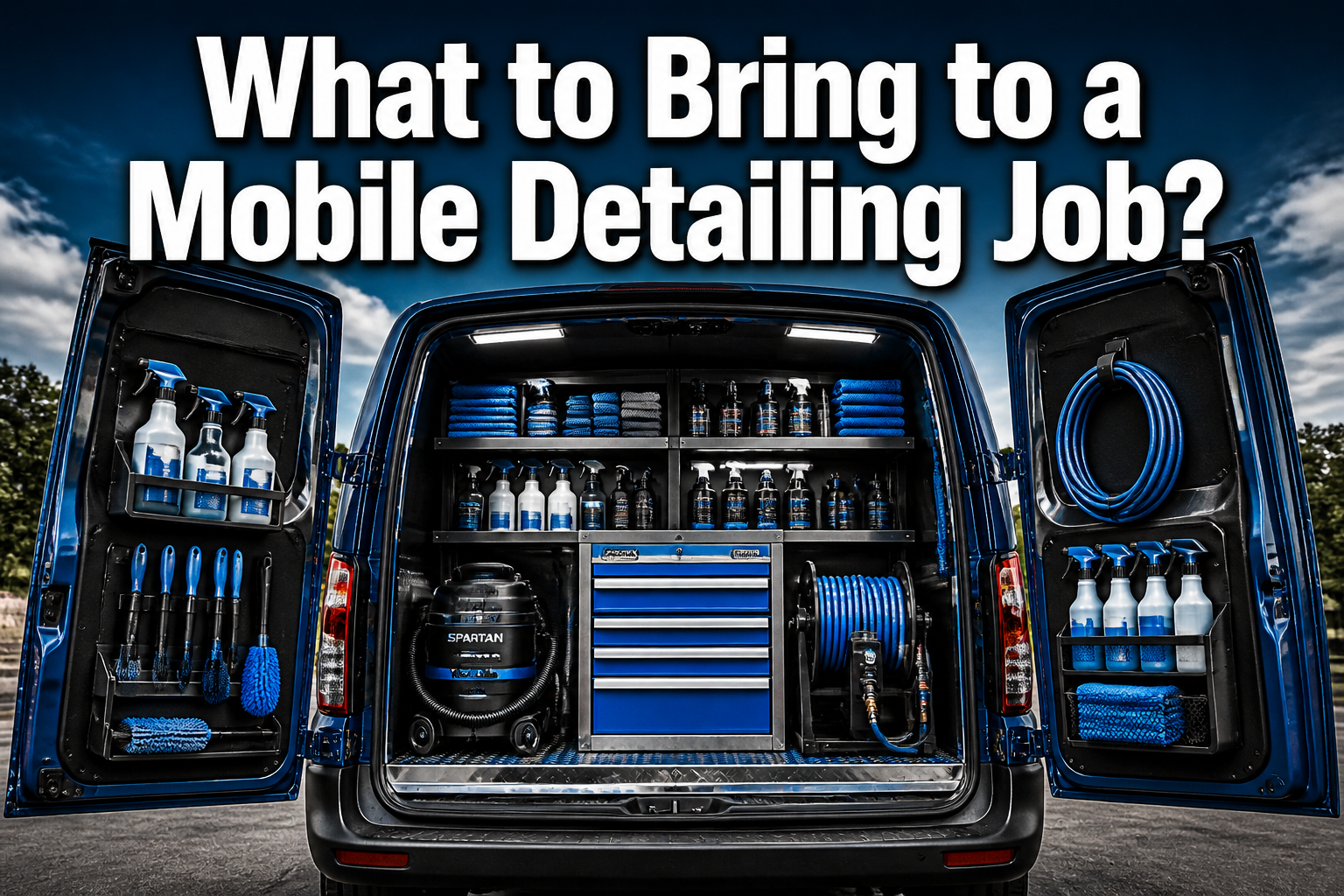
A successful mobile detailing job requires essential equipment, including pressure washers, vacuum systems, microfiber towels, car care chemicals, and polishing machines. Professional detailers must also bring water tanks, power sources, and protective gear to deliver quality service at any location.
The key is having a well-organized mobile setup that matches the services offered while maintaining efficiency and professionalism.
What Equipment Do You Need for a Mobile Detailing Job?
The foundation of any mobile detailing job starts with reliable equipment that can operate independently of the customer’s location. Professional mobile detailers need self-contained systems for water, power, and cleaning.
Essential Equipment Checklist:
- Pressure washer (1,500-3,000 PSI) with adjustable nozzles.
- Wet/dry vacuum (6+ HP) with long hoses and attachments.
- Steam cleaner for interior sanitization and stain removal.
- Foam cannon for pre-wash soap application.
- Dual-action polisher with backing plates and pads.
- Air compressor for drying and pneumatic tools.
- Extension cords (12-gauge, 50+ feet) and power strips.
Power and Water Systems:
Mobile detailing jobs require 40-100 gallons of fresh water, depending on service level. A 2,000-watt inverter or portable generator provides sufficient power for most equipment. Professional setups include water reclaim systems to meet environmental regulations in many areas.
Common Equipment Mistake: Many new mobile detailers underestimate power requirements. Calculate the total amp draw of all equipment to avoid tripping breakers or overloading generators during jobs.
What Supplies Should You Pack for Every Mobile Detailing Job?
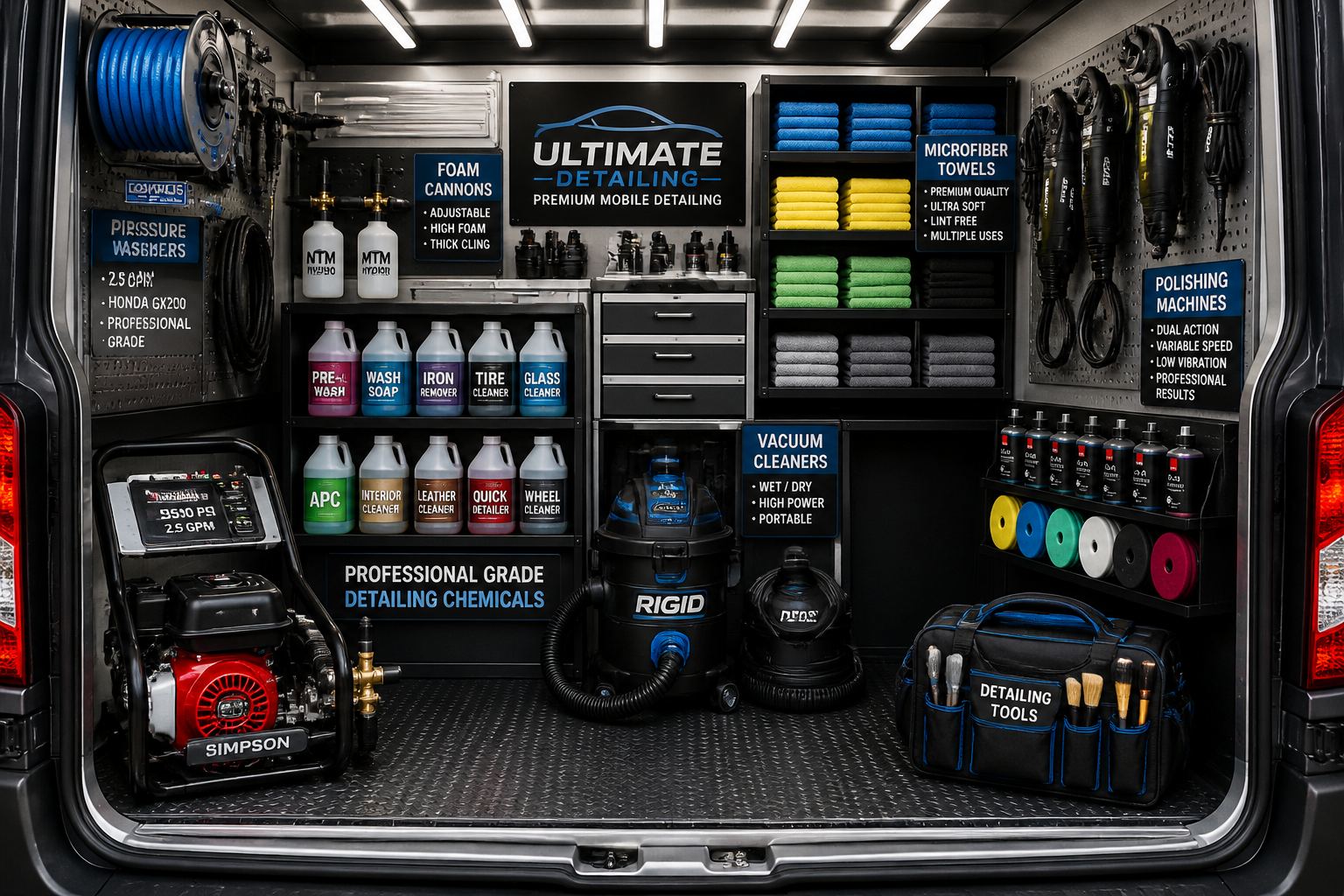
Successful mobile detailing jobs depend on having the right supplies for every surface and situation. Quality supplies directly impact results and customer satisfaction.
Chemical Arsenal:
- Car wash soap (pH-balanced, 2-3 different formulations).
- Degreaser for engines and wheel wells.
- All-purpose cleaner for interior surfaces.
- Glass cleaner (ammonia-free for tinted windows).
- Tire and wheel cleaner (acid-free options).
- Leather conditioner and fabric protectant.
- Wax or ceramic coating for paint protection.
Microfiber and Towel System:
Professional mobile detailers use color-coded microfiber systems to prevent cross-contamination:
- Blue towels: exterior washing and rinsing.
- Yellow towels: wheels and lower panels.
- Gray towels: interior cleaning and dusting.
- White towels: final paint polishing and wax removal.
Pack 50-75 microfiber towels in various weights (200-600 GSM) plus chamois or waffle-weave drying towels.
Detailing Tools:
- Detailing brushes (various sizes for vents, emblems, wheels).
- Clay bar and lubricant for paint decontamination.
- Applicator pads for wax and sealant application.
- Trim restoration products for faded plastic and rubber.
Pro Tip: Create service-specific supply kits. Basic wash packages need fewer chemicals than full paint correction jobs. This prevents overpacking and reduces setup time.
How Should You Organize Your Mobile Detailing Setup?
Organization directly impacts efficiency and professionalism on mobile detailing jobs. Well-organized mobile units complete jobs 25-40% faster than disorganized setups.
Storage Solutions:
- Mobile carts with multiple shelves for supplies.
- Clear storage bins with labels for quick identification.
- Chemical dispensers to prevent spills and waste.
- Hose reels and cord management systems.
- Towel organizers to maintain cleanliness standards.
Workflow Optimization:
Set up equipment in logical sequence: power connection, water source, vacuum station, washing area, and drying zone. Keep frequently used items within arm’s reach of primary work areas.
Vehicle Configuration:
Successful mobile detailing businesses use vans, trailers, or trucks with:
- Fresh water tanks (40-100 gallons).
- Waste water collection (required in many jurisdictions).
- 110V and 12V power systems.
- Climate-controlled storage for temperature-sensitive products.
- Professional exterior branding for marketing impact.
What Safety Equipment Is Required for Mobile Detailing Jobs?
Safety equipment protects both detailers and customers during mobile detailing jobs. Many insurance policies require specific safety measures.
Personal Protective Equipment:
- Chemical-resistant gloves (nitrile recommended).
- Safety glasses for chemical and pressure washer use.
- Non-slip footwear for wet working conditions.
- Respirator masks for enclosed areas work.
- Sun protection (hat, sunscreen, UV-protective clothing).
Job Site Safety:
- Wet floor signs and caution cones.
- First aid kit with burn gel and eye wash.
- Fire extinguisher (Class ABC rated).
- Spill containment materials.
- Emergency contact information.
Documentation Requirements:
Carry current business license, insurance certificates, and Material Safety Data Sheets (MSDS) for all chemicals. Some commercial properties require contractor insurance verification before allowing mobile detailing services.
What Tools Are Essential for Different Mobile Detailing Services?
Different mobile detailing job types require specific tools and equipment. Matching tools to services prevents under-delivery and customer dissatisfaction.
Basic Wash and Wax Jobs:
- Pressure washer with soap and rinse settings.
- Two-bucket wash system with grit guards.
- Microfiber wash mitts and drying towels.
- Spray wax or quick detailer.
- Interior vacuum and basic cleaners.
Paint Correction Services:
- Dual-action polisher with variable speeds.
- Compound, polish, and finishing pads.
- Paint thickness gauge for safety.
- Halogen or LED work lights.
- Clay bar and decontamination products.
Ceramic Coating Applications:
- Paint decontamination system (clay, iron remover).
- Isopropyl alcohol (70%+) for panel prep.
- Ceramic coating with applicator cloths.
- Infrared thermometer for surface temperature.
- Controlled environment (tent or enclosed area).
Interior Deep Cleaning:
- Steam cleaner with upholstery attachments.
- Extraction machine for carpet and fabric.
- Leather cleaning and conditioning products.
- Ozone generator for odor elimination.
- Detail brushes for intricate areas.
Service Matching Rule: Choose tools based on promised results, not available equipment. Customers expect consistent quality regardless of service location.
How Much Should You Budget for Mobile Detailing Equipment?
Mobile detailing job startup costs vary significantly based on service level and target market. Professional-grade equipment requires substantial initial investment but pays for itself through efficiency and results.
Startup Investment Ranges:
| Equipment Category | Basic Setup | Professional Setup | Premium Setup |
|---|---|---|---|
| Pressure Washer | $300-600 | $800-1,500 | $2,000-4,000 |
| Vacuum System | $200-400 | $600-1,200 | $1,500-3,000 |
| Polishing Equipment | $150-300 | $500-800 | $1,200-2,500 |
| Water/Power Systems | $500-1,000 | $1,500-3,000 | $5,000-10,000 |
| Vehicle Setup | $2,000-5,000 | $10,000-25,000 | $40,000-75,000 |
Chemical and Supply Costs:
Budget $500-1,500 monthly for chemicals and supplies, depending on job volume. Professional-grade products cost 2-3x more than consumer versions but deliver superior results and efficiency.
ROI Considerations:
Quality equipment reduces job time and callbacks. A $2,000 professional vacuum system that saves 15 minutes per job pays for itself within 200-300 jobs through increased daily capacity.
Financing Options: Many equipment suppliers offer financing for mobile detailing businesses. Leasing allows access to premium equipment with lower upfront costs and built-in upgrade paths.
What Are Common Mistakes When Packing for Mobile Detailing Jobs?
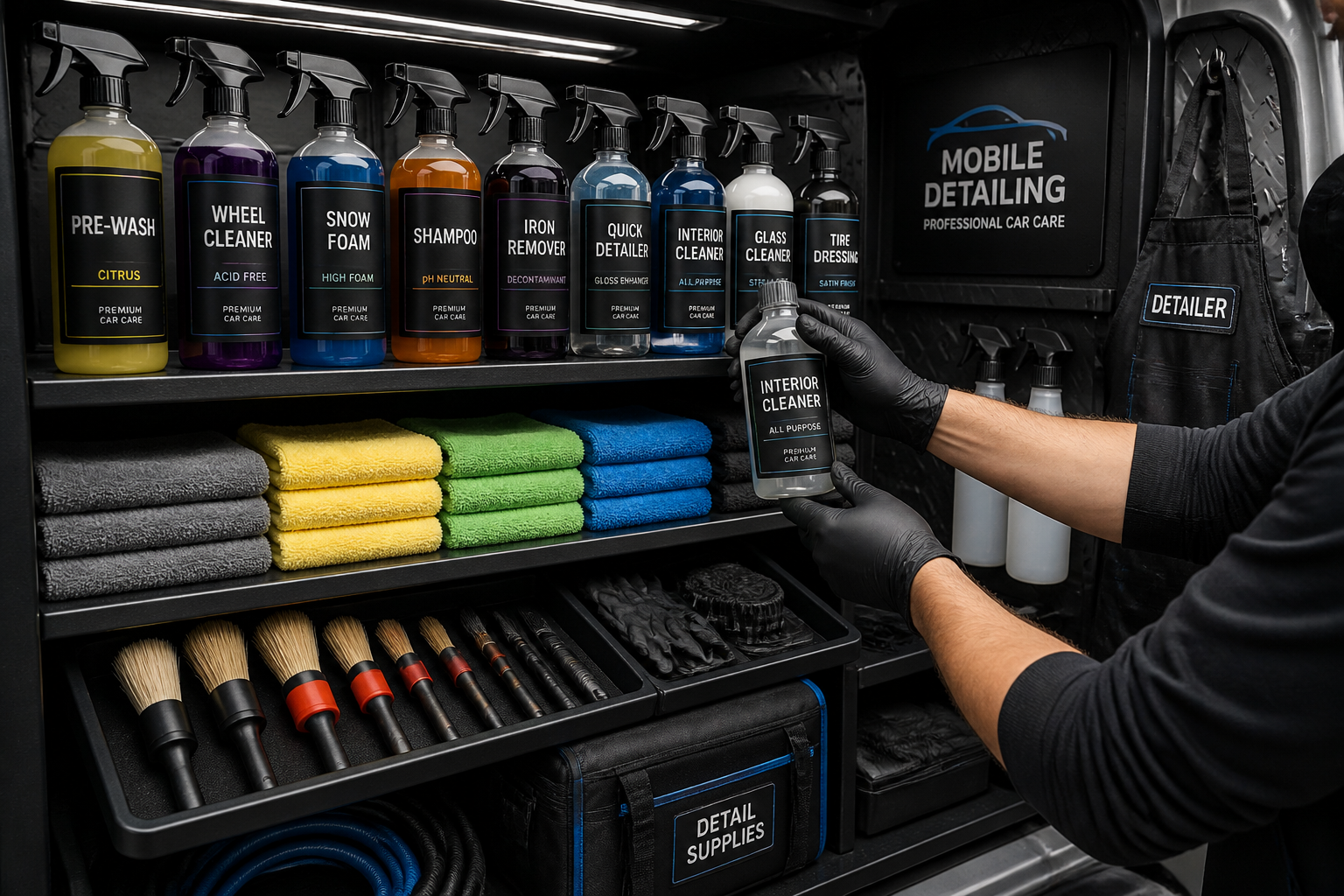
Experienced mobile detailers avoid these common packing and preparation mistakes that can derail job efficiency and customer satisfaction.
Overpacking Problems:
- Bringing every product “just in case” slows setup and breakdown.
- Excessive equipment increases fuel costs and wear on vehicles.
- Too many options create decision paralysis during jobs.
Underpacking Issues:
- Missing specialized tools for promised services.
- Insufficient water or power for job completion.
- Wrong chemical concentrations for specific tasks.
Organization Failures:
- No systematic storage leads to wasted time searching for items.
- Mixed clean and dirty towels compromise quality standards.
- Unlabeled chemicals create safety hazards and mistakes.
Weather Preparation:
- No backup plan for rain or extreme temperatures.
- Missing extension cords for indoor power access.
- Inadequate lighting for early morning or evening jobs.
Prevention Strategy: Create detailed checklists for each service type. Review and update lists based on actual job experiences and seasonal requirements.
Final Thoughts
Success in mobile detailing jobs depends on thorough preparation, quality equipment, and systematic organization. The investment in professional-grade tools and supplies pays dividends through faster job completion, superior results, and customer satisfaction that drives repeat business.
Start by building a solid foundation with reliable water and power systems, then add specialized equipment as your service offerings expand. Focus on organization and efficiency to maximize daily job capacity while maintaining quality standards that set your mobile detailing business apart from competitors.
FAQ
How much water do I need for a mobile detailing job?
Most mobile detailing jobs require 20-40 gallons for exterior washing and 5-10 gallons for interior cleaning. Carry 40-60 gallons minimum to handle unexpected situations or multiple vehicles.
What power requirements do mobile detailing tools have?
Professional equipment typically needs 15-30 amps total. A 2,000-watt inverter handles most tools, while larger operations may need 3,500+ watt generators for simultaneous equipment operation.
Do I need special licenses for mobile detailing chemicals?
Most areas don’t require special licenses for standard car care chemicals, but you need business licenses and may need permits for water discharge. Check local environmental regulations before starting.
How do I prevent chemical spills during transport?
Use secondary containment (bins or trays) under chemical containers, secure all bottles in upright positions, and carry spill cleanup materials. Never transport damaged or leaking containers.
What’s the minimum insurance coverage for mobile detailing?
Carry at least $1 million general liability insurance plus commercial auto coverage. Many commercial clients require $2 million coverage. Professional liability insurance protects against damage claims.
How often should I replace microfiber towels?
Replace microfiber towels every 3-6 months with regular use, or when they become stiff, lose absorbency, or show permanent staining. Quality towels last longer with proper washing techniques.
What backup equipment should I carry?
Pack backup vacuum belts, extra fuses, spare microfiber towels, and basic tools for equipment repairs. Carry contact information for equipment rental companies in your service area.
How do I handle jobs without water access?
Use waterless or rinseless wash products, bring extra water capacity (80-100 gallons), or pre-arrange water access with customers. Some mobile detailers partner with nearby businesses for water refills.
What’s the best way to organize chemicals in a mobile unit?
Group chemicals by function (wash, polish, interior), use color-coded labels, secure bottles in foam-lined compartments, and maintain MSDS sheets for each product. Keep incompatible chemicals separated.
