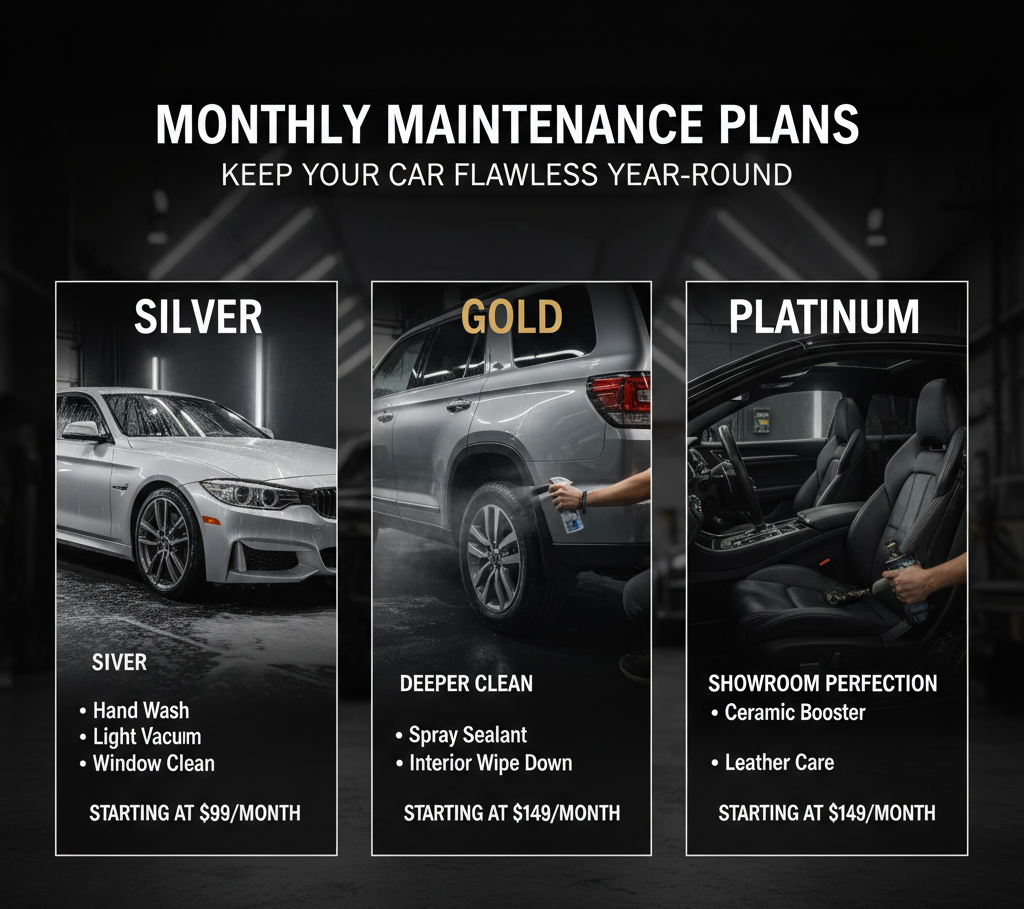
Securing recurring revenue stabilizes any mobile or shop-based auto business. Setting up monthly maintenance plans for detailing clients transforms one-time buyers into a dependable income stream. This approach eliminates the feast-or-famine cycle associated with seasonal washes.
You will learn how to structure contracts that protect your time while keeping customer vehicles in pristine condition year-round. Implementing these strategies will build a roster of loyal customers who trust your expertise.
The Mechanics of a Detailing Subscription
A maintenance program is a scheduled, recurring service agreement. Customers pay a flat monthly or per-visit fee to keep their vehicle clean. Instead of performing intensive paint corrections or deep carpet extractions, you perform lighter, more frequent washes.
Frequent washes maintain a previously established baseline. This prevents heavy dirt buildup, preserves existing ceramic coatings, and drastically reduces the time required per appointment. You spend less time scrubbing and more time turning over vehicles.
The Prerequisite: The Initial Reset Detail
Never enroll a neglected vehicle directly into a maintenance program. The car must undergo an initial deep detail to establish a clean baseline. Skipping this step guarantees you will lose money trying to fix heavy contamination on a maintenance budget.
Require every new client to purchase a full interior and exterior detail first. This initial job removes embedded iron, tar, and deep interior stains. Once the paint is decontaminated and protected, the vehicle qualifies for your subscription program. Make this rule non-negotiable for all clients.
Structuring Monthly Maintenance Plans for Detailing Clients
Offering multiple options captures different budget levels. Keep the choices limited to three tiers to prevent decision fatigue.
Tier 1: The Bi-Weekly Refresh
This entry-level option targets customers wanting frequent, quick exterior cleaning. It requires the least amount of time but relies on strict bi-weekly scheduling.
Services in this tier usually include:
- Two-bucket hand wash or rinseless wash.
- Wheel face cleaning and tire dressing.
- Light interior vacuuming.
- Wipe-down of main interior surfaces.
- Exterior window cleaning.
Tier 2: The Standard Monthly Upkeep
This tier balances thoroughness and affordability. Most customers choose this monthly schedule. It covers all the elements of the Bi-Weekly Refresh with added protection.
Services in this tier usually include:
- Application of a spray wax or ceramic sealant.
- Interior wipe-down with UV protection.
- Deep cleaning of floor mats.
- Interior and exterior glass cleaning.
- Door jamb wipe-down.
Tier 3: The Premium Protection Plan
Targeted at clients with ceramic coatings or high-end vehicles. This package commands the highest price point and caters to enthusiasts.
Services in this tier usually include:
- Careful hand washing using pH-neutral soap.
- Application of a dedicated coating maintenance spray.
- Deep leather conditioning and fabric protection.
- Spot stain removal on carpets.
- Engine bay light dusting.
How to Price Your Subscription Tiers?
To price a detailing subscription accurately, follow these specific steps:
- Calculate your hourly operating cost, including chemicals, fuel, insurance, and labor.
- Determine the average time needed for a maintenance wash versus a deep clean.
- Set a minimum base price per vehicle type (sedan, mid-size SUV, large truck).
- Apply a 10% to 15% discount compared to your standard one-off service rates.
- Set clear upcharges for oversized vehicles or lifted trucks.
A common pricing model charges $80 to $120 per month for a standard sedan on a monthly schedule. Ensure the discounted rate still meets your target hourly wage. If you aim to make $75 an hour, a $100 maintenance wash must take less than 80 minutes.
Chemical and Equipment Efficiency
Efficiency drives profitability in recurring jobs. You cannot use the same slow methods for a maintenance wash that you use for an annual deep clean. Streamline your equipment setup.
Switching to rinseless wash methods, such as Optimum No Rinse, saves significant time. Rinseless washing eliminates the need to drag out heavy pressure washers and hoses. It also allows you to work inside garages during the winter months or rain delays.
Use forced air blowers to dry vehicles quickly. Towel drying takes longer and introduces the risk of micro-scratches. An air cannon blasts water out of crevices, mirrors, and grilles in seconds. Pair this with a high-quality drying aid to add gloss while you dry.
How to Pitch the Program to Customers?
Sell the subscription during the vehicle pickup phase of the initial detail. When the customer admires the finished product, explain how a recurring plan keeps it looking exactly like that. Focus on preserving their investment and the convenience of automatic scheduling.
Give them a physical menu outlining the savings. A script might sound like: “Your car looks brand new right now. To keep it this way and protect the clear coat, I offer a monthly upkeep plan. It saves you 15% off standard rates, and you never have to think about booking an appointment.”
Follow up via email one week later. Customers often realize how quickly their car gets dirty again after a few days of driving. Sending a digital link to sign up catches them right when they need the service most.
Legal Protections and Service Agreements
Protect your business by setting clear boundaries in writing. A formal agreement prevents misunderstandings about what a maintenance wash actually covers.
Cancellation and Pausing Policies
Require a 30-day written notice for pausing or terminating the subscription. This gives you time to fill the empty slot in your route. Outline exactly what happens if a client skips a month. Usually, skipping a month voids the maintenance pricing, and the next wash reverts to the standard, higher rate.
Weather and Rescheduling Rules
For mobile detailers, weather dictates the schedule. State in your agreement that appointments will be rescheduled due to rain, freezing temperatures, or high winds. Limit how many times a client can voluntarily shift their appointment per quarter to avoid scheduling chaos.
Condition Limits and Extra Fees
Excessive pet hair, biohazards, or heavy mud incur additional fees beyond the monthly rate. A maintenance wash assumes standard daily driving wear. If a client takes their SUV off-roading, you must charge them an hourly rate to remove the heavy mud before resuming the standard checklist.
Software Tools for Automated Billing
Manual invoicing wastes time and leads to missed payments. Chasing down clients for a $100 check every month ruins the efficiency of a subscription model.
Use automated routing and billing tools designed for service businesses. Systems like Square for Retail or Jobber let you securely store credit cards. You can set these systems to charge the client automatically on the 1st of every month. Automation guarantees you get paid before you touch the vehicle.
These platforms also send automated text reminders. Reducing no-shows is critical for mobile route density. When a client knows you are arriving tomorrow at 9 AM, they will leave the car out and unlock the doors.
Scheduling Logistics and Route Density
For mobile operations, route density dictates your profit margins—group recurring clients by geographic zone on specific days of the week. Driving across town for a single maintenance wash consumes your profit in fuel and travel time.
Assign Mondays to the north side of your city, Tuesdays to the south, and so forth. When pitching a new client in a specific zip code, only offer them the day you are already in their area. Say, “I service your neighborhood every other Thursday. Does morning or afternoon work better for you?”
If a client demands a different day, charge a convenience travel fee. Protecting your route density is the only way to effectively scale a mobile detailing operation.
Retaining Your Subscribers Long-Term
Acquiring a new customer costs significantly more than keeping an existing one. Focus on client retention to build a waiting list for your services.
Send reminder texts the day before the appointment. Leave a small air freshener or branded item in the cup holder after every visit. Consistent communication prevents clients from feeling ignored after they sign the contract. Treat your recurring clients like VIPs.
Periodically inspect their paint for new scratches or failing protection. Informing a client about a new door ding shows you are paying attention to their vehicle’s health. Trust keeps subscriptions active for years.
Upselling Your Maintenance Roster
A subscriber base provides a captive audience for seasonal upselling. While the monthly fee remains static, you can offer add-on services twice a year to boost your bottom line.
In the spring, offer a mechanical decontamination and clay bar treatment to remove winter road salt. In the fall, pitch an upgraded glass sealant to improve visibility during winter rain. Offer interior fabric extraction after summer road trips.
Send a mass email to your subscriber list offering these add-ons at a slight discount. Because they already trust you, the conversion rate on these seasonal upsells will be extremely high.
Maintaining Professional Standards
Adhere strictly to industry standards for safety and chemical use. Familiarize yourself with the guidelines set by organizations such as the International Detailing Association. Using professional-grade chemicals ensures you do not damage delicate interior surfaces during repeated washings.
Keep Safety Data Sheets (SDS) for all chemicals in your work vehicle. Rotate your microfiber towels regularly to prevent cross-contamination between wheels and paintwork. Wash your towels using dedicated microfiber detergents to keep them soft and effective.
Tracking Profitability and Growth
Review the profitability of your maintenance plans every six months. Track exactly how long each vehicle takes from arrival to departure. If a specific SUV consistently takes 20 minutes longer than budgeted, you must raise the rate for that specific client.
Do not be afraid to fire bad clients. If a subscriber constantly reschedules, complains about minor issues, or leaves trash piled in the car, drop them. Replace them with a client who respects your time. A smooth, efficient route is better than a stressful, fully booked one.
Conclusion
Building a predictable cash flow requires a shift from chasing single jobs to nurturing relationships. Implementing monthly maintenance plans for detailing clients stabilizes your schedule and boosts long-term profitability. You secure consistent work during slow seasons and build a loyal customer base.
Start by defining your service tiers, mandating an initial deep clean, and automating your billing process today. Once your route is full, you can scale by hiring employees or raising your rates to secure the future of your detailing business.