Finding the ideal cage size for different hamster breeds determines their lifespan, stress levels, and overall physical health. Most commercial pet store cages fail to meet the basic spatial requirements these active rodents need.
Wild hamsters run several miles every night foraging for food. Your pet requires a large, unbroken floor plan to replicate this natural behavior.
What is the minimum cage size for a hamster?
To quickly answer the core housing requirement, here are the absolute minimum standards for any hamster:
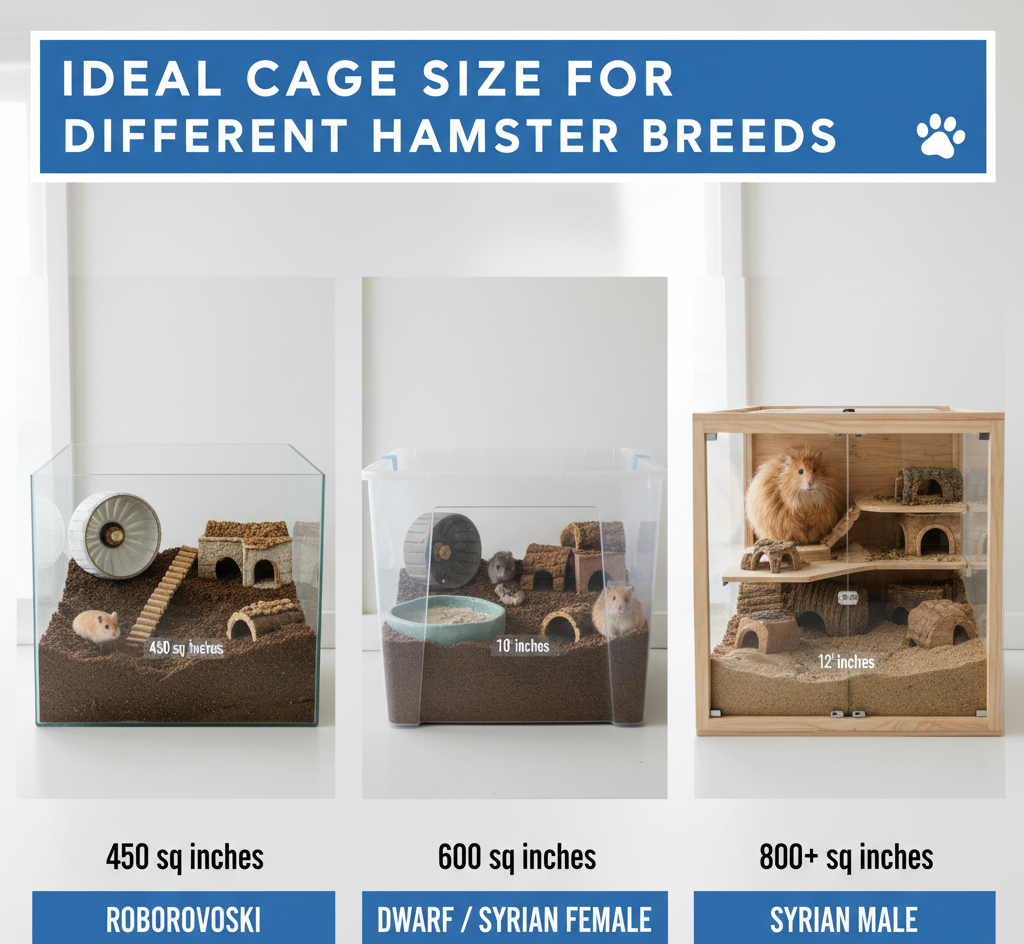
- Absolute Minimum Floor Space: 450 square inches (though animal welfare groups highly recommend 775 to 1,000+).
- Measurement Method: Length multiplied by the width of the cage base.
- Unbroken Space: Levels and shelves do not count toward this floor space total.
- Bedding Depth: The base must accommodate at least 6 to 10 inches of bedding for burrowing.
- Bar Spacing: Wire spacing must be 0.5 inches or smaller to prevent escapes.
Why Floor Space Matters More Than Vertical Space?
Hamsters are ground-dwelling creatures, not climbers. They possess poor eyesight and lack the physical anatomy for safe descent. Tall enclosures with multiple levels pose severe fall risks.
When calculating the ideal cage size for different hamster breeds, measure only the continuous bottom floor. If a cage is 20 inches long and 15 inches wide, the floor space is 300 square inches. Adding a second level of the same size does not equal 600 square inches of usable roaming space.
A large footprint allows room for a properly sized wheel, multiple hides, a sand bath, and open running space.
Confining a hamster to a small footprint forces them to live in their own waste and restricts their natural foraging behaviors. According to the RSPCA housing guidelines, adequate unbroken floor space is vital for preventing behavioral issues.
Syrian Hamster Space Requirements
Syrian hamsters are the largest domestic breed, frequently reaching 6 to 8 inches in length. Their size dictates massive housing requirements. They require large accessories, which quickly consume available floor space.
Floor Space Minimums
- US Minimum Standard: 600 to 800 square inches of continuous floor space.
- European/German Standard: 1,000 to 1,550 square inches (100 cm x 50 cm or larger).
- Ideal Dimensions: A tank measuring 48 inches long by 20 inches wide provides excellent roaming room.
- Gender Differences: Female Syrian hamsters go into heat every four days and are notoriously demanding regarding space. A female Syrian often requires upward of 1,200 square inches to prevent stress behaviors.
Wheel Size Considerations
- Syrians require an upright wheel measuring 11 to 12 inches in diameter.
- The wheel must allow the hamster to run with a completely flat back.
- A 12-inch wheel requires a cage tall enough to house the wheel plus 8 to 10 inches of burrowing bedding beneath it.
- The enclosure must have a minimum height of 20 to 24 inches to fit these necessities.
Dwarf Hamster Cage Guidelines
Dwarf hamsters, including Winter White and Campbell’s varieties, measure roughly 3 to 4 inches long. Despite their smaller stature, they possess endless energy reserves. Their small size does not mean they thrive in small habitats.
Winter White and Campbell’s
- Minimum Floor Space: 600 to 800 square inches.
- Ideal Dimensions: A 40-gallon breeder aquarium (36 inches by 18 inches) serves as a great starting point.
- Accessory Footprint: They need an 8 to 10-inch wheel, sand baths, and dense clutter to feel secure.
- Clutter Density: Dwarf hamsters are prey animals that panic in open spaces. A larger cage allows you to pack the floor with cork logs, grapevine wood, and ceramic hides.
Chinese Hamsters
- Chinese hamsters are slightly longer and leaner, resembling mice.
- They are the only domestic breed with a slightly prehensile tail, making them more adept at navigating low climbing structures.
- Minimum Floor Space: 800 square inches.
- Enclosure Style: They benefit from slightly taller enclosures (while maintaining the wide base) to accommodate low-hanging hammock nets and thick climbing branches.
Roborovski Hamster Enclosure Needs
Roborovski (Robo) hamsters are the smallest and fastest breed available. They barely reach 2 inches in length. Owners often mistakenly purchase tiny cages for them.
- Speed and Activity: Robos are incredibly active and run continuously throughout the night.
- Minimum Floor Space: 800 to 1,000 square feet.
- Ideal Enclosure: A 75-gallon aquarium or a large custom DIY enclosure is optimal.
- Sand Requirements: Robos originate from arid, sandy environments. Approximately one-third of the cage floor should be a sand bath area.
- Bar Escape Risks: Due to their size, Robos can squeeze through standard wire cages. Solid-sided enclosures, such as glass tanks or bin cages, are mandatory.
Calculating the True Usable Space
When you set up a habitat, the stated floor space shrinks rapidly. You must account for the footprint of essential items.
- The Wheel: A large wheel and its stand consume a significant portion of the floor.
- Multi-Chamber Hide: A biologically appropriate multi-chamber hideout takes up roughly 12 by 8 inches.
- Sand Bath: A proper sand bath container for hygiene will occupy another large section.
- Water and Food Stations: Bowls and bottle stands also take up space in the running room.
- Remaining Space: In a 450-square-inch cage, these accessories leave the hamster with almost zero room to walk. A 1,000-square-inch cage leaves ample room for a running track around the accessories.
Signs Your Hamster Needs a Larger Enclosure
Hamsters communicate distress through physical actions. If your enclosure is too small, your pet will develop stereotypic behaviors. These are repetitive, unnatural actions caused by environmental stress.
The Veterinary Centers of America warns that poor housing directly impacts lifespan.
- Bar Biting: Chewing frantically on metal cage bars is not normal tooth maintenance. It indicates severe confinement anxiety and can cause them to break their teeth.
- Monkey Barring: Climbing the walls and hanging from the roof is an escape attempt, often resulting in dangerous falls.
- Pacing: Running back and forth along the same wall endlessly.
- Wall Scratching: Digging relentlessly at the corners of a glass or plastic tank.
- Lethargy: Giving up and sleeping excessively due to a lack of enrichment.
If you observe any of these signs, immediately upgrade the habitat size. Adding toys to a small cage will not cure space-induced stress.
Best Cage Types for Maximum Space
Finding a commercial enclosure that meets the ideal cage size for different hamster breeds requires looking beyond standard pet store aisles. Here are the best options for achieving massive floor space.
Glass Aquariums
- Pros: They offer deep bases for burrowing, prevent draft exposure, and eliminate bar biting entirely.
- Cons: They are heavy to move and require a secure, breathable mesh lid.
- Sizes: Avoid anything smaller than a 40-gallon breeder tank (648 square inches). A 75-gallon tank (864 square inches) or larger is preferred.
DIY Bin Cages
- Pros: Highly cost-effective and lightweight. You can modify large plastic storage tubs by cutting panels in the lid and attaching wire mesh for ventilation.
- Cons: Tapered bottoms mean the floor space is smaller than the lid dimensions. You must measure the inside bottom precisely.
- Sizes: Look for 200-quart (50-gallon) storage bins or larger. The Iris Holiday Tree Storage Tote is a popular choice for maximizing horizontal length.
IKEA Furniture Hacks
- Pros: Converting furniture pieces like the IKEA Detolf, Linnmon, or Pax creates massive, aesthetically pleasing enclosures.
- Cons: Requires tools, DIY skills, and custom lid construction.
- Sizes: The IKEA Detolf glass cabinet, laid on its back, provides roughly 950 square inches of continuous floor space.
Custom Wood and Acrylic Enclosures
- Pros: Built exactly to your specifications. You can create a 1,500+ square inch habitat tailored to your home’s layout.
- Cons: Wood must be sealed with non-toxic, pet-safe waterproof sealant to prevent urine absorption.
- Sizes: Companies like Niteangel and Mewoofia sell pre-fabricated wooden enclosures that meet European welfare standards, often exceeding 1,000 square inches.
The Role of Deep Bedding in Space
Cage size is not just about length and width; it is also about volume. In the wild, hamsters build complex tunnel systems deep underground.
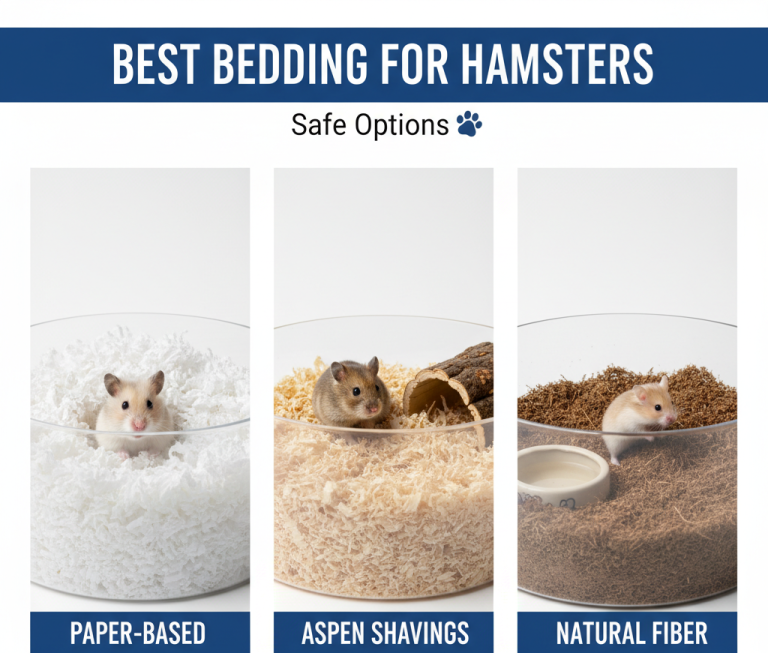
- Burrowing Requirements: A proper cage must hold at least 6 to 10 inches of compacted paper or aspen bedding.
- Structural Integrity: Mix orchard grass hay into the bedding so the tunnels hold their shape.
- Space Correlation: A cage with a shallow 2-inch plastic base cannot hold enough bedding. If a hamster cannot dig downward, it becomes stressed, placing greater demand on horizontal running space. A deep base effectively increases the usable living area by adding subterranean dimensions.
International Animal Welfare Standards
The United States lags severely behind European countries in small-animal welfare. Standard US pet store cages are often sold in sizes as small as 200 square inches.
- Germany: The Veterinary Association for Animal Welfare in Germany mandates strict minimums. They recommend 100 cm x 50 cm (approx 775 sq inches) as the baseline for all hamster species.
- United Kingdom: Organizations like the Blue Cross advocate for 100 cm x 50 cm enclosures as a starting point.
- Scientific Backing: Studies from the University of Bern in Switzerland demonstrate that hamsters housed in cages exceeding 1,500 square inches show zero signs of wire-gnawing or stress-pacing.
Upgrading your enclosure to meet these international standards guarantees a healthier pet.
Transitioning to a Larger Cage
When you move a hamster from a small pet store cage to an appropriately sized habitat, the transition must be handled carefully.
- Transfer Old Bedding: Move a significant portion of the unsoiled bedding from the old cage into the new one. Hamsters rely on scent to feel safe.
- Keep Familiar Items: Transfer their unwashed hides and toys so the new environment smells familiar.
- Expect Hiding: Your hamster may spend the first few days hidden under the deep bedding. This is a normal acclimation response to a suddenly expansive environment.
- Scatter Feeding: In a larger cage, stop using a food bowl. Scatter their seed mix across the entire floor to encourage natural foraging across their new territory.
Financial Considerations of Large Habitats
Providing the ideal cage size for different hamster breeds requires a higher initial investment. However, a large enclosure saves money in the long term.
- Reduced Veterinary Bills: Hamsters in large, low-stress environments have stronger immune systems. They are less likely to develop wet tail, respiratory infections, or broken teeth from bar biting.
- Fewer Bedding Changes: A tiny cage requires complete cleaning every few days due to ammonia buildup. A 1,000-square-inch enclosure with deep bedding only requires spot cleaning soiled areas once a week. You will replace the bulk bedding far less often.
- Lifespan Increase: A proper habitat allows the animal to reach its full biological lifespan of two to three years.
Providing adequate room is the single most important decision an owner makes. Every species, regardless of physical stature, demands substantial territory.
By selecting the ideal cage size for each hamster breed, you eliminate behavioral problems and replicate their natural environment. Prioritize horizontal floor space, deep bedding, and solid sides to ensure your pet thrives.