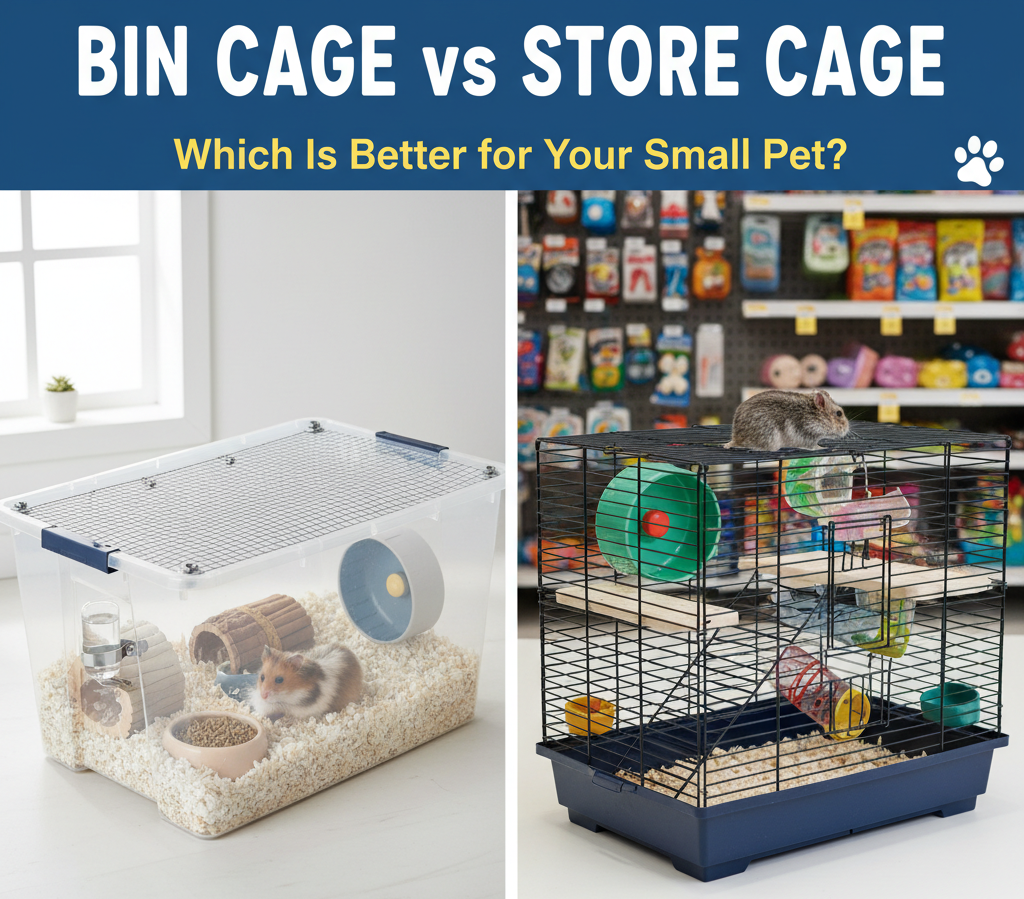
The debate of Bin Cage vs Store Cage often leaves people wondering which option provides the healthiest environment. While store-bought cages are traditional, DIY bin cages have surged in popularity for their generous floor space and low price tag.
The short answer is that a bin cage is usually better for meeting the minimum floor space requirements of hamsters and mice at a fraction of the cost. However, a high-end store cage offers better visibility and ventilation right out of the box.
Your choice depends on your budget, your pet’s specific needs, and how much work you want to put into the setup.
What is a Bin Cage?
A bin cage is a DIY habitat made from a large, clear plastic storage container. Owners cut out sections of the lid or sides and replace them with hardware cloth (wire mesh) to provide airflow. These bins are common in the “hamster community” because they offer a deep base for burrowing and a large, unbroken floor area.
Common Materials for Bin Cages:
- Large plastic bins (typically 100-quart to 200-quart).
- 1/4-inch or 1/2-inch galvanized hardware cloth.
- Heavy-duty zip ties or nuts and bolts.
- Utility knives or soldering irons for cutting plastic.
What is a Store-Bought Cage?
A store cage is a commercially manufactured habitat designed specifically for small animals. These range from traditional wire-topped cages with plastic bases to premium glass terrariums or wooden enclosures. While many “starter kits” in big-box stores are too small, high-quality brands produce larger models that meet modern welfare standards.
Types of Store Cages:
- Wire Cages: Plastic base with a wire top for maximum airflow.
- Modular Cages: Connecting tubes and pods (often criticized for being too small).
- Tank Style: Glass or acrylic enclosures that hold deep bedding.
- Furniture Style: Wooden enclosures that look like home decor.
Bin Cage vs Store Cage: Which is Better for Your Budget?
When it comes to price, the bin cage wins every time. A massive storage bin costs between $20 and $40. Even after buying the mesh and zip ties, the total cost rarely exceeds $60.
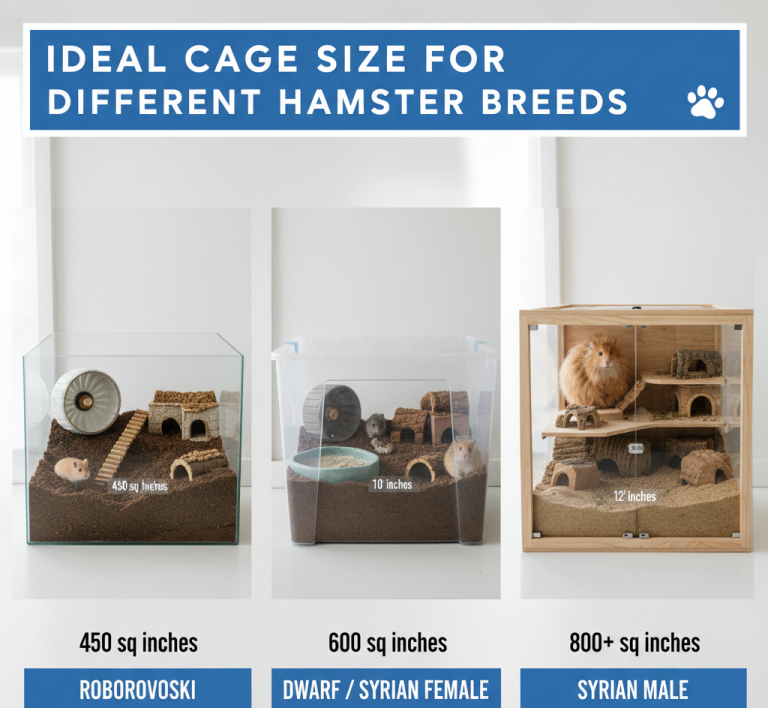
In contrast, a store-bought cage that meets the minimum 600-800 square inches of floor space often starts at $100 and can go up to $300. If you are on a tight budget, the bin cage lets you spend more on high-quality food, enrichment, and vet care.
Floor Space and Size Comparison
Small pets like hamsters need a lot of room to run and explore. According to the RSPCA, hamsters need enough space to exhibit natural behaviors.
Bin Cage Dimensions
Most 200-quart bins provide roughly 600 to 800 square inches of floor space. Because the walls are upright, the pet gets to use every inch. This is crucial for species like Syrian hamsters, which are prone to stress in smaller environments.
Store Cage Dimensions
Standard pet store cages are often shockingly small, sometimes offering less than 300 square inches of space. To get a store cage that matches a bin, you must look for “XL” models or use 40-gallon breeder tanks. These larger commercial options are great, but take up a significant amount of room and are much heavier to move.
Ventilation and Airflow Needs
Air quality is a major factor in rodents’ respiratory health. Ammonia from urine can build up quickly in enclosed spaces.
- Store Cages (Wire): These offer 360-degree ventilation. They are the best for keeping the air fresh and the temperature cool.
- Store Cages (Tank): These rely on a mesh top for air. They can get stuffy if the tank is very tall.
- Bin Cages: Ventilation depends entirely on how many mesh windows you install. If you only mesh the lid, air can become stagnant at the bottom. You must mesh the sides to ensure proper cross-ventilation.
Cleaning and Maintenance Differences
How easy is it to keep the home clean? This is a weekly task for any pet owner.
Cleaning a Bin Cage
Bin cages are lightweight. You can easily carry them to a bathtub to wash them out. The plastic is non-porous, so it doesn’t soak up odors. However, mesh edges can sometimes trap fur or debris if they are not filed down smoothly during the build.
Cleaning a Store Cage
Wire cages are easy to take apart. You unclip the top and dump the base. Glass tanks, however, are very heavy and difficult to clean. You often have to scoop out bedding and wipe it down in place because it is too heavy to move safely.
Safety and Security Concerns
Safety is where store cages often have an edge. Commercial cages are tested for bar spacing and latch security.
Escape Risks
- Bin Cages: If the mesh isn’t secured tightly, a determined hamster can push it out. Also, if there are any plastic lips or edges inside the bin, a rodent might chew a hole right through the side.
- Store Cages: Wire cages are generally secure, but you must ensure the bar spacing is small enough (1/2 inch or less) so the pet doesn’t get stuck.
Interaction with Other Pets
If you have cats or dogs, a bin cage might be less secure. A heavy pet could sit on the plastic lid, causing it to crack. Glass tanks or sturdy wire-store cages are often safer in multi-pet households.
Customization and Enrichment Opportunities
A great pet habitat allows for deep bedding, wheels, and hiding spots.
Bedding Depth
Hamsters are natural burrowers. They need at least 6 to 10 inches of bedding.
- Bin Cages: The high plastic sides make it easy to pile bedding deep without it falling out.
- Store Cages: Most wire cages have shallow bases (2-3 inches). This makes it impossible for the pet to burrow unless you add a DIY “bedding guard.”
Accessory Placement
In a wire store cage, you can hang hammocks, bridges, and water bottles easily from the bars. In a bin cage, you have to get creative. Use industrial-strength Velcro or drill extra holes to mount a wheel or a bottle.
Which Habitat is Best for Each Species?
Not all small pets have the same needs. Here is a quick guide on which cage to choose based on your pet.
Pet TypeRecommended ChoiceReason
| Pet Type | Recommended Choice | Reason |
|---|---|---|
| Syrian Hamster | Bin Cage or Large Tank | They need massive floor space and deep bedding. |
| Dwarf Hamster | Bin Cage | They are small and can escape through many wire cage bars. |
| Mice | Wire Store Cage | Mice need excellent ventilation to prevent respiratory issues. |
| Gerbils | Glass Tank (Store) | Gerbils will chew through plastic bins in hours. |
Step-By-Step: How to Make a Safe Bin Cage
If you decide the bin cage is the better choice for you, follow these steps to ensure it is safe.
- Choose the Right Bin: Look for the largest clear bin available. The bottom should be flat, not indented.
- Cut the Lid: Use a utility knife to cut a large rectangle out of the lid. Leave a 2-inch border of plastic around the edge.
- Cut the Mesh: Cut your hardware cloth so it is 1 inch larger than the hole you made.
- Drill Holes: Use a small drill bit to make holes every 2 inches along the plastic border.
- Secure the Mesh: Use zip ties to pull the mesh tight against the lid. Ensure the “pokey” ends of the zip ties are on the outside of the cage.
- Add Side Windows: For better airflow, repeat this process on the long sides of the bin.
Pros and Cons Summary
Bin Cage Pros:
- Extremely affordable.
- Lightweight and easy to move.
- High sides allow for very deep bedding.
- Large floor space meets welfare standards.
Bin Cage Cons:
- Requires tools and DIY effort.
- Aggressive chewers can chew through it.
- Lower visibility than glass or wire.
Store Cage Pros:
- Ready to use immediately.
- Excellent ventilation (wire models).
- Better aesthetic for home decor.
- Very secure latches and doors.
Store Cage Cons:
- Expensive for the size you get.
- Often too small for hamsters.
- Shallow bases prevent burrowing.
Common Mistakes to Avoid
Whether you buy or build, keep these pitfalls in mind to keep your pet happy.
- Small Sizes: Never settle for a cage just because it is labeled for “hamsters.” Always check the actual square inches.
- Poor Ventilation: Avoid “tunnels and pods” cages. They have almost no airflow and are a nightmare to clean.
- Dangerous Mesh: If building a bin, never use “chicken wire.” The holes are too big, and the wire is too flimsy. Always use 1/4 inch hardware cloth.
- No Lid: Even if the walls are high, small pets are amazing climbers. Always have a secure, locking lid.
The Final Verdict: Which Is Better?
When comparing Bin Cage vs Store Cage, the “better” option depends on your priorities.
If you want the best value and maximum space for a burrowing pet like a Syrian hamster, the bin cage is the winner. It provides the room they need to live a stress-free life without breaking the bank.
If you prefer convenience, aesthetics, and maximum airflow, a high-quality store-bought cage (such as a large glass terrarium or a Savic Hamster Heaven) is a great choice. Just be prepared to pay a premium for a large enough model.