Setting up a home for a new pet is an exciting milestone. However, many new owners feel overwhelmed by the conflicting advice found in pet stores. A proper habitat is the foundation of a long and healthy life for your small friend.
The best hamster cage setup for beginners focuses on replicating a hamster’s natural environment. These animals are active burrowers and long-distance runners. If their environment is too small or lacks stimulation, they can become stressed or ill.
What is the Best Hamster Cage Setup for Beginners?
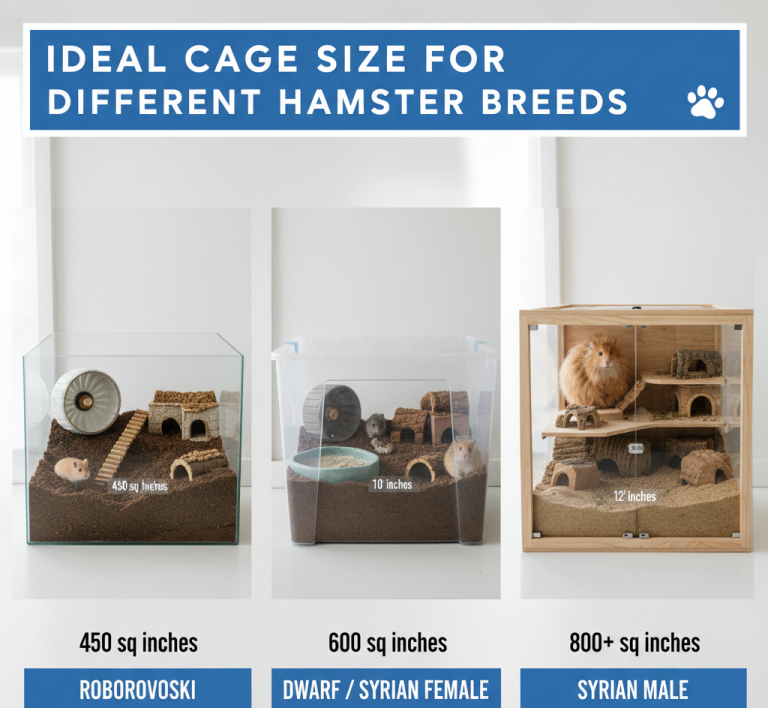
The ideal beginner setup includes a large, escape-proof enclosure with at least 450 to 600 square inches of unbroken floor space. It must feature deep, safe bedding for burrowing, a solid-surface exercise wheel, and multiple hiding spots. Additionally, a sand bath and various chew toys are necessary for hygiene and dental health.
Selecting the Right Enclosure
The most important decision you will make is the cage itself. Most cages sold in traditional pet stores are, unfortunately, too small for any hamster species.
Why Floor Space Matters Most?
Hamsters are ground-dwelling animals that need room to roam. In the wild, they can travel several miles in a single night. A cramped cage leads to “cage aggression” and repetitive stress behaviors like bar biting.
Current welfare standards suggest a minimum of 450 square inches of floor space. However, many experts now recommend 600 to 800 square inches for a thriving pet. You should measure the internal base of the cage, not the external dimensions.
Wire Cages vs. Glass Tanks
Wire cages offer excellent ventilation and allow hamsters to climb. However, they often have shallow bases that cannot hold enough bedding. If you choose wire, ensure the bar spacing is narrow enough to prevent escapes.
Glass tanks or “terrariums” are popular because they allow for deep bedding. They also provide a clear view of your pet’s burrowing activities. According to the RSPCA, a solid-walled enclosure can also help prevent drafts and keep the internal temperature stable.
DIY Bin Cages
For a budget-friendly option, many beginners create “bin cages.” This involves using a large plastic storage tub and replacing the lid with hardware cloth for ventilation. This provides a massive amount of floor space at a fraction of the cost of commercial cages.
Choosing Safe and Comfortable Bedding
Bedding is more than just a floor covering; it is your hamster’s primary tool for building a home. Hamsters spend most of their lives tunneling and sleeping underground.
The Importance of Depth
To encourage natural behavior, you need at least 6 inches of bedding. For Syrian hamsters, 10 to 12 inches is even better. Deep bedding allows them to create stable tunnels that won’t collapse.
Safe Materials for Your Habitat
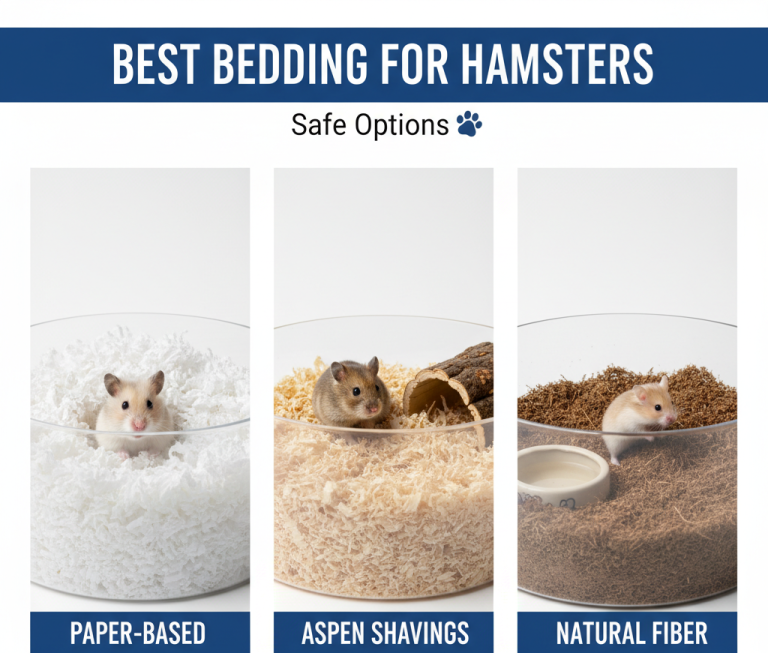
Paper-based bedding is the gold standard for beginners. It is soft, absorbent, and holds its shape well for burrows. Look for unscented, 99% dust-free brands to protect your pet’s sensitive respiratory system.
Aspen wood shavings are also a safe, natural choice. Avoid cedar and pine shavings at all costs. These softwoods contain phenols and oils that are toxic to small mammals and can cause liver damage or respiratory infections.
Materials to Avoid
Never use “fluffy” or “cotton” nesting materials. These fibers are incredibly dangerous because they do not break down. If a hamster pouches them or gets a limb caught, it can lead to choking or loss of circulation.
Essential Accessories Every Cage Needs
Once the base and bedding are ready, you must fill the environment with functional tools. These items address your hamster’s biological needs.
Picking the Right Exercise Wheel
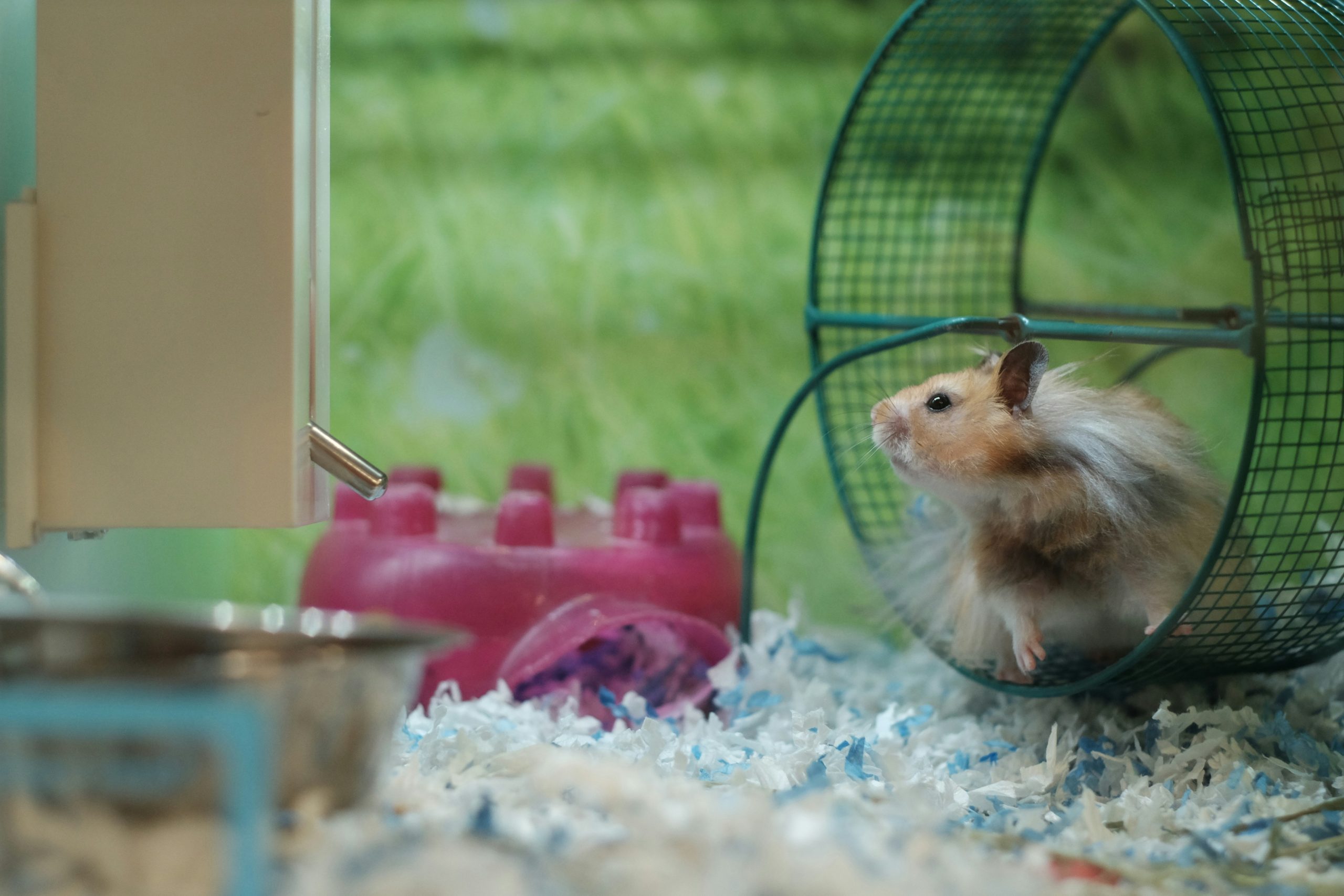
A wheel is not an optional accessory. Hamsters have an incredible amount of energy to burn. A high-quality wheel should have a solid running surface; wire or mesh wheels can cause a painful condition called “bumblefoot.”
The size of the wheel depends on the species:
- Syrian hamsters require a wheel 10 to 12 inches in diameter.
- Dwarf Hamsters: Require an 8 to 10-inch wheel.
If the wheel is too small, the hamster’s back will arch while running. This leads to permanent spinal injuries over time. Ensure the wheel spins smoothly and quietly to encourage use during their nocturnal hours.
Water Bottles and Feeding Dishes
Fresh water must be available at all times. Glass water bottles are often better than plastic because they cannot be chewed. Alternatively, a small, heavy ceramic water bowl can be used, provided it is placed on a flat surface so it doesn’t tip into the bedding.
For food, a ceramic dish is easy to clean. However, many owners prefer “scatter feeding.” Instead of a bowl, you sprinkle the food throughout the cage. This forces the hamster to forage, providing mental stimulation and preventing boredom.
Adding Enrichment and Hideouts
A bare cage is a stressful cage. Hamsters are prey animals and feel vulnerable in open spaces. Your goal is to “clutter” the cage with safe objects.
Multiple Hideouts
Your hamster should have at least two or three places to hide. One of these should be a multi-chamber hideout that mimics a natural underground burrow. Wooden hides are excellent because they are safe to chew and provide a natural aesthetic.
Chews for Dental Health
Hamsters have teeth that never stop growing. They must chew constantly to wear them down. Provide a variety of textures, such as:
- Applewood sticks
- Whimzees (dog chews that are hamster-safe in moderation)
- Cardboard tubes and boxes
- Woven seagrass toys
Bridges and Platforms
Platforms provide a sturdy surface for heavy items, such as water bowls or sand baths. They also create a “second level” that adds variety to the terrain without the risk of high falls. Bendable willow bridges are great for creating tunnels or ramps.
The Importance of a Sand Bath
Many beginners are surprised to learn that hamsters should never be washed with water. Water removes essential oils from their fur and can lead to deadly chills.
Instead, hamsters use sand to clean themselves. A sand bath helps remove excess oils and keeps their coat fluffy. Use a dedicated container filled with reptile sand (calcium-free) or sterilized children’s play sand. Avoid “dust” products marketed for chinchillas, as the fine particles can cause lung issues.
Nutrition and Foraging
A proper setup includes a high-quality diet. A mix of pellets and seeds ensures your hamster gets a balanced mix of protein, fat, and fiber.
Seed Mixes vs. Pellets
High-quality seed mixes encourage natural foraging behavior. However, some hamsters “selectively feed,” only eating the fatty sunflower seeds. Pairing a seed mix with a lab block or pellet ensures the seed mix receives all necessary vitamins.
Fresh Supplements
You can supplement the dry diet with small amounts of fresh vegetables. Broccoli, kale, and carrots are great choices. According to the ASPCA, you should remove any uneaten fresh food after 24 hours to prevent mold in the bedding.
Cleaning and Maintaining Your Hamster’s Home
A common mistake is cleaning the entire cage too often. This is actually very stressful for hamsters because it removes their familiar scent markers.
Spot Cleaning
Check the cage daily for soiled bedding or “toilet corners.” Most hamsters will choose a specific corner as their bathroom. Removing only this small section every few days keeps the cage smelling fresh without bothering the pet.
Deep Cleaning
A full cage clean should be done only once every 4 to 6 weeks, depending on the size of the enclosure. When you do a deep clean, save about 25% of the old, clean bedding. Mix it back in with the new bedding so the cage still smells like home to your hamster.
Cleaning the Accessories
Wipe down the wheel, water bottle, and ceramic dishes weekly using a pet-safe disinfectant or a mixture of white vinegar and water. Ensure everything is completely dry before placing it back in the habitat.
Common Beginner Mistakes to Avoid
Even with the best intentions, mistakes are easy to make. Here are the most frequent errors seen in the hobby:
- Using a “Starter Kit”: Most colorful plastic cages with tubes are much too small. They are difficult to clean and offer poor ventilation.
- Buying “Scented” Bedding: Fragrances like lavender or lemon can overwhelm a hamster’s keen sense of smell and cause irritation.
- Lack of Foraging: Placing everything in one spot can lead to a lazy, bored pet. Space things out to keep them active.
- Mixing Species: Hamsters are solitary animals. Never house two hamsters together, as they will eventually fight, often with fatal results.
Creating a Stress-Free Environment
Placement of the cage is just as important as the setup inside. Keep the cage in a quiet area away from loud televisions or high-traffic hallways. Since hamsters are nocturnal, they need to sleep undisturbed during the day.
Avoid placing the cage in direct sunlight or near heaters. Hamsters can overheat quickly. A room with a consistent temperature and natural day/night light cycles is best for their internal clock.
Conclusion
Building the best hamster cage setup for beginners requires a shift in perspective. Instead of looking for a cute toy, look for a functional habitat. Focus on maximizing floor space, providing deep bedding for burrows, and ensuring the wheel is the correct size.
When you prioritize your pet’s instincts, you reduce their stress and increase their lifespan. A well-designed enclosure is a joy to watch and provides a safe sanctuary for your new companion.