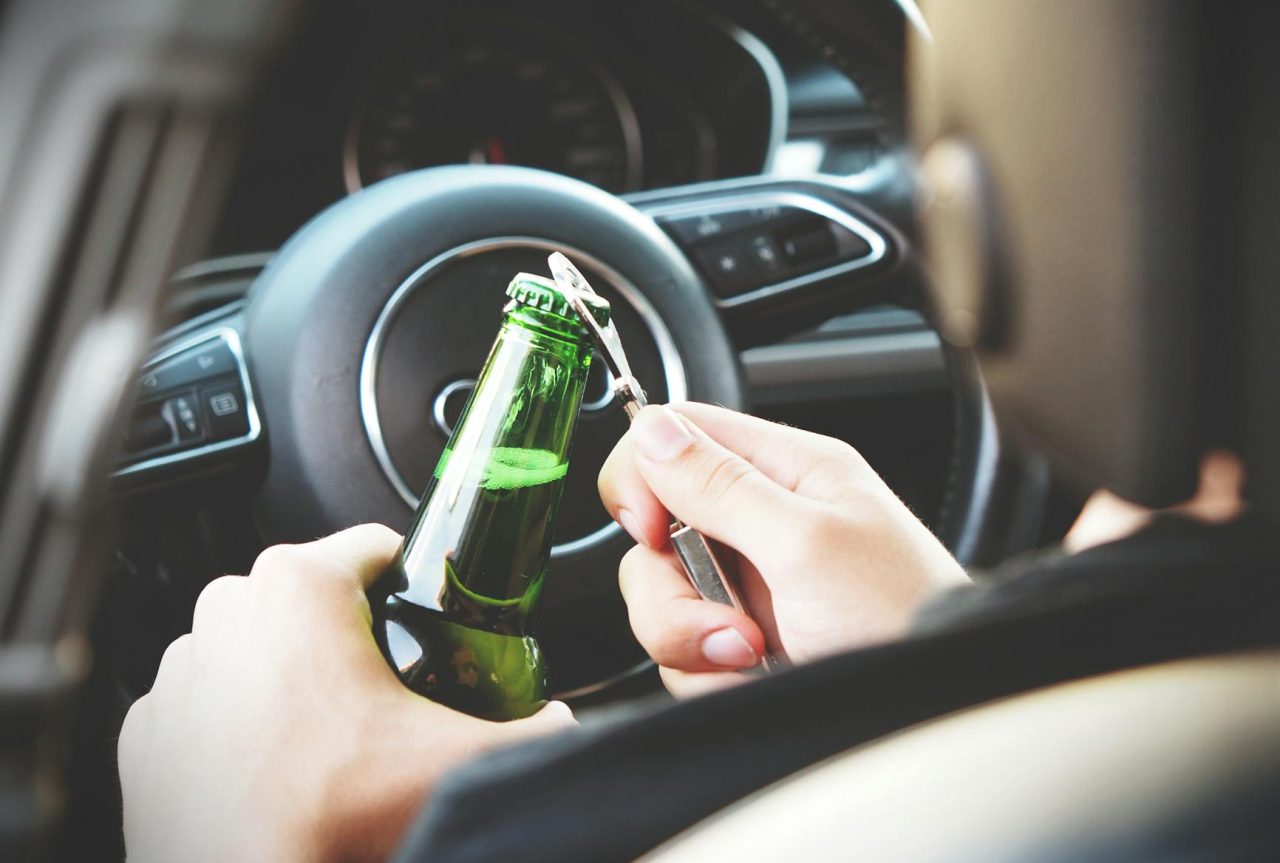
Seconds of inattention or fleeting fatigue can trigger collisions; detecting those moments before they escalate is the practical value AI brings to road safety. AI systems combine camera vision, vehicle telemetry, and environmental inputs to identify unsafe states, drowsiness, distraction, aggressive maneuvers, and produce timely alerts or post-trip coaching.
Data sources and sensing modes that matter
Robust systems fuse multiple sensor types so no single failure breaks detection. Each input has clear strengths and limitations; choose sensors based on operational hours, lighting, and vehicle class.
In-cabin cameras and dash cams
In-cabin cameras capture facial landmarks, head pose, gaze direction, hand position, and basic posture. Forward-facing dash cams provide scene context—lane position, relative speed, and traffic conditions—that helps decide whether a glance-away is dangerous. Typical hardware:720p–1080p cameras at 15-30 fps, with infrared illumination for low light.
Glare, sunglasses, hats, or tinted glass raise false negatives. For night operations, near-infrared arrays increase reliability but add roughly USD 50-150 per camera unit, depending on integration. Clean lenses and proper mounting angles are simple, high-impact checks for reliability.
Vehicle telematics and CAN bus signals
Telematics provide high-frequency signals—speed, steering angle, yaw rate, accelerator and brake inputs, gear changes—that are insensitive to lighting and privacy concerns of video.
These streams are ideal for detecting harsh braking, sharp steering, or sustained speeding. Retrofitted telematics units typically cost about USD 100-400 per vehicle, with monthly connectivity fees around USD 10-30 if cellular telemetry is used.
OEM access to CAN bus data varies. For some makes, only limited subsets are exposed without manufacturer cooperation; for others, a commercial interface delivers rich telemetry.
External sensing and V 2X context
Radar, lidar, ultrasonic sensors, and V 2X (vehicle-to-everything) messages give object proximity and scene layout. Combined with the in-cabin state, external context helps the model judge whether the same driver behavior is safe in one situation and unsafe in another (for example, looking down at a stopped light versus at 60 mph). V 2X coverage is uneven, and adding radar or lidar increases cost and calibration needs.
How AI interprets behavior: algorithms and models?
Detection stacks typically separate perception (what is visible) from behavioral interpretation (what it means). That separation clarifies where to test and how to respond when performance shifts.
Workload and distraction models
Workload estimation maps patterns—rapid gaze shifts, prolonged eyes-off-road, micro-pauses in steering inputs, phone handling—to cognitive load. Supervised models trained on labeled driving sessions to assign risk scores for delivering information or issuing an alert.
Cambridge researchers show machine learning can estimate workload to determine when additional in-vehicle data would increase driver demand rather than help safety.
Increased workload produces correlated sensor signatures across cameras and vehicle signals—more variable steering corrections, longer glances away, or erratic pedal inputs. To be reliable, training data must reflect the fleet’s operational envelope: urban and highway driving, day and night, and the demographic mix of drivers.
Drowsiness and facial analysis
Convolutional networks and temporal layers detect eyelid closure (PERCLOS), yawning, and nodding. Temporal context—several seconds of motion—reduces sensitivity to brief occlusions. Commercial dash camera products often combine CNN-based facial features with telematics to detect drowsiness in real time.
Caveat: models trained on limited datasets will underperform for underrepresented ages, skin tones, or eyewear. Plan explicit tests on the actual driver population and lighting conditions before scaling.
Architectures for real-time detection and the latency question
Pick an architecture based on the alerting requirement, connectivity, and privacy needs.
- Edge-only: inference runs on an embedded device with GPU/NPU. Pros: low latency (tens of milliseconds) and operation without network connectivity. Cons: constrained model size and less convenient remote updates.
- Cloud-assisted: heavier models run in the cloud. Pros: powerful models and centralized updates. Cons: network latency (100 ms to seconds), recurring data costs, and privacy concerns when raw video is transmitted.
- Hybrid: immediate warnings run on-device; aggregated telemetry and periodic higher-level analysis run in the cloud. This balances responsiveness and fleet analytics and is recommended for most fleet deployments.
Latency targets depend on use case. For immediate warnings, such as drowsiness or imminent collision alerting, end-to-end latency should be under 200 ms to feel instantaneous. For coaching, post-trip summaries, or compliance reports, delays of minutes to hours are acceptable.
Common failure points, diagnostics, and how to respond
Anticipating failure modes and having simple diagnostics prevents drift from turning into blind spots.
False positives and false negatives
False positives erode trust and lead to ignored alerts; false negatives are safety-critical. Both commonly stem from biased training data, poor sensor placement, or edge cases not present in training sets.
Diagnostic steps: run confusion-matrix analyses segmented by scenario—day/night, sunglasses/no sunglasses, passenger present/absent, driver seat positions. Track per-vehicle and per-driver performance metrics during pilots. Set acceptable thresholds for nuisance alerts (for example,5-10% in pilot data) and tune alert sensitivity or add confirmation from another sensor before issuing loud alerts.
Sensor degradation, occlusion, and environmental effects
Cameras and external sensors degrade: lenses collect grime, mounts loosen, and lighting shifts. Weather—rain, fog, snow—reduces external perception; interior condensation or reflections can foil in-cabin cameras.
Monitor image brightness histogram, focus confidence, and signal-to-noise ratio for cameras; monitor packet loss and CAN bus error counters for telematics. Schedule routine walk-around checks: lens cleaning, mount torque verification, and timestamp synchronization across sensors.
When to call a mechanic or integrator: persistent CAN bus errors, physical harness damage, or misaligned mounts after maintenance should be handled by trained technicians. Lens cleaning and minor re-seating are acceptable on-site fixes; avoid opening OEM harnesses without expertise.
Data bias and corner cases
Underrepresented demographics, rare lighting conditions, or atypical vehicle interiors can create blind spots. Maintain an edge-case log during pilot runs and add targeted samples to the training set when possible. If retraining is infeasible, apply conservative thresholds and human-review workflows for flagged events in those subgroups.
Privacy, consent, and regulatory constraints
Design to capture only what is necessary. Favor on-device inference and transmit anonymized event metadata—event type, confidence, timestamp—rather than raw video except for incident reviews with explicit consent and secure storage. Data retention practices vary; many fleets retain incident video 30-90 days depending on policy and law.
Operational step: draft clear driver-facing policies, obtain informed consent where required, and implement encryption in transit and at rest. Maintain logs for audits and minimize access to raw footage through role-based controls.
Practical rollout example: regional delivery fleet
Context: A regional delivery fleet with 150 vans logged frequent minor collisions during peak commuter hours. The fleet piloted 20 vehicles for 3 months using infrared in-cabin cameras plus telematics modules, running edge inference for immediate alerts and cloud analytics for monthly coaching.
Deployment details: pilot across urban and suburban routes, require a one-button acknowledgement for alerts to measure compliance, and log events for human review. Hardware cost averaged USD 250 per vehicle with USD 20 monthly connectivity for cloud analytics.
Results: Within 3 months, harsh-braking incidents dropped 28% and prolonged eyes-off-road events dropped 40%. Operational lessons: camera angles required adjustment for taller drivers, and initial alert sensitivity was too high; thresholds were tuned to reduce nuisance alarms. The fleet implemented quarterly hardware checks and safety briefings tied to coaching reports.
Tools, maintenance, and simple routines that keep systems reliable
Keep a compact maintenance kit and a short, repeatable workflow.
- Essential tools: multimeter, lens-cleaning kit, cable testers, and a laptop with vendor diagnostic software. A handheld diagnostic device that pulls logs and applies firmware updates speeds on-site fixes.
- Maintenance cadence: lens cleaning monthly, software/firmware updates quarterly, and hardware inspection quarterly or after collisions. Keep spare camera modules and CAN bus interface cables for rapid swaps.
- Walk-around checklist: check mounts and connectors, verify camera view and brightness, confirm timestamp alignment, and run a brief drive-test to confirm telemetry streams.
Human factors and deployment pitfalls to avoid
Don’t assume one camera angle fits all drivers. Test mounts across the 5th to 95th percentile of driver heights before wide deployment.
- Match models to vehicle class. Vans: sedans, and trucks have different sightlines and CAN bus signals; use vehicle-class-specific calibration.
- Limit persistent false alarms with configurable sensitivity and a graduated coaching cadence—soft alerts, then in-cab coaching, then managerial interventions if risky patterns persist.
- Log driver feedback during pilots. Acceptance surveys and brief interviews reveal timing and annoyance issues that metrics alone miss.
When should AI step back and a human take over?
If the system reports ongoing hardware faults (camera offline, frequent CAN bus errors), remove the vehicle from service until diagnostics are complete.
If erratic vehicle behavior correlates with mechanical symptoms—brake fade, excessive steering play—consult a qualified mechanic. For contested incidents or privacy disputes, preserve raw data under secure chain-of-custody and involve legal or HR as appropriate.
How to choose and validate a solution?
Match the tool to your operational goal and constraints.
Decision factors:
Operational goal: immediate warnings, post-trip coaching, or compliance reporting.
- Sensor budget: start with a dash cam + telematics for broad coverage; add IR in-cabin cameras if night operations are common.
- Compute budget: edge devices with NPUs cost more upfront but have lower latency and recurring cloud fees.
- Data policy: prefer vendors that support on-device inference and transmit anonymized events.
Validation steps before full rollout:
- Pilot with a representative vehicle and driver sample for 60: 90 days across expected conditions.
- Measure false positive/negative rates and gather driver acceptance data—simple surveys on alert annoyance and perceived utility.
- Run tests for lighting: eyewear, seat positions, and passenger presence. Keep an edge-case checklist and retrain or recalibrate models where performance lags.
Three brief operational observations
Alert timing matters: a warning that repeats immediately after a first soft nudge is the most common cause of drivers disabling the system.
- Small mechanical or mounting drift after routine maintenance often explains sudden spikes in false alarms; a 5-minute walk-around prevents many issues.
- Telemetry sampling frequency affects sensitivity—10: 20 Hz is often sufficient for braking and steering patterns; higher rates improve detection but increase storage and processing needs.
Closing practical summary
AI can detect unsafe driving behavior effectively when sensor selection, model validation, human factors, and maintenance are treated as integrated parts of the system. Start with a pilot that mirrors real operations, log edge cases for retraining, and prefer hybrid architectures that keep critical alerts on-device while using the cloud for analytics.
Maintain a short maintenance routine, clear privacy policies, and a process for escalating mechanical or contested incidents to qualified professionals.
Read Next: How Location Sharing Improves Travel Safety in Practice
Read Next: Travel Safety Concerns for Tourists Using Local Transport Apps
Read Next: How GPS Errors Can Affect Your Safety During a Trip