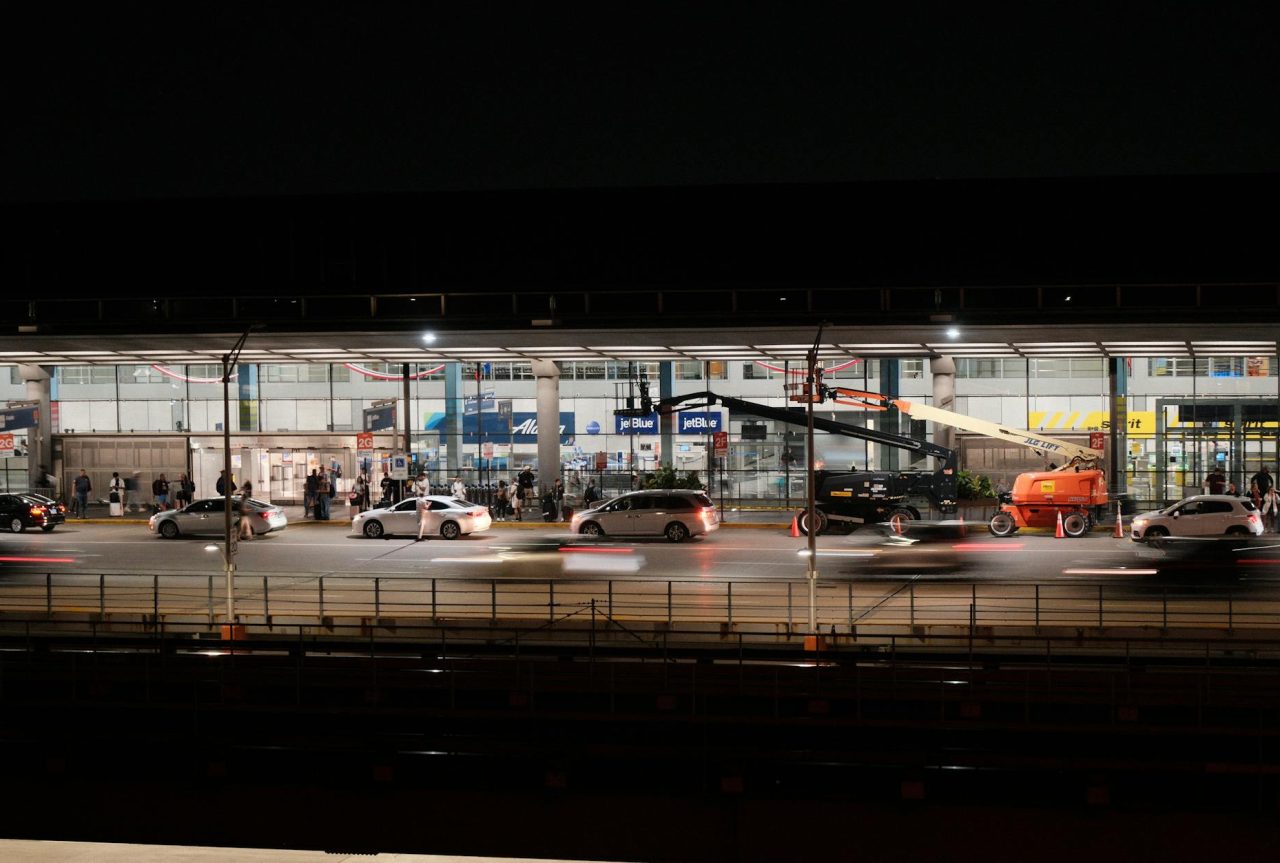
Airport transfers promise a simple handoff: plane to door. In reality, scheduled pickups, curb rules, luggage constraints, and flight variability turn that handoff into an uncertain choreography of staging lots, missed calls, and surprise fees.
This article is for frequent flyers, fleet managers, airport planners, and operators weighing whether autonomous taxis can reduce that friction.
The airport-transfer ecosystem: who does what and what it costs?
Airport transfers span on-demand taxis, prebooked black cars, and shared shuttles. Each choice trades cost, predictability, and physical assistance.
- Prebooked private transfers: fixed windows and professional drivers; predictable but pricier—services like Blacklane position themselves in this segment as verified on-request chauffeured rides.
- Regular taxis and ride-hailing: curbside pickup and variable pricing; fastest for short-notice needs but messy during peak arrivals. Aggregators such as Taxi 2Airport list many sedan-based options for small groups.
- Shared shuttles: pooled trips that cut fare but add stops and wait windows. Platforms like Expedia and GO Airport Shuttle aggregate schedules and pricing for budget-minded travelers.
Pricing patterns: private prebooked cars often run 2-3x a standard taxi in many metros; shared shuttles may be cheaper but add 15-45 minutes depending on additional stops. If exact pricing matters, check local aggregators for airport-specific fees and baggage policies.
What do travelers need to decide?
You’ll feel at home if predictability matters most—choose prebooked transfers. Skip that option if cost is the main concern and you can tolerate extra time. Worth it when tight connections or mobility assistance are required.
Ride availability spikes right after clustered flight arrivals and collapses late at night, creating surge pricing and long waits that more vehicles alone don’t fix.
Where transfers break and why those failures matter?
Most breakdowns happen at interfaces: flight-to-ground, curb-to-car, and passenger-to-driver communication. Small frictions here cascade into missed flights, angry reviews, and safety incidents.
Common failure points
- Delays and cascading schedules: weather or ATC shifts of 20-120 minutes are routine; drivers commonly wait 10-20 minutes before charges or cancellations kick in.
- Curbside restrictions and staging: airports often require licensed vehicles to use certain lanes, pushing pickups to remote staging or cell-phone lots and adding 10-30 minutes.
- Luggage mismatch: oversized items or unclear piece counts lead to refusals or extra fees; shared shuttles cap pieces per passenger.
- Gate changes and miscommunications: prebooked drivers sometimes wait at the wrong terminal; only services that monitor flight feeds realign pickups reliably.
A crowded curb with signs, people, and identical vehicles makes even on-time pickups fail—the visual clutter causes misidentifications. Another is the midafternoon lull where fleets idle but can’t legally stage at the curb, so cars shuffle to lots and add minutes to every trip.
A short anecdote-style note often reported in pilot summaries: riders are frequently redirected to a nearby coffee shop or signage-posted pickup point when curb rules change mid-pilot.
Safety, accessibility, and the stakes
Accessibility is inconsistent. Wheelchair users report longer waits, extra fees, or vehicles without ramps. Safety issues include unlicensed drivers, misidentification in low-light zones, and drivers unfamiliar with airport protocols. For anyone needing mobility assistance, the smallest mismatch in vehicle capability or timing is a major safety risk.
Quick practical detail: always confirm ramp availability, securement straps, and driver certification when booking accessible transfers. If unclear, opt for verified accessible services even at higher cost.
How autonomous taxis could change airport transfers?
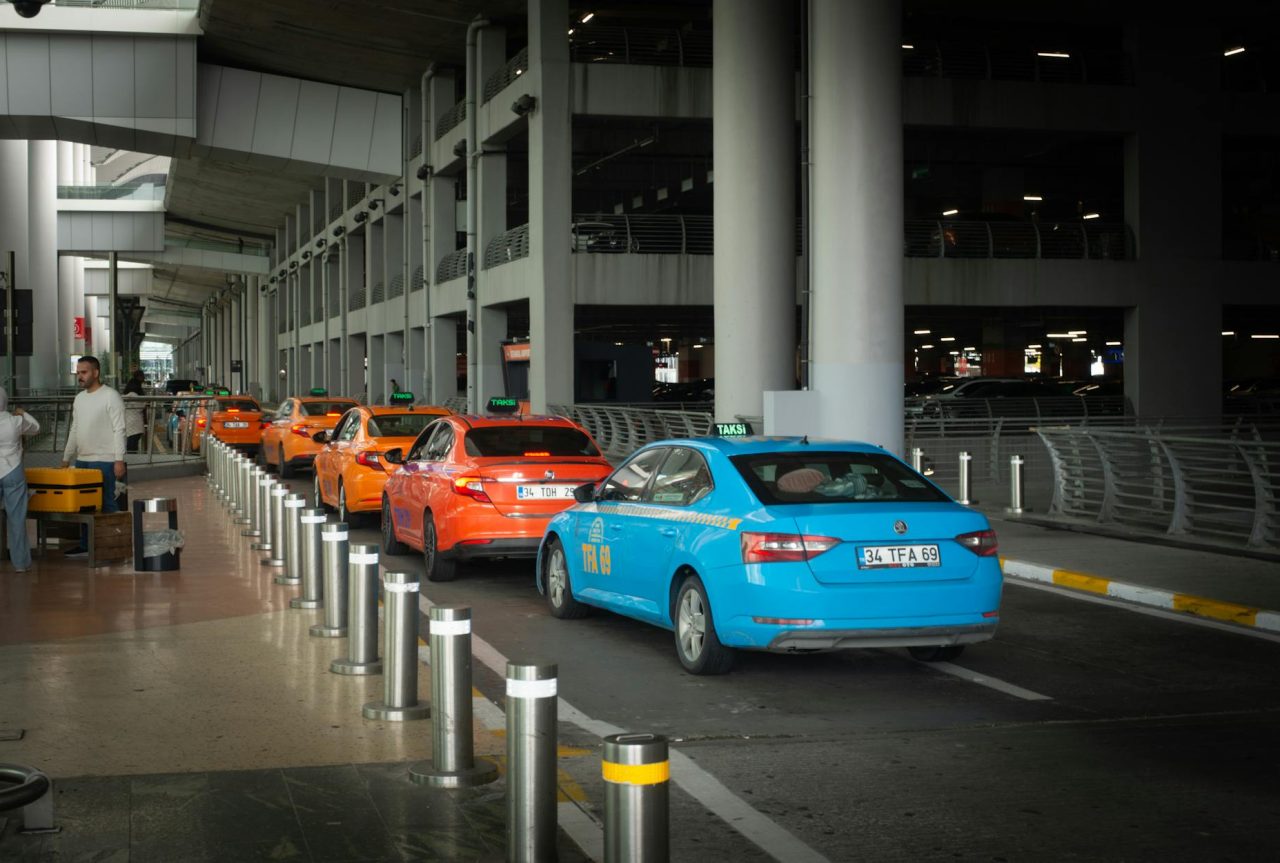
Autonomous taxis offer steady availability, predictable routing to approved pickup zones, and software-driven responsiveness to flight changes. That’s the upside; operational complexity and new failure modes are the caveats.
Technical tools that matter
- Localization and mapping: high-definition maps plus lidar/camera/radar let AVs hold position for curb or staging pickup. Plain-English: the vehicle uses maps and sensors to know exactly where it is and where to stop.
- Geofencing: virtual boundaries that keep AVs in approved lanes or lots to avoid fines and curb conflicts.
- Dynamic routing and fleet orchestration: systems that ingest live flight feeds, passenger locations, and traffic to reassign vehicles in real time—reducing idle cruising and lowering wait times.
Terminals are sensor-hostile—reflective glass, dense pedestrians, mixed vehicle types, and temporary signage create perception edge cases. AV systems must demonstrate robust behavior for those conditions or default to conservative actions that increase delays.
New risks and the diagnostics operators must run
Autonomy adds fresh failure modes. Operators need layered diagnostics and human-in-the-loop fallback plans. Think in terms of “what to monitor” and “what to do when monitoring flags a problem.”
Critical failure modes and response rules
- Sensor occlusion and glare: direct sun, spray, or tunnel transitions can degrade cameras and lidar. Systems should flag degraded perception in seconds and either slow/stop the vehicle or request remote human assistance.
- Ambiguous curb interactions: human gestures, signs, and unloading buses create unclear intent. AVs must default to conservative behavior—pause or reposition—and call a remote operator for resolution.
- Luggage and door handling: most AVs can’t lift heavy bags. Policies should state “no-heavy-luggage” or only allow light carry-ons unless robotic handling or ground staff are present.
- Regulatory and insurance limits: many jurisdictions mandate a remote safety operator during early deployments. The operator needs dashboards showing sensor health, planned path, and perception confidence; absent that, the AV should not depart.
What to monitor in real time-per-sensor health, perception confidence scores in crowded zones, geofence compliance, and human-intervention rates.
Operational rules should specify automated escalation: low-confidence perception triggers a soft stop and a remote-operator check; repeated remote interventions route that vehicle to maintenance.
Real-world pilot scenarios and concrete outcomes
Pilots usually start in constrained settings: limited hours, two approved pickup zones, and remote or onboard attendants. Those constraints expose what scales and what doesn’t.
Scenario: medium airport,10-vehicle AV fleet
Context: fleet serves a downtown business district 15 miles away, pickups limited to two geofenced zones, remote human oversight required at night.
Measured outcome: average pickup wait fell from 20-30 minutes (shared shuttle baseline) to 7-10 minutes;8% of trips required remote intervention for luggage handling or pedestrian ambiguity. The honest trade-off: predictability rose, but labor shifted from curbside drivers to remote operators and diagnostics teams.
Signage placement made a measurable difference—moving a pickup sign 15 feet reduced ambiguous approaches and remote assists by nearly half in one pilot.
Another sensory detail noted in reports is the soundscape:
AVs at idle in staging lots are much quieter, which reduces crowd confusion at night but makes the vehicles less visible to arriving passengers unless lighting and signage are improved.
Maintenance, diagnostics, and when to call a professional
To run reliable AV transfers, operators must instrument fleet health and ground interfaces with strict maintenance schedules and diagnostics.
- Key metrics to track: sensor uptime, perception-confidence distribution in crowded zones, fleet utilization (idle time and deadhead miles), and human-intervention rate per 1,000 miles with root-cause tagging (weather, signage, luggage, work zones).
- Common maintenance pitfalls: delayed sensor cleaning (salt/grit damage in winter), software updates rolled fleet-wide without canary deployments, and inadequate spare vehicles during holidays.
- When to consult a professional mechanic or OEM specialist: repeated sensor contamination events, unexplained calibration drift, or hardware wear that causes abrupt perception confidence drops. Do not push software patches fleet-wide without staged rollback testing by qualified engineers.
Accessibility, equity, and regulatory hurdles
AVs must meet more than traffic rules. Regulators will focus on ADA compliance, passenger safety, and curb-access rules. Expect phased approvals: designated staging lots first, curbside later after validated accessibility features.
Decision factors: whether the fleet supports wheelchair tie-downs, audible prompts for visually impaired riders, and two-way remote communication to a live assistant.
If pilot reports don’t document those features, accessibility is likely an afterthought. Skip AV transfers when you require hands-on assistance unless the provider publishes verified accessibility certifications.
Common mistakes operators and travelers make

Assuming “autonomous” equals “hands: off” for passengers: many pilots still require curbside verification or in-app check-in.
- Underinvesting in staging and deadhead planning: limited lanes at smaller airports force remote staging and extra transfer time if not accounted for.
- Not stress-testing peak periods: pilots limited to midweek midday miss holiday surges and fail when demand peaks.
- Failing to publish clear luggage policies: last-minute refusals create safety risk and bad reviews.
Safety warnings and required tools
Warnings: AV perception degrades in heavy rain, snow, fog, or glare; service providers should publish operational weather limits. Do not rely on AV-only service for strict-connection flights without human fallback.
- Essential tools for operators: a remote-operator dashboard showing sensor health and confidence, automated geofence enforcement, flight-monitoring integration, and a rapid-dispatch mechanism for human-staffed backup vehicles.
- Training and certification: remote operators must be trained to interpret confidence metrics and execute safe reroutes or handoffs; ground staff must know how to handle luggage and accessibility needs flagged by the AV.
Practical takeaway
Autonomous taxis can fix many frictions in airport transfers—predictable response times, cleaner staging, and software-driven rerouting—but they introduce new failure modes that demand disciplined diagnostics, remote operators, and explicit luggage and accessibility rules.
For now, expect phased rollouts in controlled pickup zones with heavy monitoring. If you need strict reliability or hands-on assistance, choose a verified human-staffed transfer; if predictability and shorter waits matter more and your baggage and accessibility needs are light, an AV shuttle pilot could be worth trying.
FAQ
Will autonomous taxis be cheaper than existing airport transfers?
Not automatically. Early AVs add capital expense for sensors and remote-operations centers. Prices may become competitive with private prebooked cars as fleets scale, but shared shuttles and heavily subsidized services will likely remain cheaper for budget travelers in the near term.
Are autonomous taxis safe for passengers with mobility needs?
Not widely yet. Accessibility requires ramps, tie-downs, audible prompts, and trained remote or on-site assistants. If you need mobility support, pick providers that explicitly advertise ADA-compliant vehicles and verified assistance staff.
What happens if an AV can’t pick me up due to crowds or construction?
Good systems escalate: the AV reroutes to an alternate geofenced zone or connects you with a remote operator who issues directions or dispatches another asset. Expect a short delay; if the provider lacks clear escalation paths, treat the service as unreliable for tight connections.
When should I choose a human driver instead of an AV?
Pick a human-driven transfer if you have heavy luggage, require hands-on mobility assistance, are on a strict connection window, or the AV provider lacks documented flight monitoring and accessibility features. AVs are better for predictable, moderate trips, not edge cases that need physical help.
Read Next: EV Charging Etiquette: Rules Every Driver Should Know
Read Next: Charging an EV in Bad Weather: What Actually Works
Read Next: Why Public Transport Still Fails Wheelchair Users
Read Next: Why Rural Areas Are Still Left Out of Smart Mobility Systems