
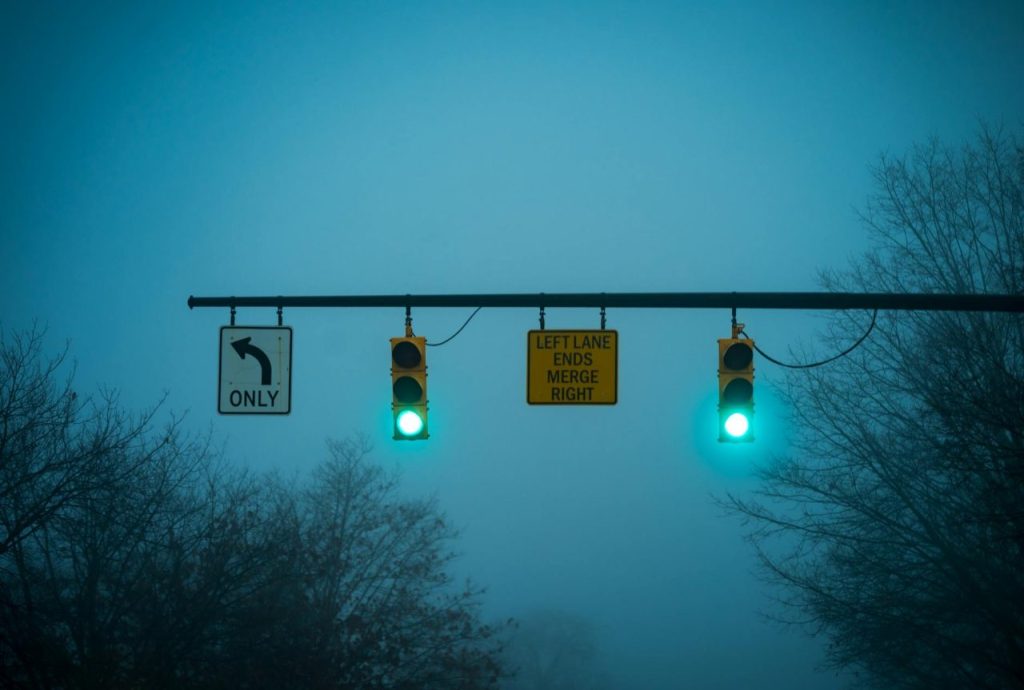
Introduction — the challenge of lane merging in modern traffic
You can feel a merge coming before you see it: brake lights flare, a line of cars compresses, and the lane drop sign hangs over the road like a deadline. The sound of blinker clicks and the sight of a single gap in a wall of metal are vivid cues that a decision is due within seconds. Lane merging problems are not merely etiquette disputes; they combine human judgment, roadway design, and evolving vehicle automation interactions that shape flow and safety for miles downstream.
Good merges preserve time and reduce crashes; poor merges create stop‑and‑go waves, road rage, and collisions. The honest trade-off is that no single tactic always wins. Effective responses blend engineering, policy, and driver behavior — and increasingly, coordinated vehicle systems that can act together where humans don’t.
How drivers behave and why it matters
Merging behavior forms a spectrum from courteous early merges to late zipper merges. Patterns include opportunistic gap-taking, aggressive cut‑ins, cooperative alternation, and defensive early moves. Which pattern dominates at a given site depends on sightlines, local signage, enforcement, and driver expectations.
Early merge versus zipper merge — how each affects flow and perception
Early mergers move into the open lane well before the lane ends. That reduces abrupt lane changes but often wastes lane capacity when the adjacent lane still has moving traffic. Late or zipper mergers stay in the closing lane until the taper and alternate one vehicle at a time. Traffic models and field reports, including summaries in HowStuffWorks and TRB research, show that zipper merging can shorten queues and improve throughput when demand exceeds capacity.
Here’s the catch: zipper merging requires shared expectations. If most drivers use the open lane early but a few jump in late, friction and perceived selfishness spike. When paired with clear signage and public messaging, zipper merge reduces queue length and delay by using both lanes to the merge point.
Common failure points in driver decisions
- Poor gap selection: underestimating closing speed leads to either risky cut-ins or abrupt braking.
- Short reaction windows caused by limited sight distance (hillcrest, curve) or late signage.
- Speed differentials: one lane moving faster than the other creates merging conflict and forced braking.
- Aggressive behaviors that intentionally close gaps versus timid drivers who brake sharply, both of which generate shockwaves.
Three brief, concrete observations that feel lived-in: the sudden flash of a brake light chain three cars back; the way a truck’s blind spot swallows small hatchbacks near a taper; and the thin, tense pause when two drivers lock eyes at the merge point. A common observation is that radio and local signs explaining “use both lanes” often cut arguments down within weeks.
Why roadway design and signs create or reduce problems
Lane drop geometry, taper length, and sign placement strongly influence behavior. Short tapers compress decision time. Poorly placed or inconsistent signs increase uncertainty and drive self‑protective early merges. Traffic engineers use standard taper-length formulas and sight-distance checks for a reason: small changes in geometry alter drivers’ available reaction time by about1–2 seconds, which matters at highway speeds.
Tactical interventions include clearer advance warnings, “Use Both Lanes Until Merge” signs where queues form, and physical measures like lengthened tapers or auxiliary lanes where space and funding allow. When space is tight, behavioral tools—signage, temporary enforcement, and outreach—are often the most practical lever.
Safety risks, diagnostics, and what to look for
Merges concentrate risk through short decision windows, blind spots, and speed mismatches. Common crash types include sideswipes during lane changes and rear‑end collisions from abrupt braking. When diagnosing persistent problems, collect targeted data before altering the roadway.
Diagnostics to gather before design changes
- 30–60 minute peak: hour video clips showing behavior upstream and at the taper.
- Counts of lane use100–200 m upstream to see whether both lanes are utilized.
- Queue length samples and time‑headway distributions to detect shockwave patterns.
- Crash and near‑miss logs over several months to spot recurring conflict points.
Worth it when you can show repeated queues during peak periods or elevated crash rates; otherwise, low-cost fixes may not be justified. If queues form more than30–60 minutes daily or crash rates exceed local averages, involve traffic engineers for a formal evaluation.
Safety warnings and basic tool requirements for field checks
- Safety: use high‑visibility vests, cones, and a vehicle warning light when recording or observing near traffic.
- Tools: binoculars or a telephoto camera for distant observations, a tripod for stable video, a notepad or spreadsheet for time stamps, and a pulse counter or automated traffic tally device if available.
- Permissions: coordinate with the road authority before staging equipment on public rights-of-way.
Cooperative solutions that work and their trade-offs
Solving lane merging problems means aligning incentives so drivers cooperate, engineers make cooperation obvious, and enforcement targets genuinely unsafe actions. Approaches span low-cost education to high-investment redesigns and vehicle-to-vehicle coordination.
Zipper merge campaigns: when they pay off and when they don’t
Zipper merge signage paired with outreach can shorten queues by roughly20–30% where congestion is the norm. The key decision factor is demand versus capacity: zipper merge helps when both lanes are congested and drivers will use the closed lane. In light traffic, forcing drivers to wait to the end can create unnecessary conflicts and slower travel.
Enforcement should focus on blocking behaviors and dangerous cut-ins rather than penalizing a properly executed zipper. Expect a behavioral transition period measured in weeks to months; these campaigns need repeated exposure to change norms.
Trade-offs include occasional pushback from drivers used to early merging, and the need to tailor messages locally. One short anecdote-style moment commonly seen: a week after a signage push, traffic crews report fewer horns and more orderly alternation at the taper.
Connected and automated vehicle (CAV) strategies
CAVs can coordinate merges by sharing position, speed, and planned trajectories. Algorithms for platoon insertion, speed harmonization, and deliberate gap creation reduce braking and shockwaves. Simulations show capacity gains of roughly10–30% in mixed traffic when a modest fraction of vehicles cooperate.
Limitations matter: real-world benefits depend on market penetration and human-driver responses. A human driver may not expect an automated vehicle to slow deliberately to create space and could react oddly. Operational constraints like cybersecurity and update timing also affect reliability — see internal discussions on software update delays and cybersecurity risks.
Practical driver guidance
Here are concrete actions drivers can take now to reduce risk and delay at merges.
- In heavy congestion: use both lanes and alternate one vehicle at a time at the merge point — this shortens queues.
- In light traffic: merge early with a signal and match speed to the target lane to avoid sudden braking.
- Maintain a2–4 second headway in clear conditions: increase to4–6 seconds for trucks, wet roads, or low visibility.
- Signal early and be predictable: matching speed makes your move readable and safer than sudden acceleration or braking.
- If you can’t find a safe gap: delay merging until a comfortable gap opens or create one by matching the speed of the traffic in the adjacent lane rather than stopping abruptly.
- Watch for trucks and buses: they need larger gaps and have larger blind spots.
You’ll feel at home if you signal early and accept a small delay for safety; skip this when you face a strict deadline, but know that rushing raises collision risk. What people miss is that predictable, moderate behavior reduces friction more than intermittent aggression.
When to consult professionals
If a merge point produces repeated delays, near-misses, or crashes, escalate to the road authority with solid diagnostics. Traffic engineers will assess taper length, sight distance, sign visibility, and whether low-cost fixes (signage, re-striping) suffice or costly measures (lengthening tapers, auxiliary lanes, ramp meters) are needed.
Mechanical issues can also create merging risks. Consult a professional mechanic when your vehicle hesitates on acceleration, the throttle response is delayed, or brakes feel spongy. These faults increase the chance of unsafe merges and need immediate service.
Common Mistakes
Assuming zipper merge always wins — it’s effective in congested flows but may be counterproductive in free-flow conditions.
- Braking abruptly to force a merge — that creates shockwaves and rear-end risk.
- Not signaling when merging — removes predictability and increases conflicts.
- Trying to squeeze into gaps too short for your vehicle type: especially trucks — misjudged gaps cause rollbacks and lane blocking.
- Ignoring local signage and campaigns — low awareness is often the main barrier to system improvements.
Realistic example: suburban lane drop during morning rush
Context: a two-lane arterial reduces to one near a shopping center, producing a500–700 m queue during morning peaks. Action: the local DOT installs "Use Both Lanes Until Merge" signs, runs a two-week radio and social media campaign, and has a crew observe peak periods. Result: during heavy demand, queue length shortens by roughly20–30% as both lanes are used and alternation occurs at the taper.
Limitation: off-peak disruption persists from a minority who continue to zipper out of habit, so the DOT schedules a short targeted enforcement window to address blocking behavior.
Small scannable checklist for on-site assessment
| Task | Why |
|---|---|
| Record30–60 min peak video | Shows lane use and conflict points |
| Count lane use100–200 m upstream | Detects underutilized capacity |
| Measure queue length samples | Determines demand vs capacity |
| Log crash/near-miss incidents | Prioritizes safety fixes |
FAQ
Is the zipper merge legal everywhere?
Most jurisdictions don’t have explicit laws for zipper merging and instead prohibit dangerous driving behaviors. Where zipper signage exists, authorities expect drivers to use both lanes; enforcement typically targets blocking or unsafe cut‑ins rather than alternation itself.
How much do low-cost fixes like signage and striping typically cost?
Simple signage and striping changes usually fall in the low thousands to tens of thousands, depending on materials and labor. Major reconstruction such as adding lanes or regrading tapers can reach hundreds of thousands to millions and require months–years for design, permitting, and construction.
Will autonomous vehicles make merging problems disappear?
CAVs can reduce shockwaves and smooth merges by coordinating speeds and gaps, but benefits depend on fleet penetration and human interactions. Mixed traffic and operational constraints like cybersecurity and update timing mean full advantages arrive gradually.
When should I call the road authority about a merge issue?
Contact the agency if you see persistent daily queues of30–60 minutes during peaks, repeated near-misses or crashes at the merge, or obstructive signage. Provide time-stamped photos or short video clips and note peak times to help prioritize evaluation.
References and further reading
For an accessible discussion of zipper merging and its effectiveness, see the HowStuffWorks overview. For mathematical and engineering treatment of merging dynamics, consult the Transportation Research Board bulletin on merging behavior. Internal resources cover related topics such as software update delays and cybersecurity risks in connected vehicles.
Lane merging problems are often cast as personality conflicts, but they are fundamentally systems problems: geometry, signaling, human decision-making, and vehicle behavior interact. The most practical path forward blends site‑appropriate signage and policies, short-term education and enforcement, targeted engineering changes when data justify them, and a gradual rollout of cooperative vehicle technologies. Drive predictably, collect data if you manage a corridor, and call professionals when patterns repeat — those steps improve safety and often reduce delay for everyone on the road.
References
- Drivers Who Merge at the Last Minute May Be Annoying, But They're …
- [PDF] Some Mathematical Aspects of The Problem of Merging
- How to Merge Onto the Freeway Safely: Tips and Tricks – YouTube
- Why Safe Highway Merging is Crucial
Related Internal Resources
- Software update delays — how OTA solves it?
- Cybersecurity risks in self‑driving cars — prevention strategies
- Traffic light recognition failures — backup systems explained
- Pedestrian detection errors — how AI models improve.
Read Next: Parking automation failures — troubleshooting steps
Read Next: Battery drain from sensors — efficiency fixes
Read Next: Autonomous trucking fatigue — monitoring solutions.