
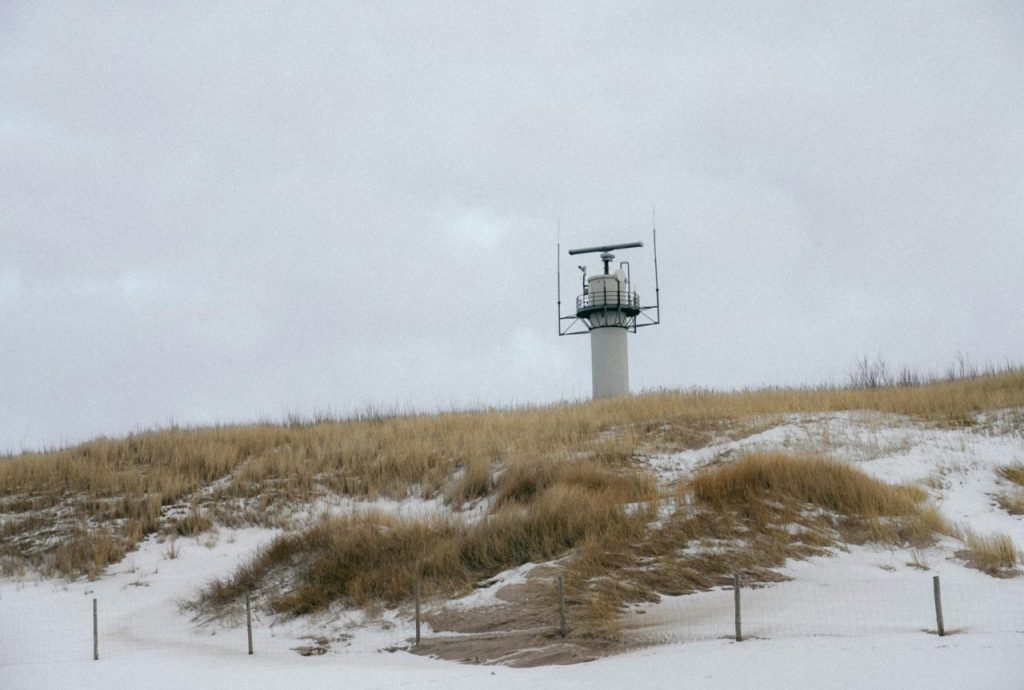
Fog turns vehicle perception from a reliable data stream into a layer of noise. The phrase “lidar vs radar confusion” crops up because operators and engineers hear competing claims: radar penetrates fog, lidar gives accurate geometry.
The truth sits between those claims and depends on droplet physics, wavelengths, mounting, and software that knows when to trust each sensor.
How do lidar and radar behave differently in fog?
Both systems are active: they send energy and analyse returns. The difference is in wavelength and detection mechanisms. Lidar uses near-IR or short-wave IR laser pulses (commonly around 905 nm or 1,550 nm), producing centimetre-level range precision and dense 3D point clouds.
Radar uses radio waves in GHz bands (automotive radars often at 24 GHz or 77–79 GHz), giving longer-range detection with reliable Doppler but significantly lower angular resolution.
Why wavelength drives performance?
Lidar wavelengths are comparable to fog droplets (typically 1–20 µm radius), which triggers Mie scattering. That creates strong near-field backscatter and reduces usable range.
Radar wavelengths (millimetre waves ≈, 4 mm at 77 GHz) are much larger than droplets; scattering per droplet is far smaller, so attenuation across fog is modest and clutter from droplets is low.
In short, lidar gives better shape detail when the air is clear; radar keeps detecting objects at range when visibility collapses. That’s why “radar works in fog; lidar doesn’t” is half-right but too blunt for system design.
What failure modes look like in real deployments?
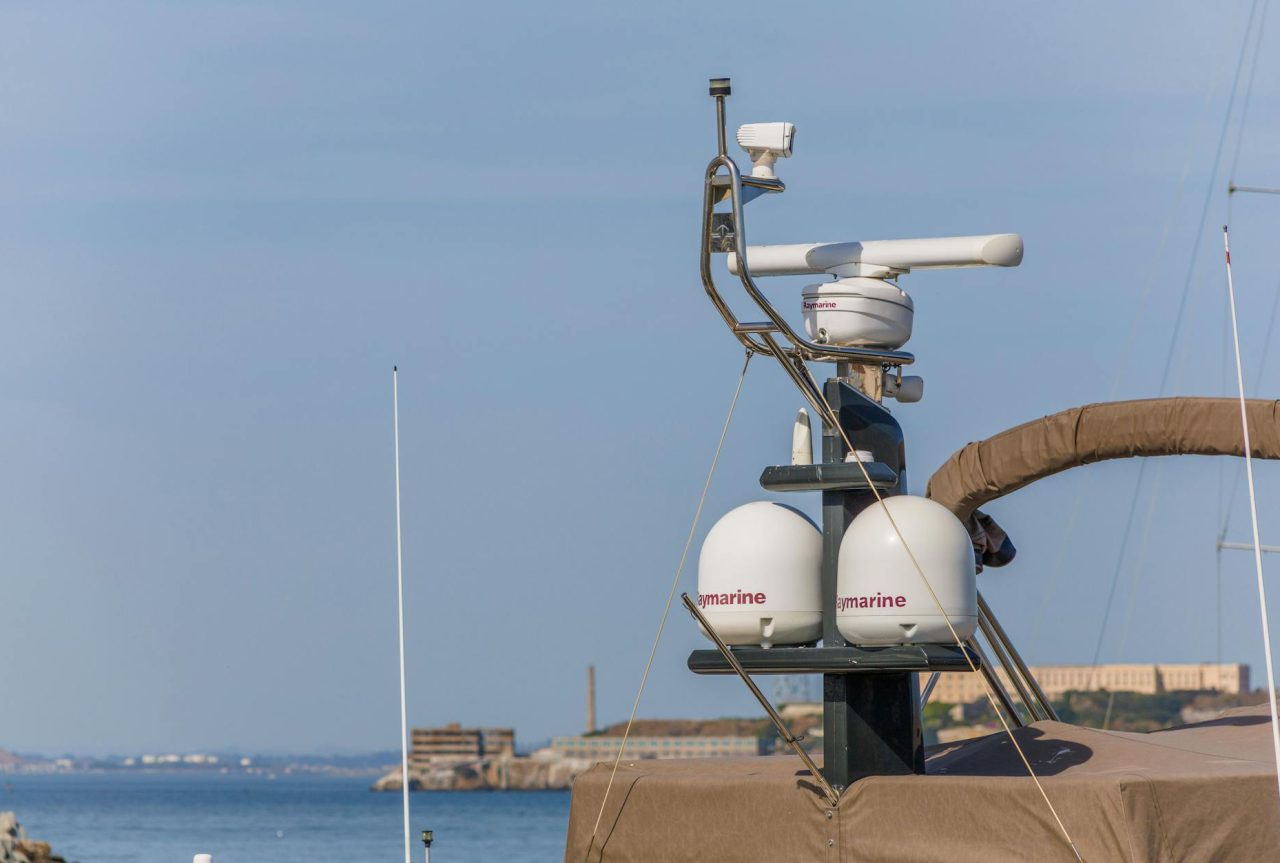
Field reports and vendor tests show predictable patterns that recur across vehicle types and environments. These patterns are useful because they point to concrete mitigation steps.
Lidar failure modes
- Dense near: field returns—point cloud looks like a snowstorm of returns, masking distant objects and confusing segmentation algorithms.
- False positives from internal reflections or contaminated windows that mimic fog backscatter.
- Range collapses from 100–200 m down to 10–30 m in severe fog or with window fouling.
Radar failure modes
- Low angular resolution: multiple close objects can merge into one blob, complicating the classification of pedestrians or cyclists in cluttered urban streets.
- Low: RCS targets at oblique angles can be missed or produce weak returns; Doppler helps for motion but not for fine shape.
- Thermal drift or radome contamination reduces SNR and introduces intermittent false targets.
What people miss: lidar’s dense data means nothing if the algorithm treats fog returns as obstacles, while radar’s robustness can’t replace geometry in tight urban scenarios. A mixed-stack that doesn’t account for these envelopes creates overconfidence and new hazards.
Diagnostics, tools, and routine checks to reduce fog risk
Small, repeatable checks catch many fog-induced failures before they cause an incident. You’ll feel at home if your fleet has a short daily checklist and a slightly deeper monthly bench test.
- Daily quick check: visual inspection of lidar windows and radar radomes; clear visible film, salt, or grit. A thin oily residue can mimic fog backscatter for lidar.
- Weekly functional test: park in an open lot and run a point-cloud sanity test—look for dense near-range spikes. Persistent spikes in clear air indicate contamination or internal reflections.
- Monthly radar test: Use a calibrated corner reflector or known target at a set distance to verify consistent detection across antennas and Doppler stability.
Tools to keep on-hand: a handheld optical cleaner for windows, a small calibrated corner reflector (~$100–$300) for radar checks, and log-enabled diagnostics software that records return histograms and SNR trends. For fleet-level acceptance tests, a portable test bench or aerosol meter helps establish baseline performance under controlled particulate loads.
When to call a specialist?
Consult a professional when calibration problems persist after cleaning, when sensors show inconsistent ranges across repeated tests, or after collisions or bumper repairs. These symptoms often indicate misalignment, a damaged radome, or electronics faults that need bench diagnostics and factory calibration.
Maintenance, calibration, and software health signals
Maintenance matters more in marginal weather. Small things—heater settings, seal integrity, and connector corrosion change performance in damp, cold mornings and coastal operations.
- Schedule window cleaning twice weekly in coastal or winter environments where salt and spray are common; otherwise, weekly to biweekly depending on local conditions.
- Enable and verify thermal or anti-condensation heaters for lidar windows in damp cold climates, where condensation can form in minutes after engine-off on muggy mornings.
- Log and track these signals continuously: lidar return-rate histograms, radar SNR and RCS variance, camera contrast metrics, and fusion confidence scores alongside environmental sensor data.
Small scannable maintenance checklist:
| Task | Interval | Why it matters |
|---|---|---|
| Visual window/radome check | Daily | Removes film that increases backscatter or reduces SNR |
| Point-cloud sanity test | Weekly | Detects persistent near-field clutter or internal reflections |
| Corner reflector radar test | Monthly | Verifies radar range and Doppler stability |
| Calibration after bumper/repair | After event | Prevents misaligned sensors and inconsistent ranges |
Choosing sensors and fusion strategies for fog-prone operations
The honest trade-off: lidar gives precise geometry, radar gives weather resilience, and cameras provide contextual cues when lighting allows. Don’t pick a stack on marketing alone—match sensors to mission profile and failure tolerance.
Decision factors
- Environment: coastal, river valleys, or locations with frequent advection fog demand stronger radar emphasis and more aggressive cleaning cycles.
- Operational needs: urban curbside manoeuvres require lidar-level geometry; highway following relies on radar’s long-range Doppler.
- Budget and maintenance capacity: Lidar adds cost and periodic maintenance; radar modules are cheaper and tougher but need fusion to avoid geometry blind spots.
Fusion recommendations you can act on:
- Use radar for long-range detection and doppler: based motion cues; rely on lidar for short-range geometry when visibility permits; use cameras for classification at close range.
- Implement environment-aware weighting: reduce lidar confidence and raise radar weight when aerosol sensors or a spike in near-range lidar returns indicate fog or contamination.
- Don’t accept single: sensor detections in degraded conditions without cross-confirmation; probability-of-existence tracking should reflect sensor envelopes.
Worth it when you operate in mixed conditions, urban clutter, and open highways, both matter. Skip a full lidar suite when low cost and robust single-purpose detection is the only need, such as a basic cruise control in a fog-prone harbour site.
Concrete scenario: last-mile delivery fleet in morning fog
A regional delivery fleet runs in an area with frequent morning advection fog. They equip vans with a 1,550 nm solid-state lidar, a front long-range 77 GHz radar, and a forward-facing camera. Radar preserves highway following at 80–100 m even in heavy fog; lidar supplies curbside geometry when fog thins for safe door-zone operations; the camera improves classification at close range.
Operational choices that made a difference: cleaning lidar windows twice weekly, enabling lidar window heaters in damp mornings, and adding an adaptive fusion rule that lowers lidar weight and raises radar confidence when aerosol counts spike. That adaptive rule cut false braking events by roughly half in the first month—an observation commonly reported in similar fleet deployments.
Common mistakes
Assuming lidar is useless and removing it entirely, you lose the geometry needed for tight urban manoeuvres when fog clears briefly.
- Overreliance on a single sensor stack without health monitoring—systems should degrade transparently and notify operators when confidence drops.
- Neglecting routine cleaning—dirty windows produce fog: like symptoms and are frequently misdiagnosed as sensor failure.
- Using static fusion thresholds—fixed thresholds that don’t adapt to measured fog density produce missed detections or false alarms.
Safety warnings and tool requirements
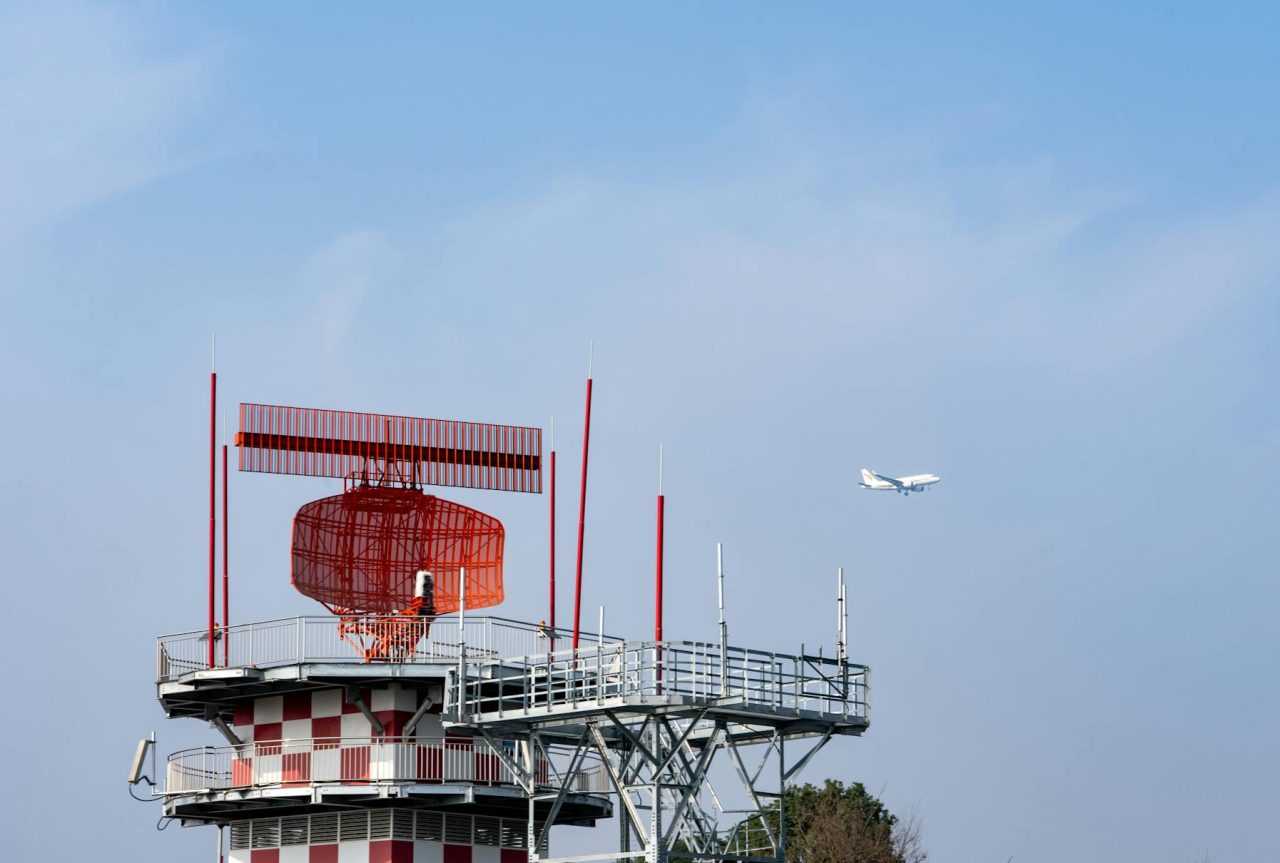
Safety warnings:
Do not assume normal object: detection behavior in heavy fog—slow speeds and increased stopping distance are mandatory until systems prove reliable under local conditions.
- Adopt a conservative human override policy: if confidence drops below a validated threshold, transfer control or bring the vehicle to a safe stop.
Essential tools:
Handheld optical cleaner and radome: safe detergent for routine cleaning.
- Calibrated corner reflector (~$100–$300) for simple radar checks.
- Diagnostic software that logs lidar return histograms: radar SNR across antennas, and fusion confidence scores.
Diagnostics to log and watch
Logging these metrics gives early warning and a traceable record for post-incident analysis:
- Lidar return-rate histogram: sudden spikes in near-range returns indicate fog or contamination.
- Radar SNR and RCS variance across antenna elements: drops suggest radome contamination or thermal issues.
- Camera contrast metrics and exposure adjustments: sustained low contrast often signals fog or low light.
- Fusion confidence score and override events: track when the system overruled a human or issued warnings, with environmental context.
Small operational detail: toggling lidar window heaters for damp cold mornings reduces condensation build-up; many systems support this, but operators sometimes forget to enable it.
FAQs
Does radar always outperform lidar in fog?
No. Radar generally preserves detection range better in fog because radio waves scatter less, but it lacks lidar’s angular and range precision. For urban scenarios where fine geometry matters, radar-only perception may miss small or low-RCS obstacles; fusion with lidar and camera delivers the safest coverage.
How much does fog reduce lidar range?
It varies with fog optical density and lidar wavelength. Field observations show effective detection ranges fall from 100–200 m down to 10–30 m in dense fog; exact performance depends on laser power, receiver sensitivity, wavelength (905 nm vs 1,550 nm), and droplet size distribution.
Can software eliminate lidar fog backscatter?
Software can mitigate many effects, but cannot fully eliminate physics. Temporal filtering, intensity thresholds, and statistical fog-point models reduce noise but risk discarding low-reflectivity real targets. Adaptive models that use environmental sensors and return intensity distributions perform best.
How often should I clean sensors?
Frequency depends on environment: weekly to biweekly in moderate conditions; twice weekly or daily in coastal, winter, or heavy-spray environments. Short daily visual inspections catch problems early and avoid misdiagnosis of sensor faults.
Practical closing: match sensors to the envelope and plan for failure
Lidar vs radar confusion dissolves when you match capabilities to operational envelopes: use radar for long-range, fog-resistant detection; use lidar for short-range, high-fidelity geometry when air is clear; add cameras for classification where lighting permits.
Implement adaptive fusion that changes sensor weighting based on live environmental signals, keep a disciplined maintenance cadence, and log diagnostic metrics so you can spot degradation early.
If you want a deeper read on sensor failure zones and engineering fixes, see the internal resource on sensor blind spots and practical engineering fixes for autonomous cars.
Read Next: Traffic light recognition failures — backup systems explained
Read Next: Cybersecurity risks in self‑driving cars — prevention strategies