
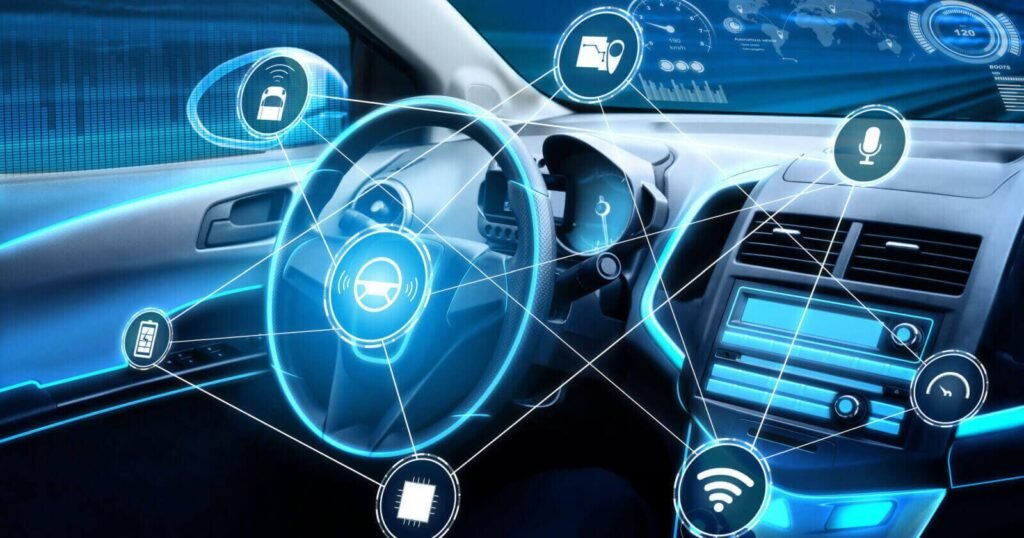
Advanced Driver Assistance Systems
The way driving has evolved in recent years. Every day, we use new technology to keep ourselves safe on the road. Such devices are referred to as advanced driver assistance systems. They become the second set of evil eyes of the driver. They have cameras and monitors to observe the highway. This will aid in averting accidents even before they occur. The major crashes occur due to mere human errors. Vehicles Safety systems are aimed at preventing those errors at the beginning.
The Monitoring of the Road by These Systems
It is the magic created by a combination of high-tech hardware. There are small video cameras concealed behind the back seat of the cars. They even utilize radar concealed in the front bumper. These sensors emit messages to observe objects around. This data is immediately read by the computer of car’s computer. This is what we make known as driver assistance technology. It can observe things that a human being may fail to notice. This is particularly true during cloudy or rainy seasons.
Application to Life: The Morning Commute
Take the case where you can be driving to work during heavy traffic. The traffic car ahead comes to a stop. You may be glancing at your radio for half a moment. The gap will be identified by advanced driver assistance systems, highlighting both the benefits and Challenges of Self Driving Cars in real-world conditions. An alarming sound will go off in the car. The car automatically brakes unless you step on the brake. This component is known as automatic emergency braking. It has rescued thousands of people in rear-end collisions, turning a frightening situation into a haven despite the ongoing challenges of self-driving technology.
| ADAS Feature | Real-Life Use Case | How It Works | Driver Benefit | |
|---|---|---|---|---|
| Automatic Emergency Braking (AEB) | Sudden stop of a car ahead during morning traffic | Uses radar and cameras to detect obstacles and applies brakes automatically | Prevents rear-end collisions and reduces accident severity | |
| Lane Departure Warning | Long highway drive where the driver unintentionally drifts into other lanes | Detects road markings and alerts the driver via vibration or sound | Prevents lane drift and off-road accidents | |
| Lane Keeping Assist | Night-time highway driving with reduced visibility | Actively steers the vehicle back to the lane center if a drift is detected | Improves control and reduces fatigue | |
| Blind Spot Monitoring | Lane changes in busy city traffic | Radar sensors monitor side areas and alert the driver with lights or sound | Avoids collisions with unseen vehicles or motorbikes | |
| Adaptive Cruise Control | Driving on highways with varying traffic speeds | Automatically adjusts speed based on distance from the vehicle ahead | Maintains a safe distance and reduces driving stress | |
| Parking Assist | Parallel parking in narrow urban streets | Sensors calculate space and steer the vehicle into a parking spot | Eliminates parking anxiety and improves accuracy | |
| Forward Collision Warning | Distracted driving in slow-moving traffic | Warns the driver when a collision risk is detected | Provides extra reaction time |

Staying in the Right Lane
We are sometimes too wayward on long highway journeys. You may begin to gradually run out of your course. The white lines in the pavement are checked by the vehicle safety system. When you pass a line without any turn signal, your steering wheel would vibrate. You will even have some vehicles that will softly push you back to the center. This is among the most useful ADAS features that are described to long-distance drivers. It helps to avoid the car running off the road or colliding with another car.
The Blind Spot Protection in the City
The worst is usually the switching of lanes. The smart driving assistance systems, powered by Computer Vision in Autonomous Vehicles, monitor your blind spots. On the side mirror, there will be a small light that will shine when someone is there. The light may flash or beep should you attempt to move over. This will make you not cut off a motorbike or another vehicle. It also renders the journey on congested roads a lot more leisurely for all.
Managing Speed with Ease
The conventional form of cruise control has existed for decades. Nevertheless, modern driver assistance technology is far more intelligent. It can change your speed according to the overtaking car. When the car in front of you slows down, your car slows down as well. Once the road is clear, your car accelerates to the desired speed. This maintains a safe distance between yourself and other car drivers. It decreases the tension of repeatedly pressing the momentary brakes in moving traffic.
The Future of Driving Safety
More ADAS features are being described in each new model car, making AI Based Car Safety Systems a core part of modern vehicle design. Self-driving cars are assembled by these systems, which are currently an important safety net for humans. They assist us in remaining attentive and responding quickly to threats on the road. With the improvement of these tools, the roads will be even more secure for everyone. The introduction of driver assistance technology through AI Based Car Safety Systems is a clever move that every car buyer can make.
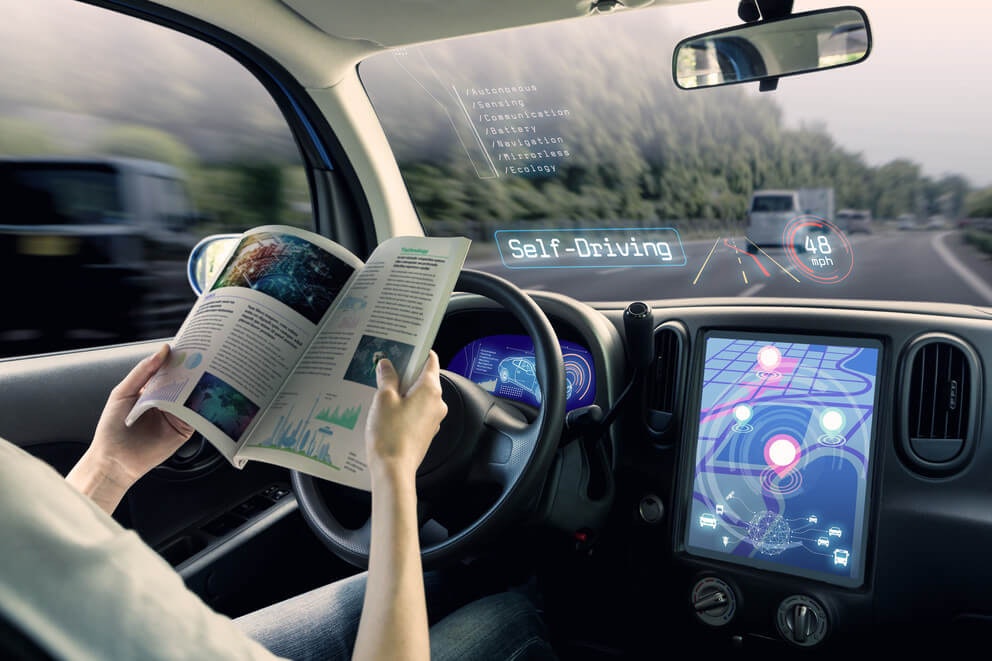
Parking without the Stress
Parallel parking proves to be very challenging for many people. This is an easy task done now with the advanced driver assistance systems. Around the car, there are sensors that determine the size of a parking spot. The car is then able to automatically drive itself into space with accuracy. The car usually steers, and you are only required to steer the brake.
Follow us on our Tumblr platform
FAQs
What are the advanced driver assistance systems?
These are electronic navigation equipment, which assist drivers to move safely and prevent road accidents.
What are the vehicle safety systems that are used to identify obstacles?
They have an integration of cameras, radar sensors, and lasers to scan the surroundings.
Is it possible to disable these support options?
Yes, the majority of cars enable you to turn off particular notifications or interventions in the settings menu.
Are these systems functional in poor weather?
Sensors may be blocked by heavy rain or snow at times, and therefore, students should always be vigilant.
Will the car be able to drive with such systems?
No, they are designed to aid the driver and not substitute for them totally.